Creator Persona

AI UGC WorkflowBy Indian UGC Team10 min read

AI UGC Creator Persona Guide for Indian D2C Ads

The best AI UGC creator persona is the buyer-adjacent person who can make one product moment feel believable. Indian D2C brands should choose the persona from the buyer hesitation: commuter for convenience, skincare user for routine proof, parent for home utility, student for affordability, fashion buyer for fit, and regional speaker for local language relevance.

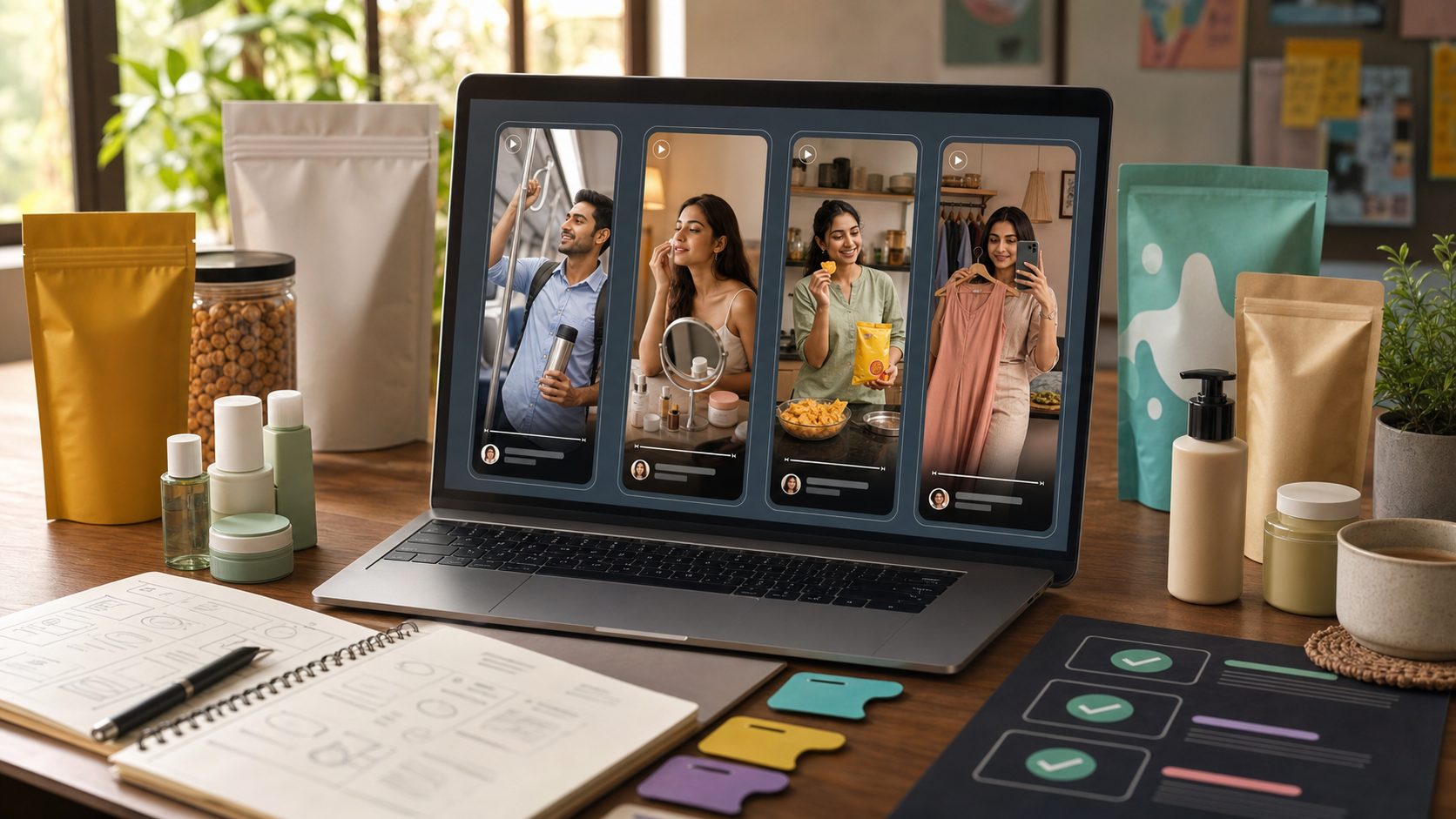
Indian D2C marketer comparing AI UGC creator personas across ecommerce ad storyboards and prompt notes

What is an AI UGC creator persona?

An AI UGC creator persona is the generated on-camera character, voice, setting, and speaking style used inside a creator-style ad. It is not just an avatar. It is the buyer-facing role that makes the product moment feel trustworthy: office commuter, skincare user, parent, student, homemaker, fitness buyer, fashion shopper, or regional-language customer.

AI UGC creator persona is the generated creator role that frames the ad's product action, language, setting, and trust cue.

Use /blog/ugc-video-generator-prompts-india when the prompt structure is the weak part.

Use /blog/ai-ugc-video-generator-review-checklist-india after the first generated clip is ready for QA.

Use /blog/how-to-find-ugc-creators-india when the final campaign needs real creators, usage rights, or posting distribution.

Generate the first creator-style draft in /dashboard/ugc-video once the persona, product action, and spoken line are clear.

Which AI UGC creator persona should Indian brands choose first?

Choose the persona that makes the product's biggest buying doubt easier to believe. If buyers doubt convenience, use a busy office or commute persona. If they doubt fit, use a mirror or try-on persona. If they doubt routine value, use a skincare, kitchen, wellness, or home-use persona. Do not start with the prettiest avatar if that person does not answer the buyer's hesitation.

Convenience product: office commuter, student, parent, or busy homemaker.

Beauty or skincare: routine-focused buyer at a vanity, bathroom mirror, or dressing table.

Food and beverage: office snack buyer, kitchen user, family buyer, or gym-bag persona.

Fashion and accessories: mirror try-on, festive styling, office outfit, or size-confidence persona.

Home utility: parent, renter, homemaker, or work-from-home buyer solving one messy moment.

Regional campaign: keep the same product action and change only language, setting, or persona after the first draft works.

How do you write a creator persona prompt?

Write the prompt as a casting note plus one product moment. Name the buyer role, age range if relevant, Indian setting, product action, spoken line, format, and guardrails. Keep the persona believable but generic. Do not imitate a real creator, celebrity, influencer, customer, or competitor ad.

Formula: buyer hesitation plus persona plus Indian setting plus product action plus one spoken line plus CTA plus review rules.

Good: young Indian office commuter at a desk opens the snack pack during chai break, gives one value line, product visible, vertical ad.

Good: skincare buyer at bathroom mirror shows serum texture and says when it fits the routine, no medical claims, no readable label text.

Avoid: famous influencer energy, celebrity lookalike, luxury studio, long monologue, fake testimonial, or exact packaging text.

Source note: Meta's video ad guidance emphasizes mobile-ready video formats, facebook.com/business/ads/video-ad-format.

Source note: Google's video ABCDs focus on attention, branding, connection, and direction, support.google.com/google-ads/answer/14783551.

When should you use an AI avatar instead of real creator UGC?

Use an AI avatar or AI UGC persona when the job is fast angle testing, language variants, creative fatigue refresh, internal concept approval, or deciding which creator brief deserves budget. Use real creators when the ad needs personal credibility, real product handling, whitelisting, creator posting, testimonial trust, or negotiated usage rights.

AI first: early hook testing, persona comparison, regional language drafts, offer refreshes, and low-risk product demos.

Real creator first: testimonial ads, creator-led trust, exact product handling, regulated claims, and influencer distribution.

Hybrid workflow: test persona and hook with AI, then brief real creators only on the winning angles.

Use /blog/ugc-creator-rates-india before budgeting filmed creator content.

Use /blog/ugc-usage-rights-india before buying or renewing paid usage rights.

How do you test creator personas without confusing the result?

Test one persona variable at a time. Keep the same product, offer, hook structure, CTA, and scene job while changing only the creator role or language. If every variant changes the persona, hook, setting, offer, and CTA together, the team cannot tell whether the buyer reacted to the avatar or to a different ad idea.

Start with two or three personas, not ten.

Keep the product action identical across variants.

Change only one variable: persona, language, setting, hook, or offer.

Judge mobile clarity, product accuracy, claim safety, and first-three-second comprehension before ad metrics.

Use /blog/ad-creative-testing-india to turn the persona test into a clean testing matrix.

Why do AI UGC personas look fake?

AI UGC personas look fake when the casting is decorative instead of useful. The avatar may look polished, but the product is too small, the setting feels foreign, the language sounds translated, the hand interaction is odd, or the persona has no reason to recommend the product. Fix the role before regenerating more videos.

Bad role: attractive creator in a premium studio holding a random product.

Better role: buyer-adjacent creator in a familiar Indian setting using the product once.

Bad language: formal translated lines that sound like brand copy.

Better language: one natural spoken line that a real buyer could say.

Bad review: approving the avatar because it looks realistic.

Better review: approving only if the product, persona, scene, claim, crop, and CTA all work together.

AI UGC creator persona decision table

Buyer hesitation
Best first persona
Prompt guardrail
Will this fit my routine?
Skincare, wellness, kitchen, or home-use buyer
Show one routine moment, not a broad lifestyle montage
Is this convenient?
Office commuter, student, parent, or busy homemaker
Keep the action fast and the product visible
Will it look good on me?
Mirror try-on or styling persona
Protect fit, fabric, scale, and product accuracy
Is it worth the price?
Value-focused buyer explaining use case or bundle logic
Avoid fake discounts, fake reviews, or exaggerated savings
Does this work in my language?
Same buyer persona with Hindi, Hinglish, or one regional line
Change language only after the visual product action works
Should we hire creators?
AI persona test before real creator outreach
Do not imitate a specific creator; use a generic buyer-adjacent role

Best For

Indian D2C founders deciding which AI UGC ad to generate first

Performance marketers testing creator roles before scaling ad spend

Agencies turning buyer personas into prompt-ready UGC video drafts

Teams deciding whether AI avatars should come before filmed creator sourcing

Not Ideal For

Imitating a real person, creator, influencer, celebrity, or competitor ad

Replacing usage-rights review for filmed creator UGC

Regulated product claims without legal or compliance review

Final testimonial ads where real customer credibility matters more than speed

Examples

Skincare: bathroom-mirror buyer shows texture, says one routine-fit line, and avoids medical or result guarantees.
Snack: office commuter opens the pack beside chai and gives one practical price or taste cue.
Fashion: mirror try-on persona shows fit, fabric movement, and one occasion instead of a generic model pose.
Home organizer: renter or homemaker shows one messy drawer, one product action, and one clean reveal.
Wellness: breakfast-table persona talks about taste, habit fit, or convenience without health claims.
Regional variant: same product action rewritten into natural Hindi, Hinglish, Tamil, Telugu, Marathi, Kannada, Malayalam, Bengali, or Gujarati only after the first visual works.

FAQs

What is the best AI UGC creator persona?

The best AI UGC creator persona is the buyer-adjacent role that makes one product moment easier to believe. Choose the persona from the buyer hesitation: office commuter for convenience, skincare buyer for routine proof, fashion shopper for fit, parent for home utility, or regional speaker for local relevance.

Can I use AI avatars for UGC ads?

Yes. AI avatars can be useful for UGC-style ad drafts, hook testing, persona testing, and language variants. They still need review for product accuracy, claims, cultural fit, and whether the persona feels believable. Do not use AI to impersonate a real creator or customer.

How do I prompt an AI UGC creator persona?

Write the prompt as a casting note plus one product action. Include the buyer role, Indian setting, product, buyer hesitation, visible action, short spoken line, CTA, format, and guardrails. Keep it to one scene so the output is easier to review.

Should I test AI UGC personas before hiring creators?

Yes, if the campaign is still choosing hooks, scenes, languages, or buyer roles. Use AI personas to decide which angles deserve filming budget. Hire real creators when you need personal credibility, real usage, creator posting, whitelisting, testimonials, or usage rights.

Why do AI creator ads feel fake?

They usually feel fake because the persona is decorative, the setting is generic, the spoken line sounds translated, the product action is unclear, or the avatar has no reason to recommend the product. Make the role buyer-adjacent and the scene smaller.

Can AI UGC replace real creators?

AI UGC is best for fast creative testing, early campaign drafts, hook exploration, and low-cost content volume. Real creators still matter for influencer distribution, creator trust, and testimonial rights.

Does AI UGC work for Indian audiences?

It can work well when the prompt includes Indian personas, local language, realistic home settings, product-in-hand moments, and duration-safe dialogue instead of generic global stock-style scenes.

What assets do I need to start?

A product name, a short product brief, and ideally one clean product image are enough to generate the first AI UGC video or product visual.