Product Demo Ads

D2C Ad CreativesBy Indian UGC Team12 min read

Product Demo Ad Creatives for Indian D2C Brands

Product demo ad creatives work when the product appears immediately, one action proves one benefit, and the viewer knows what to do next. Indian D2C brands should start with a 3-second product-in-hand moment, then turn the same hook into a UGC video, static retargeting card, and regional-language variant if the first test works.

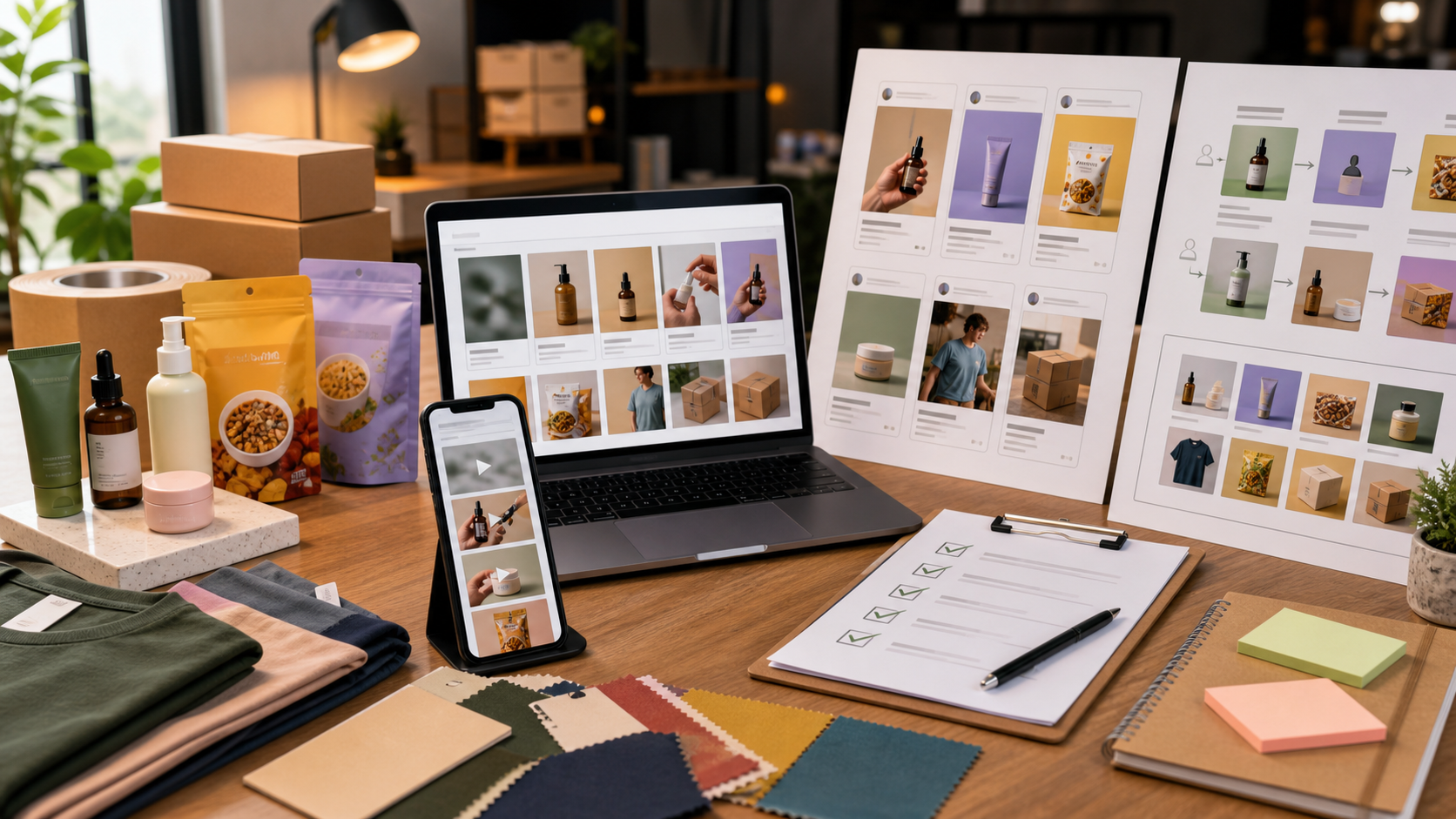
Indian D2C product demo ad creative board with vertical video frames, product samples, and static ad variants

What are product demo ad creatives?

Product demo ad creatives are paid-social assets that show a product doing one useful job instead of only describing benefits. A strong demo creative has a visible product, a buyer context, one product action, one reason to care, and a CTA that fits the stage of the funnel.

Product demo ad creative is the ad format that makes the product action visible before the viewer has to trust the claim.

Use /blog/d2c-ad-creative-examples-india when the team still needs broad format ideas.

Use /blog/static-ad-creatives-d2c-india when the demo has already taught the buyer and the next asset should repeat the offer.

Generate the first demo-style draft in /dashboard/ugc-video once the product action and buyer hesitation are clear.

Which product demo ad should you create first?

Create the smallest demo that removes the biggest buying doubt. If shoppers do not understand the product, show the first use. If they doubt the result, show the mechanism without exaggeration. If they compare alternatives, show the product solving one narrow routine better than the old habit.

Confusing product: open with the product in hand, then show one use in the first three seconds.

Crowded category: show the exact routine where this product is easier, cleaner, faster, or more convenient.

Trust gap: use a creator-style walkthrough, not a fake testimonial or unsupported claim.

Price hesitation: show quantity, use count, bundle logic, or avoided waste in a static follow-up.

Regional market: keep the same product action but change the spoken line to natural Hindi, Hinglish, Tamil, Telugu, Marathi, Kannada, Bengali, Malayalam, or Gujarati.

How should the first frame of a product demo ad work?

The first frame should make the product and the problem visible before the viewer scrolls. Do not start with a logo, vague lifestyle shot, or long setup. Start with the product, hand, surface, routine, or before-state that tells the buyer what category they are watching.

Beauty: hand holding the product beside the texture, vanity, mirror, or routine step.

Food and beverage: pack, pour, bite, sip, bowl, lunchbox, or chai-break moment.

Fashion: garment on body, mirror fit check, fabric close-up, or occasion change.

Home: messy drawer, kitchen counter, storage problem, cleaning action, or small apartment context.

Wellness: conservative routine scene that shows habit fit without medical-result promises.

Source note: Meta's video ad format guidance emphasizes mobile-ready creative and formats built for video placements, facebook.com/business/ads/video-ad-format.

How do you write a UGC product demo script?

Write a UGC product demo script as a sequence of decisions: hook, product action, proof cue, objection answer, and CTA. Keep the first version short enough to film or generate in one scene. If the script needs three locations, split it into separate tests.

Hook: say the buyer problem in the language the customer would use.

Action: show one physical product use, not a montage of benefits.

Proof cue: use visible texture, size, routine, comparison, quantity, or convenience instead of a vague claim.

Objection: answer one doubt such as mess, fit, taste, effort, price, or time.

CTA: send cold traffic to the product page, warm traffic to the offer, and creative teams to /dashboard/ugc-video for more variants.

Use /blog/ugc-creator-brief-template-india when the same demo needs to be filmed by a real creator.

When should a product demo become a static ad?

Turn the demo into a static ad after the buyer already understands the product action. Static follow-ups work best for retargeting, sale reminders, review snippets, bundle pushes, comparison cards, and product-led offer clarity. The static should repeat the winning idea, not introduce a new story.

Video demo: use it when buyers need to see the product being used.

Static offer card: use it when buyers understood the demo but need a reason to act now.

Comparison card: use it when the old routine versus new routine is the main decision.

Review card: use it when trust is the remaining issue and the claim has been reviewed.

Create static follow-ups in /dashboard/static-ads after the video angle is clear.

Source note: Google's video creative ABCDs framework focuses on attention, branding, connection, and direction, support.google.com/google-ads/answer/14783551.

How do you prompt AI to create product demo ads?

Prompt AI with the product, buyer, setting, action, hook, duration, platform, language, and guardrails. A vague prompt creates generic movement. A useful prompt creates one product moment that a performance marketer can review for product accuracy, claim safety, mobile crop, and next-step clarity.

Prompt structure: Indian buyer, product image, everyday setting, one product action, one spoken line, one CTA, no invented text on packaging.

Good video prompt: show a founder-friendly product demo in an Indian kitchen, one hand action, one Hinglish hook, vertical 9:16 framing, no readable fake labels.

Good static prompt: product pack on a clean surface, one offer hierarchy, one proof cue, mobile-safe crop, no extra brand claims.

Bad prompt: make a viral ad for this product with lots of benefits and premium lifestyle visuals.

Plan the test matrix with /blog/ad-creative-testing-india before changing hook, language, offer, and format together.

Why do product demo ad creatives fail?

Product demo ads fail when the product is too late, the action is unclear, the claim is bigger than the visual proof, or the format is solving the wrong problem. Fix the demo before blaming the audience. Most weak demos need a clearer first frame, simpler action, safer claim, or tighter CTA.

Bad: a beautiful lifestyle scene where the product appears after five seconds.

Better: product visible in the first frame with the use case obvious.

Bad: a creator saying five benefits without touching the product.

Better: one benefit supported by one visible action.

Bad: making a new creative by changing format, hook, offer, language, and landing page at once.

Better: keep the product action constant and test only hooks or only static follow-ups.

Use /blog/d2c-video-ads-creative-fatigue-india when a previously strong demo needs refresh variants.

Product demo creative decision table

Buyer doubt
Demo creative to make
What to review before launch
What does this product do?
Product-in-hand first-use video
Product appears in frame one and the action is clear
Will it fit my routine?
Everyday Indian setting demo
The setting matches the buyer, not a generic stock scene
Is it worth the price?
Value-per-use static follow-up
Offer and quantity are clear on mobile
Is the claim believable?
Mechanism or texture demo
Visual proof supports the claim without exaggeration
Will this work in my language or region?
Regional UGC variant
Same product action, natural spoken line, native review
Have viewers seen the video too often?
Hook and first-frame refresh
Only the opening changes, not every test variable

Best For

Indian D2C brands that need product-led Meta, Instagram, or YouTube Shorts ads

Performance marketers turning product pages into video and static creative tests

Agencies building repeatable UGC demo prompts for multiple ecommerce categories

Founders who need a clear first ad before hiring creators or running a full shoot

Not Ideal For

Copying competitor demos frame for frame

Making medical, financial, or regulated claims without review

Imitating a known creator, celebrity, influencer, or competitor voice

Replacing real creator footage when the campaign depends on human identity or testimonial trust

Examples

Skincare: hand applies one texture at a vanity and explains why it fits a morning routine.
Snack: pack opens on a kitchen counter, one bite or pour happens, and the CTA pushes the trial bundle.
Fashion: mirror try-on shows fit, movement, and one occasion instead of a generic model pose.
Home: messy drawer or kitchen problem appears first, then one product action fixes the visible issue.
Wellness: breakfast-table routine shows habit fit with conservative, non-medical language.
Regional demo: the same product action is rebuilt with a natural Hindi or Tamil line after the base demo proves clarity.
Static follow-up: winning video hook becomes a product-plus-offer card for warm retargeting.
Creative refresh: the first frame changes from lifestyle setup to direct product action while the offer and landing page stay the same.

FAQs

What is a product demo ad creative?

A product demo ad creative is a paid-social ad that shows the product doing one useful job. It can be a UGC video, product-in-hand clip, static follow-up, comparison card, or regional-language variant built around one visible product action.

What should the first frame of a product demo ad show?

The first frame should show the product, product action, buyer problem, or use context immediately. Avoid starting with a logo, generic lifestyle shot, long setup, or text-only promise because mobile viewers may scroll before the product becomes clear.

How do I make product demo ads with AI?

Give AI a product image, buyer type, Indian setting, one product action, one spoken hook, target format, CTA, and guardrails. Review the output for product accuracy, claim safety, mobile crop, language fit, and whether the product is visible quickly.

Should product demo ads be video or static?

Use video when buyers need to see how the product works. Use static ads when buyers already understand the product and need an offer, proof point, bundle, review cue, or retargeting reminder. Many campaigns need both.

Why do product demo ads fail?

They fail when the product appears too late, the action is unclear, the claim is unsupported, the scene feels generic, or the CTA does not match the buyer stage. Simplify the demo to one action and one buyer hesitation before making more variants.

Can AI UGC replace real creators?

AI UGC is best for fast creative testing, early campaign drafts, hook exploration, and low-cost content volume. Real creators still matter for influencer distribution, creator trust, and testimonial rights.

Does AI UGC work for Indian audiences?

It can work well when the prompt includes Indian personas, local language, realistic home settings, product-in-hand moments, and duration-safe dialogue instead of generic global stock-style scenes.

What assets do I need to start?

A product name, a short product brief, and ideally one clean product image are enough to generate the first AI UGC video or product visual.