Facebook Video Ads

D2C Ad CreativesBy Indian UGC Team10 min read

Facebook Video Ad Creator: India D2C Workflow

A good Facebook video ad creator workflow starts with one buyer hesitation, one product action, one vertical mobile scene, and one CTA. Indian D2C teams should create the smallest usable UGC-style video first, review it for product accuracy, crop, language, and claim safety, then turn the winning hook into static, Hindi, Hinglish, or regional variants.

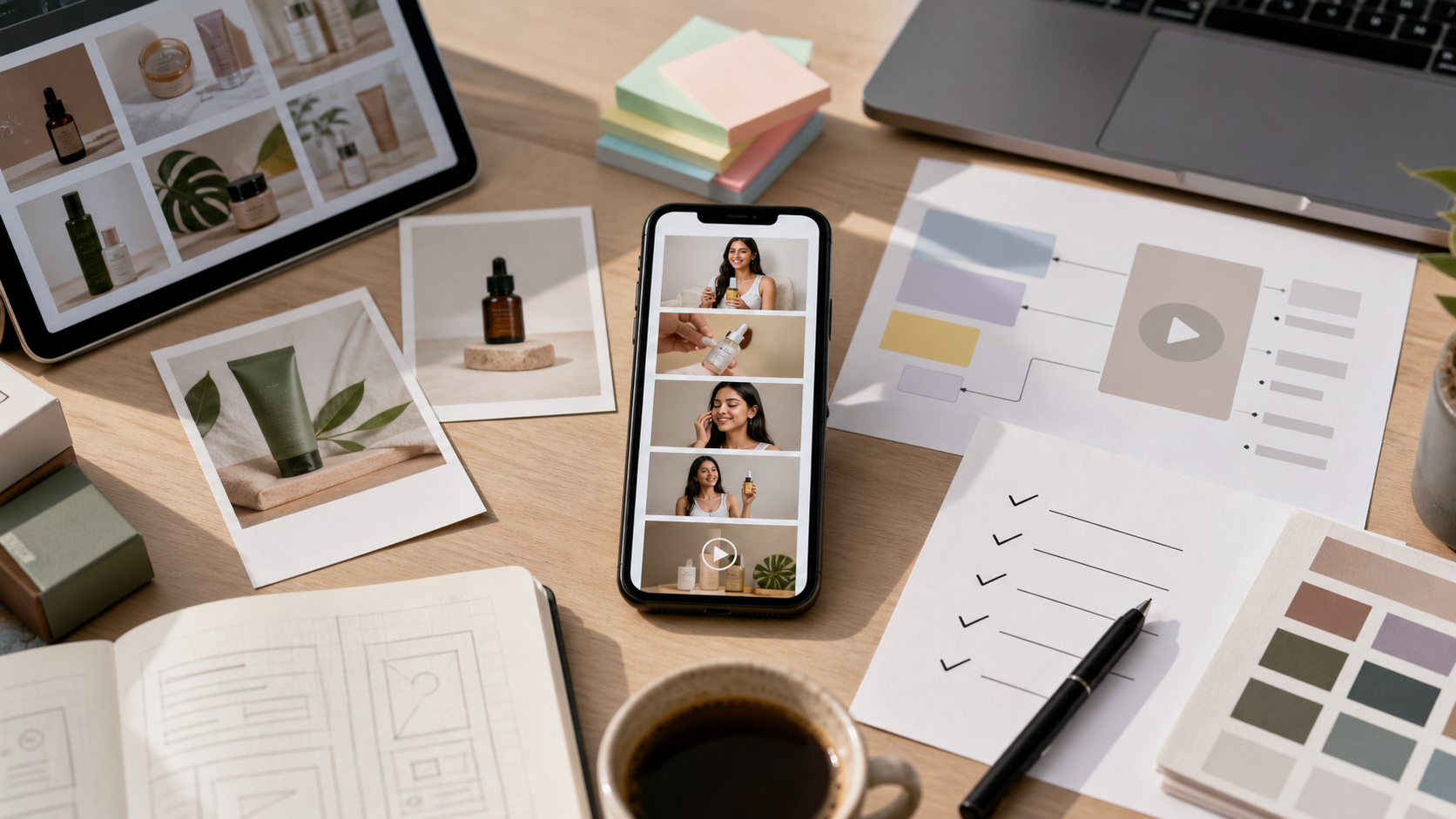
Indian D2C marketing team planning Facebook video ad creatives with product storyboards and mobile ad previews

What is a Facebook video ad creator?

A Facebook video ad creator is a tool or workflow that helps a brand turn a product, offer, image, script, or prompt into short video creative for Meta placements. For D2C brands, the useful output is not a generic brand montage. It is a mobile-first ad that shows the product quickly, explains one reason to care, and sends the viewer to the right next step.

Facebook video ad creator means a workflow for producing videos that can run across Meta placements such as Facebook Feed, Reels, Stories, and Instagram inventory.

Use /blog/facebook-ad-creatives-for-d2c-india when you need the broader creative planning guide.

Use /blog/ugc-video-ads-india when the base UGC ad structure is unclear.

Use /dashboard/ugc-video when the first video prompt is ready.

Use /dashboard/static-ads after the winning video hook needs a retargeting image or offer card.

Which Facebook video ad should you create first?

Create the video that removes the buyer's biggest doubt. If shoppers do not understand the product, make a product-in-hand demo. If they understand it but do not trust the benefit, answer the objection. If the category is crowded, show one practical comparison. If the price feels high, explain value, routine fit, or bundle logic before testing a discount.

New product: one clear demo in an Indian home, office, kitchen, vanity, wardrobe, commute, or unboxing setting.

Beauty and wellness: show texture, routine timing, or ease of use without exaggerated outcome claims.

Food and beverage: show taste, serving, chai break, breakfast, office snack, or family-use context.

Fashion and accessories: show fit, fabric movement, styling, size confidence, or occasion use.

Home and utility: show the messy moment, product action, and clean result.

If the product image must become motion, use /blog/product-image-to-video-ai-ads-india before generating many variants.

How do you write a Facebook video ad prompt?

Write the prompt like a tight production brief: product, buyer, hesitation, Indian setting, creator persona, one product action, one spoken line, format, and CTA. A narrow prompt gives the model fewer chances to distort the product, invent unsafe claims, or make a polished video that cannot work as an ad.

Prompt formula: product plus buyer hesitation plus Indian setting plus creator persona plus product action plus hook plus CTA.

Skincare example: creator at a bathroom mirror shows serum texture, says when it fits the routine, product visible, vertical mobile ad, no readable label text.

Snack example: office worker opens the pack during a chai break, takes one bite, gives one value line, direct shop CTA.

Fashion example: mirror try-on showing fabric movement and one occasion cue, not a long outfit montage.

Use /blog/ugc-video-generator-prompts-india when weak prompts are causing weak AI video drafts.

Use /blog/ugc-hooks-examples-india when the generated clip looks usable but the first line is forgettable.

What Facebook video ad size and format should you use?

Start with vertical mobile video because most D2C testing happens inside feed, Reels, and Stories-style placements. Keep the product and hook understandable without tiny text, avoid important elements at the edges, and make sure the first frame still works if audio is muted or the viewer scrolls quickly.

Default creative: vertical 9:16 video for Reels and Stories-style testing.

Reusable fallback: square or 4:5 crop when the same idea must work in feed placements.

Safe-zone rule: keep product, face, hand action, and CTA away from the extreme top and bottom edges.

First-frame rule: the product category and buyer problem should be clear before the video needs explanation.

Source note: Meta video ad format guidance emphasizes mobile-ready video creative, facebook.com/business/ads/video-ad-format.

Source note: Meta's ads guide documents creative placements and specs across Facebook and Instagram, facebook.com/business/ads-guide.

What should you check before launching the Facebook video ad?

Review the ad like a product owner and a media buyer. Launch only if the product still looks like the SKU, the first three seconds explain the ad job, the spoken line sounds natural, the claim is safe, the crop works on mobile, and the CTA matches the buyer's stage.

Product accuracy: shape, color, texture, packaging, scale, and use action still match the real item.

Mobile clarity: the product and hook are understandable in a vertical feed without tiny text.

Language fit: English, Hinglish, Hindi, or regional wording sounds natural for the audience.

Claims check: remove medical, financial, legal, exaggerated, or unverifiable promises.

CTA check: send cold buyers to a product page, warm buyers to an offer, and hesitant buyers to proof or comparison.

Source note: Google's video creative ABCDs focus on attention, branding, connection, and direction, support.google.com/google-ads/answer/14783551.

When should a Facebook video become a static ad instead?

Turn the winning video idea into a static ad when the product is understood but the buyer needs one message repeated cleanly. Video is better for demonstration, trust, routine context, and objection handling. Static ads are better for retargeting, offer framing, bundle pushes, comparison cards, and fast refreshes after a video proves the angle.

Use video when buyers need to see the product in use.

Use static when the missing piece is the offer, price anchor, benefit hierarchy, packshot, proof, or comparison layout.

Turn the strongest video hook into a static retargeting ad instead of generating unrelated videos.

Use /blog/static-ad-creatives-d2c-india to choose the first static follow-up format.

Use /blog/ad-creative-testing-india to avoid changing hook, scene, language, and offer at the same time.

Facebook video ad creator decision table

Ad job
Best first video
Do not launch if
Explain a new product
Creator-style product-in-hand demo
The product action is unclear in the first three seconds
Handle one objection
One spoken objection-answer scene
The line sounds like brand copy or overclaims the result
Compare a crowded category
One practical tradeoff without naming competitors
The ad copies a competitor or attacks them directly
Test local relevance
Same approved scene with Hindi, Hinglish, or one regional line
The language sounds translated or formal
Use one product image
Image-to-video scene with one motion
The SKU shape, color, or label changes too much
Retarget warm buyers
Static follow-up from the winning hook
Another video repeats the same unclear offer

Best For

Indian D2C founders planning Facebook and Instagram video ad tests

Performance marketers who need faster UGC-style creative before hiring creators

Ecommerce teams turning product photos into mobile video ad drafts

Agencies building Meta creative variants for Indian product categories

Not Ideal For

Copying a real creator, influencer, celebrity, customer, or competitor ad

Regulated claims without review

Campaigns where exact packaging text must be readable in every frame

Replacing paid-usage rights checks for filmed creator content

Examples

Skincare: vanity-table creator shows texture, explains when to use the product, and sends viewers to the product page.
Snack: office-desk chai-break moment with one taste reaction and a value-per-use line.
Fashion: mirror try-on focused on fit, fabric movement, and one occasion cue.
Home product: messy drawer, one product action, clean reveal, and a simple shop CTA.
Pet care: living-room demo with the product visible and one owner-friendly use case.
Regional variant: keep the approved scene and rewrite only the spoken line for natural Hindi, Hinglish, Tamil, Telugu, Marathi, Kannada, Bengali, Malayalam, or Gujarati.

FAQs

What is a Facebook video ad creator?

A Facebook video ad creator is a tool or workflow for making short videos that can run across Meta placements. For D2C brands, the best workflow turns one product, buyer hesitation, product action, and CTA into a mobile-first ad draft.

What Facebook video ad should I create first?

Create the ad that removes the biggest buying doubt. Start with a product demo when buyers do not understand the item, an objection-answer video when trust is weak, a comparison when the category is crowded, or a value explanation when price is the issue.

Can AI create Facebook video ads for Indian brands?

Yes. AI can create Facebook video ad drafts when the prompt includes one product, one buyer, one Indian setting, one product action, one natural spoken line, and one CTA. Review every output for product accuracy, crop, language, and claim safety.

What size should a Facebook video ad be?

Start with vertical 9:16 video for Reels and Stories-style placements, then create square or 4:5 crops if the same idea must work in feed placements. Keep the product, face, hand action, and CTA away from the extreme edges.

Should I create Facebook video ads or static ads first?

Create video first when buyers need demonstration, trust, routine context, or objection handling. Create static ads first when the product and offer are already clear and the campaign needs retargeting, comparison cards, bundle framing, or fast refreshes.

Can AI UGC replace real creators?

AI UGC is best for fast creative testing, early campaign drafts, hook exploration, and low-cost content volume. Real creators still matter for influencer distribution, creator trust, and testimonial rights.

Does AI UGC work for Indian audiences?

It can work well when the prompt includes Indian personas, local language, realistic home settings, product-in-hand moments, and duration-safe dialogue instead of generic global stock-style scenes.

What assets do I need to start?

A product name, a short product brief, and ideally one clean product image are enough to generate the first AI UGC video or product visual.