Telugu UGC Ads

Regional Language UGCBy IndianUGC Team9 min read

Telugu UGC Ads: Script, Creator Brief, and QA Guide

Telugu UGC ads are short creator-style product videos designed for Telugu-speaking buyers. The reliable workflow is to define the exact market and buyer hesitation, preserve product facts, adapt the intended meaning into natural spoken Telugu, show one clear product action, and use separate fluent-language and brand-accuracy reviews before testing the ad against a proven control.

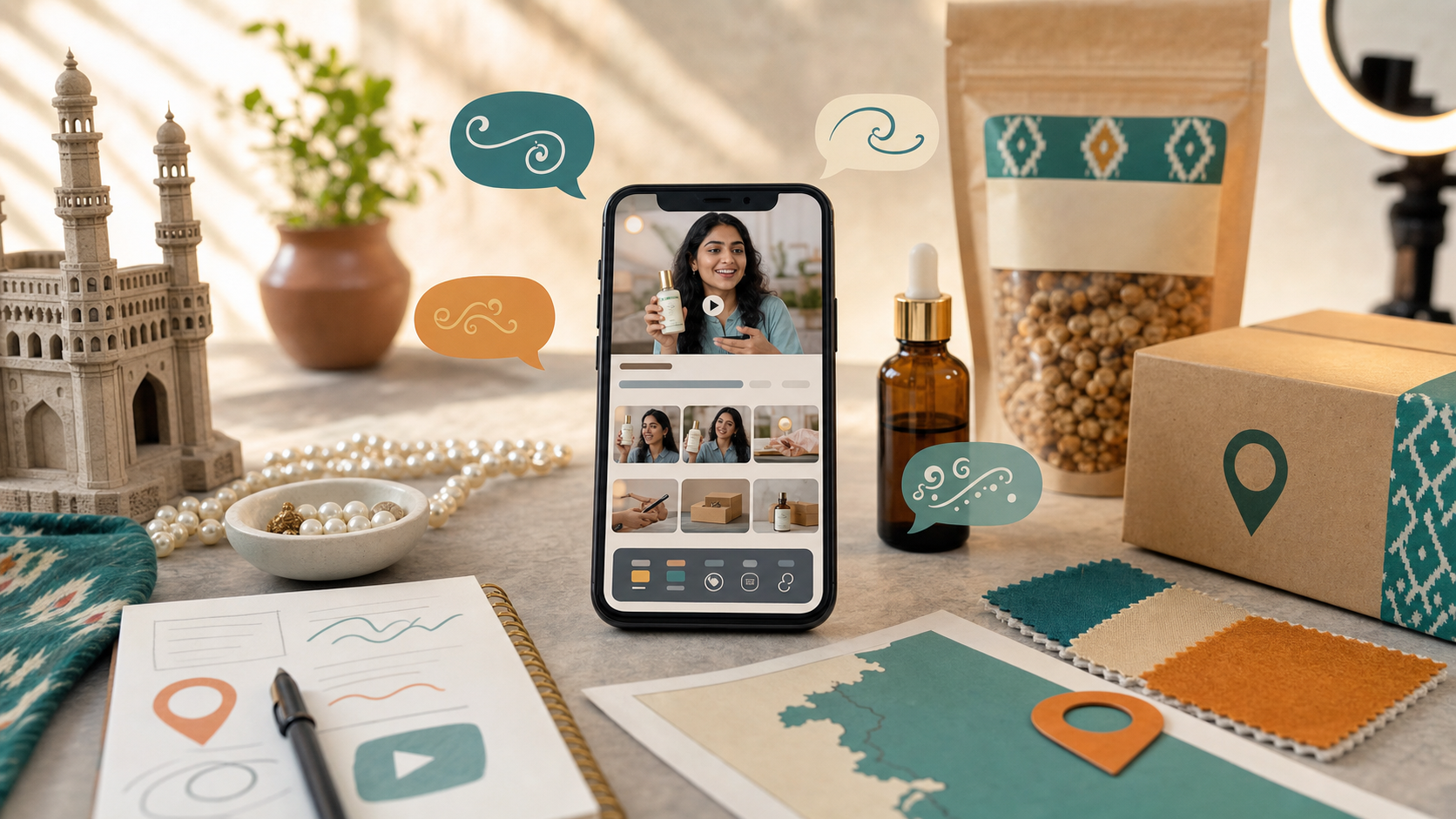
Telugu-speaking creator recording a vertical product demonstration in a Hyderabad home

What is a Telugu UGC ad?

A Telugu UGC ad is a creator-style product video that uses natural spoken Telugu, a relevant persona, a familiar situation, and a visible product action for a Telugu-speaking audience. It is more than an English ad with translated audio. The hook, cadence, examples, setting, captions, and CTA should feel native while the product, offer, and approved claims remain accurate.

Build each video around one buyer hesitation, one proof action, and one CTA.

Choose the audience before choosing vocabulary: Telangana, Andhra Pradesh, or a narrower city and buyer segment.

Preserve approved pack details, price, usage instructions, warranty, ingredients, and claim boundaries.

Use the broader process in /blog/regional-language-ad-localization-checklist-india before scaling languages.

For reusing a proven visual with a new spoken track, follow /blog/ai-video-dubbing-ads-india and review pronunciation, timing, lip sync, and captions separately.

How should you choose the right Telugu for an ad?

Choose the spoken register from the buyer, region, category, and situation instead of requesting generic Telugu. A Hyderabad software professional shopping for skincare may mix familiar English category words differently from a family buyer in Vijayawada. Give a fluent reviewer the intended meaning and audience context, then let them write the shortest natural line that preserves the commercial point.

Define the target: location, age range, category familiarity, and where the ad will run.

State whether natural English mixing is welcome; do not force either pure Telugu or fashionable slang.

Mark product terms and regulated wording that cannot be improvised.

Read the line aloud against the planned shot and cut anything that requires rushed delivery.

Compare the language decision with /blog/tamil-ugc-ads-india when planning a South India campaign.

What is the fastest Telugu UGC production workflow?

Start from one product angle that already deserves a test. Write the buyer problem and product truth in plain language, adapt one short Telugu version, create a rough 15-30 second vertical draft, and review it before producing more hooks. This catches unnatural dialogue, pronunciation problems, and altered product details while the draft is still cheap to change.

Step 1: choose one buyer hesitation supported by reviews, calls, or campaign learning.

Step 2: choose one product action that answers that hesitation on screen.

Step 3: write the intended meaning, then have a fluent speaker adapt it into spoken Telugu.

Step 4: create simple shots with one location and limited motion.

Step 5: add accurate Telugu captions during editing rather than generating text inside the scene.

Step 6: create the reviewed first draft in /dashboard/ugc-video before multiplying variants.

How do you write a Telugu UGC creator brief?

A useful Telugu creator brief explains who is watching, what they doubt, what the product must visibly do, which facts cannot change, and how the recommendation should sound. Brief meaning and constraints rather than dictating every translated word. That gives a fluent creator room to sound human without turning an approved benefit into an invented testimonial.

Audience: Telugu-speaking first-time skincare buyers aged 25-34 in Hyderabad.

Hesitation: the product may feel heavy during a warm commute.

Action: show a small amount on the hand and the actual application step.

Required truth: use only the brand-approved texture description.

Delivery: practical friend explaining a routine, with natural category words.

CTA: invite the viewer to check product details; do not invent scarcity, results, or personal experience.

What should you check before publishing a Telugu video ad?

Use two reviewers with distinct jobs. A fluent Telugu reviewer checks meaning, pronunciation, cadence, register, and captions. A brand reviewer checks the real SKU, product action, offer, claims, rights, and destination page. Finally, watch the export once with sound and once muted on a phone; both versions should communicate the same honest argument.

Language: natural delivery, correct pronunciation, accurate captions, and no unintended double meaning.

Product: correct pack, colour, label, size, price, usage, and availability.

Creative: product appears early and the action remains understandable without audio.

Compliance: no fabricated review, endorsement, result, urgency, or health claim.

Platform: safe 9:16 crop, readable captions, licensed assets, and a visible CTA.

Run /blog/ad-creative-audit-checklist-india before increasing spend.

How should brands test Telugu UGC ads?

Compare one reviewed Telugu adaptation with a proven control while holding the product angle, offer, audience logic, landing page, placement, and measurement stable. Change the language first, then test hooks inside the winning language. Evaluate attention, qualified clicks, conversion rate, purchase quality, and comment sentiment together because cheap views alone do not prove commercial improvement.

Round one: proven control versus the same meaning in natural Telugu.

Round two: keep Telugu and the product action stable, then compare two opening hooks.

Round three: test a Telangana- or Andhra Pradesh-specific context only when customer evidence justifies it.

Stop or revise when fluent reviewers flag awkward delivery or clicks rise while purchase quality falls.

Use /blog/ad-creative-testing-india to keep creative learning separate from media noise.

Telugu UGC production decision table

Campaign situation
Best production choice
Main failure to avoid
Testing a proven angle cheaply
AI UGC draft plus fluent Telugu review
Presenting synthetic speech as a real testimonial
Personal experience drives the claim
Contract a real Telugu-speaking creator
Inventing experience, identity, or endorsement
Exact handling or fit is essential
Film the real product with a tight brief
Letting generated footage alter the SKU
English winner needs localization
Meaning-first Telugu adaptation
Literal translation with unnatural cadence
Language is proven; hooks need scale
Generate controlled Telugu hook variants
Changing offer, audience, and scene together

Best For

D2C brands with meaningful demand in Telangana or Andhra Pradesh

Performance teams localizing an already proven product argument

Agencies with access to a fluent Telugu reviewer

Teams testing controlled regional-language variants

Not Ideal For

Word-for-word translation without fluent review

Fabricated testimonials, endorsements, or product results

Tests that change language, offer, audience, and landing page together

Regulated claims without appropriate compliance review

Examples

Skincare: adapt a texture objection for a Hyderabad morning while keeping the approved product claim unchanged.
Food: demonstrate the real preparation step and let a fluent reviewer choose natural taste language.
Fashion: show accurate fabric movement or styling without treating generated fit as sizing proof.
Home utility: demonstrate one setup action in a familiar room instead of translating a feature list.

FAQs

What are Telugu UGC ads?

Telugu UGC ads are short creator-style product videos designed for Telugu-speaking audiences. They use natural spoken Telugu, an appropriate creator persona and setting, one visible product action, and a clear CTA while preserving accurate product and offer details.

Should a Telugu ad script be translated word for word?

No. Preserve the intended meaning, approved product facts, and claim boundaries, then let a fluent Telugu speaker adapt the phrasing for the defined audience. Literal translation often creates formal, rushed, or unnatural spoken dialogue.

Can AI create Telugu UGC videos?

AI can create useful Telugu concept drafts and controlled variants. A fluent speaker should review meaning, pronunciation, cadence, and captions, while a separate brand reviewer checks the product, offer, claims, rights, and landing page.

How long should a Telugu UGC ad be?

A focused 15-30 second draft is a practical starting point for paid social. Use only the dialogue that fits naturally while showing one buyer problem, one product action, and one CTA; split a crowded concept into separate videos.

How do I test Telugu UGC against English or Hinglish?

Keep the product angle, offer, audience logic, landing page, placement, and measurement stable, then compare the control with the same meaning adapted into natural Telugu. Judge attention and qualified conversion outcomes together.

Can AI UGC replace real creators?

AI UGC is best for fast creative testing, early campaign drafts, hook exploration, and low-cost content volume. Real creators still matter for influencer distribution, creator trust, and testimonial rights.

Does AI UGC work for Indian audiences?

It can work well when the prompt includes Indian personas, local language, realistic home settings, product-in-hand moments, and duration-safe dialogue instead of generic global stock-style scenes.

What assets do I need to start?

A product name, a short product brief, and ideally one clean product image are enough to generate the first AI UGC video or product visual.