Creator Brief Template

UGC Creator SourcingBy Indian UGC Team11 min read

UGC Creator Brief Template for Indian D2C Ads

A strong UGC brief tells the creator exactly what paid-social asset to make: the buyer problem, product action, scene, language, proof line, CTA, deliverables, usage rights, deadline, revision rules, and banned claims. For Indian D2C brands, the fastest workflow is to test the angle with an AI UGC draft, then send the winning pattern to a creator.

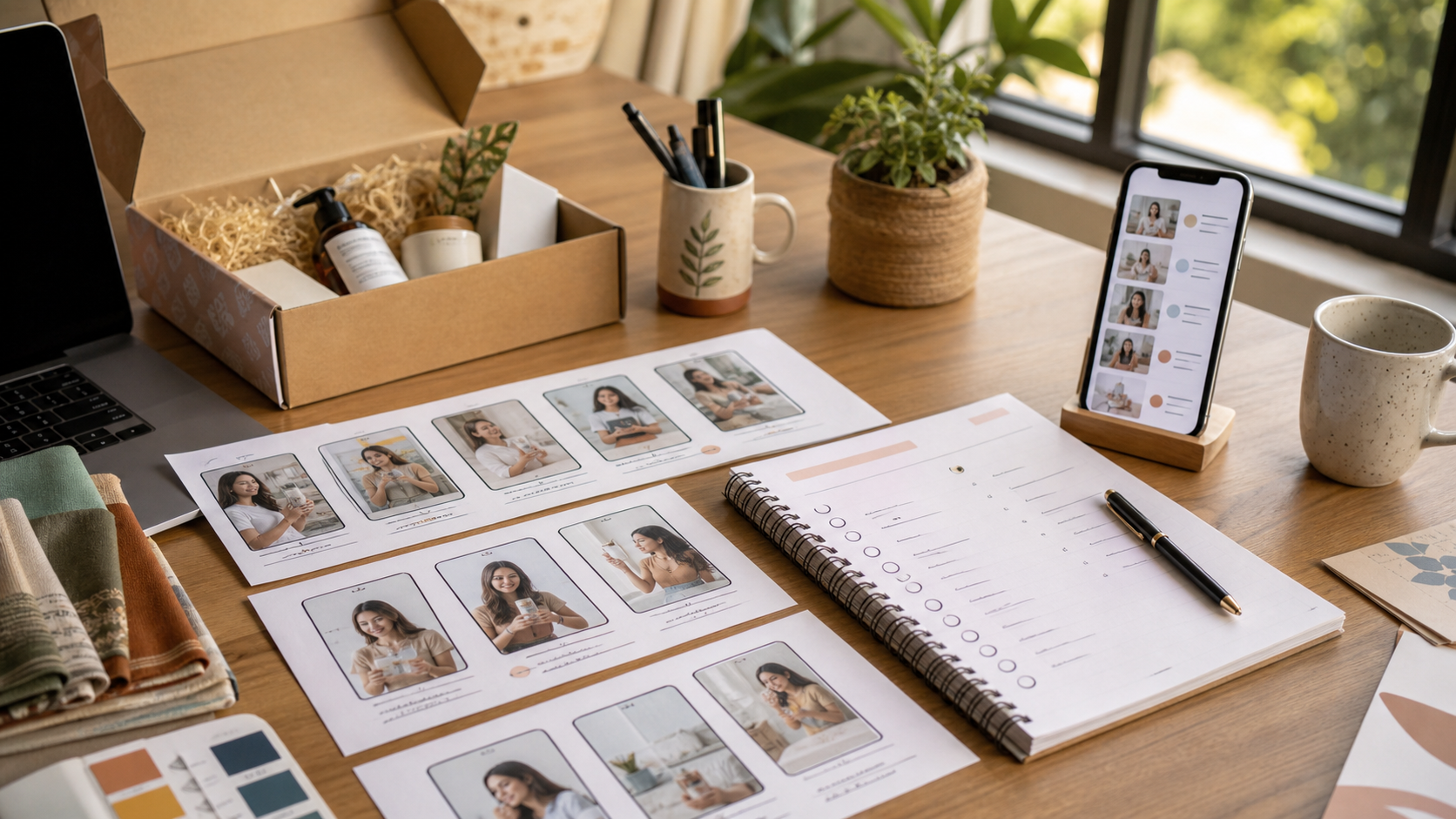
Indian D2C marketing desk with UGC creator brief checklist, product samples, and video storyboard frames

What is a UGC brief?

A UGC brief is a one-page production instruction for a creator-style ad. It translates the brand's product, buyer problem, scene, spoken line, deliverable, usage-right need, and review rules into a format a creator can film or an AI UGC workflow can draft. The brief should remove guesswork, not inspire vague creativity.

Start with the creator role here: /blog/what-is-a-ugc-creator

Use /blog/how-to-find-ugc-creators-india before sending briefs to a shortlist

Budget filmed variants with /blog/ugc-creator-rates-india

Confirm paid usage with /blog/ugc-usage-rights-india

Generate the first angle draft in /dashboard/ugc-video before paying for many filmed versions

What should a UGC creator brief include?

A UGC creator brief should include one buyer hesitation, one product action, one scene, one hook, one proof line, one CTA, exact deliverables, usage window, language, deadline, revision terms, claim limits, and examples of what not to say. If the brief asks for a viral video, it is too vague.

Product: name, category, price context, image, and the one feature that must be visible

Buyer problem: the hesitation the ad must answer, such as trust, taste, fit, effort, price, or routine friction

Scene: kitchen, vanity, desk, wardrobe mirror, commute, store, unboxing table, or another believable Indian setting

Language: English, Hinglish, Hindi, Tamil, Telugu, Kannada, Marathi, Bengali, or another state-market variant

Deliverable: raw clip, edited vertical ad, hook variants, stills, subtitles, creator post, or whitelisted asset

Review rule: product accuracy, claim safety, mobile crop, disclosure, and CTA clarity

Which UGC brief template should Indian brands use first?

Use a paid-social brief first, not a generic influencer collaboration brief. A paid-social UGC brief should make the asset easy to test in Meta, Instagram, YouTube Shorts, or marketplace retargeting. The simplest version is problem, scene, action, proof, CTA, usage, and review.

Problem: 'New moms do not trust the ingredient list from one static image'

Scene: 'Kitchen counter unboxing, product close to camera, natural morning light'

Action: 'Open the pack, show texture, use one serving, react naturally'

Proof: 'Mention one visible reason to believe, not a medical-style claim'

CTA: 'Visit product page, trial pack, WhatsApp order, size guide, or offer page'

Usage: 'Brand can run the edited 20-second video as Meta and Instagram ads for three months in India'

How do you turn a UGC brief into an AI UGC draft?

Turn the brief into an AI UGC draft by removing everything that cannot be shown in one short scene. Keep one creator, one setting, one product action, and one spoken line. Generate separate drafts for different hooks, languages, and scenes instead of forcing the whole campaign into one video.

Use /blog/ugc-video-generator-prompts-india when the brief needs to become a prompt-ready video instruction

Use /blog/ugc-video-script-examples-india when the hook, proof, objection, or CTA is still weak

Use /blog/ad-creative-testing-india to decide which creative variable to test first

Use /blog/regional-language-ugc-ads-india when the same brief needs Hindi, Hinglish, Tamil, Telugu, Kannada, Marathi, or Bengali variants

Use /dashboard/static-ads after a winning video angle needs retargeting creatives

Why do UGC briefs fail?

UGC briefs fail when they ask for popularity instead of a job. Common failures include too many messages, no visible product action, unclear usage rights, unsupported claims, vague language direction, no revision rule, and no mobile-first review. A creator cannot rescue a confused brief.

Bad brief: make this viral for Instagram

Better brief: answer this buyer hesitation with this product action in this setting

Bad brief: create something aesthetic

Better brief: show opening, applying, tasting, wearing, comparing, cleaning, or packing the product

Bad brief: one video for every channel

Better brief: one 20-second vertical ad plus clearly named edits and usage rights

Source note: Meta recommends mobile-first creative formats for video ads, facebook.com/business/help/188534925073536

How should teams review a creator brief before production?

Review the brief like an ad asset before production begins. The team should be able to identify the first three seconds, the visible product moment, the proof line, the CTA, the usage window, and the claim risk without asking the creator to interpret strategy. If any one is missing, fix the brief before shipping product samples.

Attention: does the first frame show a problem, product, or surprising contrast?

Branding: is the product visible early without feeling like a hard-sell TV ad?

Connection: does the scene match the buyer's real routine, city, language, or category context?

Direction: is the CTA clear enough for a paid-social viewer?

Source note: Google's ABCD video framework covers Attention, Branding, Connection, and Direction, support.google.com/google-ads/answer/14783551

Source note: ASCI influencer guidance requires disclosure when there is a material connection, ascionline.in/social/wp-content/uploads/2025/04/ASCI-Influencer-Guidelines.pdf

UGC brief decision table

Brief job
Use this format
What to check
Test first hook
AI UGC draft brief
Can the buyer problem be understood in the first three seconds?
Film real product use
Creator production brief
Is the product action specific enough to film without guessing?
Run paid ads
Usage-rights brief
Are platform, duration, geography, edits, and paid usage written down?
Create regional variants
Language variant brief
Does the spoken line sound native, not translated from English?
Compare creators
Portfolio review brief
Has the creator already shown the category, camera style, and product action?
Scale weekly creatives
Template plus AI drafts
Can the same structure produce new hooks without renegotiating every asset?

Best For

Indian D2C founders sending first UGC briefs

Performance marketers turning product angles into Meta and Instagram ad assets

Agencies managing creators, AI UGC drafts, and usage-right workflows

Brands scaling Hindi, Hinglish, or regional-language creator ads

Not Ideal For

Formal legal contract drafting

Celebrity influencer campaign strategy

Guaranteed creator pricing benchmarks

Medical, financial, legal, or high-claims campaigns without compliance review

Examples

Skincare brand: briefs one bathroom mirror routine, one texture close-up, one claim-safe proof line, and three months paid usage.
Snack brand: uses the same brief structure for English, Hinglish, and Hindi taste-test variants before hiring regional creators.
Fashion brand: asks for mirror try-on, fabric movement, size note, and raw footage rights so the team can cut multiple hooks.
Home product: defines messy-before, one cleaning action, clean-after, and static retargeting follow-up before shipping samples.
Agency workflow: drafts three AI UGC scenes, gets client approval on the strongest one, then sends that exact brief to creators.
Premium D2C product: separates creator filming, editing, posting, paid usage, and whitelisting in the brief so quotes are comparable.

FAQs

What is a UGC brief?

A UGC brief is a short production instruction that tells a creator what ad asset to make. It should define the buyer problem, product action, scene, language, hook, proof line, CTA, deliverables, usage rights, deadline, revisions, and claim limits.

What should a UGC creator brief include?

It should include the product, target buyer, buyer hesitation, required product action, scene, hook, proof line, CTA, deliverables, platform, usage window, edit rights, language, deadline, revision terms, disclosure needs, and examples of banned claims or awkward references.

Is a UGC brief different from an influencer brief?

Yes. A UGC brief usually focuses on the content asset the brand will use. An influencer brief may also cover creator posting, audience distribution, disclosure, campaign hashtags, and whitelisting. Some campaigns need both, but the content and distribution terms should be separated.

Should I create an AI UGC draft before sending a creator brief?

Yes when the hook, scene, language, or buyer hesitation is still uncertain. An AI UGC draft helps the team approve the direction before paying creators for real product handling, identity, posting, or paid-usage rights.

Why do UGC creator briefs fail?

They fail when the brief asks for a generic viral video, skips the product action, ignores paid usage, includes risky claims, gives no language direction, or asks one video to solve too many buyer objections.

Can AI UGC replace real creators?

AI UGC is best for fast creative testing, early campaign drafts, hook exploration, and low-cost content volume. Real creators still matter for influencer distribution, creator trust, and testimonial rights.

Does AI UGC work for Indian audiences?

It can work well when the prompt includes Indian personas, local language, realistic home settings, product-in-hand moments, and duration-safe dialogue instead of generic global stock-style scenes.

What assets do I need to start?

A product name, a short product brief, and ideally one clean product image are enough to generate the first AI UGC video or product visual.