Model-Led Product Photos

Product Photography AIBy Indian UGC Team11 min read

AI Model Product Photography for Indian Ecommerce

AI model product photography helps ecommerce teams place a product with a believable person, hand, routine, or styling context without running a full shoot for every idea. The safest Indian workflow is one clean product photo, one buyer use case, one model scene, one product action, and one review pass for product shape, skin/hand realism, claims, crop, and platform fit.

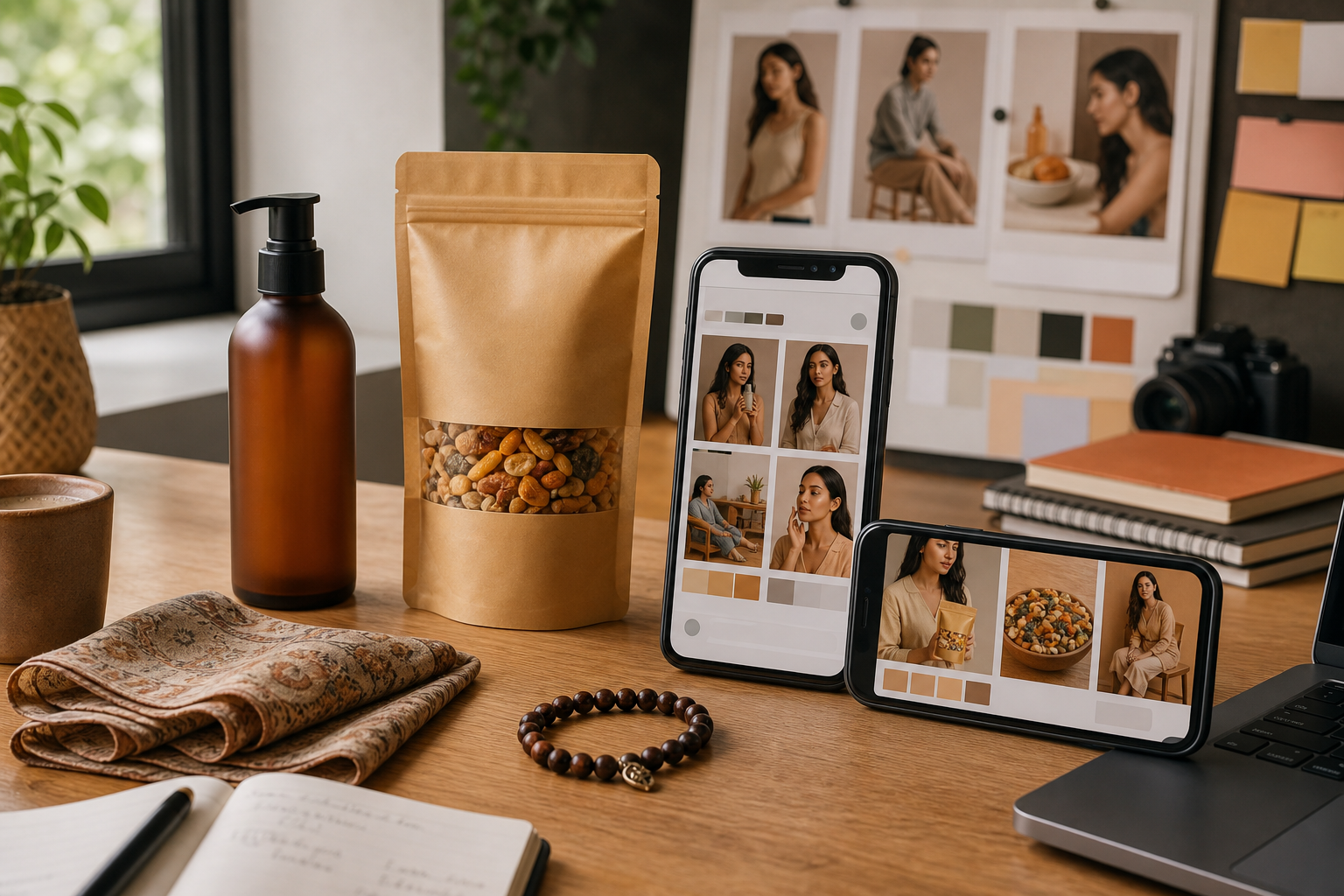
Indian ecommerce desk with product samples and AI model product photography previews for lifestyle ads

What is AI model product photography?

AI model product photography is a workflow for creating product visuals where a generated person, hand, or lifestyle scene helps explain the item. It is useful for fashion styling, skincare routines, food serving moments, accessories, home products, and paid-social stills. It should support the product decision, not replace product accuracy review.

AI model product photography is a model-led product image workflow that turns one product photo into lifestyle visuals with a person, hand, styling moment, or routine context.

Use the broader ecommerce workflow first if the team is still deciding where AI belongs: /blog/ai-product-photography-for-ecommerce-india

Use prompt formulas when the scene keeps changing the product: /blog/ai-product-photography-prompts-india

Use marketplace QA before listing support images: /blog/ai-product-photography-marketplace-images-india

Use /dashboard/static-ads after the model-led visual is approved and needs hooks, offers, or comparison layouts

When should Indian brands use a model-led AI product photo?

Use a model-led AI product photo when the buyer needs to understand fit, scale, routine, texture, or product-in-use context. A person in the image should answer a buying question. If the model is only decorative, start with a cleaner product photo or static ad instead.

Fashion and accessories: show styling, scale, hand placement, outfit context, or festive use

Beauty and personal care: show vanity routine, hand texture, bottle scale, or application moment without medical-style claims

Food and beverage: show serving size, snack moment, kitchen counter, office desk, or family-use context

Home goods: show scale, hand interaction, storage fit, before-after context, or room placement

Premium products: use restrained casting and fewer props so the product remains the main character

Which AI model photo should you create first?

Create the image that reduces the biggest buyer doubt first. If shoppers wonder how big the product is, show hand scale. If they wonder how it fits into a routine, show one realistic moment. If they wonder whether the style suits them, show a simple outfit or room context before trying dramatic campaign scenes.

Fast rule: one product, one person or hand, one setting, one use case, one crop

Skincare example: serum bottle on an Indian bathroom vanity with a hand showing texture near the product

Snack example: pouch held near chai or an office desk, with pack visibility preserved

Fashion example: accessory styled with one outfit cue, not a full editorial shoot

Home example: organizer held near the drawer or shelf it improves

If the best still image needs motion next, turn it into a short ad with /blog/product-image-to-video-ai-ads-india

How do you keep AI model product photos from looking fake?

Keep the scene physically simple. Most fake-looking outputs fail because the hand, model, light, product edge, shadow, or scale does not match. Use one product reference, one surface, one model interaction, and one light direction. Reject outputs where the product changes shape, label, color, or size.

Product accuracy: shape, label direction, variant, material, size, and color still match the real SKU

Human realism: fingers, wrist angle, face, clothing, and posture do not distract from the product

Scene realism: Indian home, kitchen, vanity, wardrobe, office, balcony, or commute context feels specific without clutter

Ad realism: crop works on mobile and the product is visible in the first glance

Source note: Meta's ad guide keeps creative specifications mobile-first, facebook.com/business/ads-guide

Source note: Google's retail image guidance asks merchants to show the product accurately and avoid promotional overlays in product images, support.google.com/merchants/answer/6324350

When should AI model photos become static ads or UGC videos?

Turn the approved model-led image into a static ad when the missing layer is a hook, offer, bundle, comparison, or retargeting message. Turn it into a UGC video when the buyer needs to see a product action. Do not force one image prompt to handle PDP trust, ad copy, and motion at the same time.

PDP model photo: one use case, product scale, believable person or hand, no sales layout

Marketplace support image: simple product-in-use context, reviewed against listing rules before upload

Static ad: approved image plus one hook, one benefit, one offer, or one comparison in /dashboard/static-ads

UGC video: same product and scene rewritten as one creator-style action in /dashboard/ugc-video

Use /blog/ai-ugc-video-generator-review-checklist-india before scaling model-led video variants

Why do AI model product photos fail?

AI model product photos fail when the model becomes more important than the product. The output may distort packaging, invent a hand pose, make the product too small, imply a claim, add fake text, or create a person who does not match the buyer context. Fix the asset by simplifying the pose and reviewing the ecommerce job first.

Bad: a glamorous model scene where the product is tiny and the pack changes shape

Better: a realistic hand-scale image where the product remains readable enough to recognize

Bad: a skincare image that implies a medical before-after result

Better: a routine image that shows texture, bottle size, or usage context without outcome claims

Bad: one image trying to be PDP photo, marketplace image, influencer post, and ad creative

Better: one approved product photo, then separate PDP, static ad, and UGC video variants

AI model product photo decision table

Image job
Best workflow
Review before publishing
Show product scale
Hand or simple model interaction
Does the product size look believable next to the person?
Create PDP lifestyle image
One model-led routine scene
Does the image answer a buyer question without hiding the SKU?
Create marketplace support visual
Simple product-in-use image
Are product accuracy, claims, and platform rules still safe?
Create paid-social still
Approved model photo plus static ad layout
Is there one hook and a clean mobile crop?
Create UGC video draft
Rewrite the still as one product action
Does motion preserve product shape, language, and CTA clarity?

Best For

Indian D2C teams that need model-led PDP lifestyle images without a new shoot for every SKU

Fashion, beauty, food, accessories, and home brands testing product-in-use visuals

Performance marketers creating static ads from approved product photos

Agencies building model-photo, static-ad, and AI UGC video variants from one source product image

Not Ideal For

Main packshots that need exact label, color, material, or dimension accuracy without review

Regulated products where model imagery could imply medical, financial, or safety outcomes

Celebrity, influencer, or real-person likeness usage without explicit rights

Luxury campaign shoots where casting, fabric, skin tone, lighting, and material control are the point

Examples

Skincare serum: hand applies a small texture sample beside the bottle on a compact bathroom vanity.
Snack pouch: creator hand holds the pack beside chai on an office desk for a realistic 4 pm use case.
Fashion accessory: model wears the accessory with one office or festive outfit cue, keeping the product close enough to inspect.
Haircare oil: bottle near a mirror and towel with a simple routine cue, no exaggerated hair-growth claim.
Home organizer: hand places the product inside a drawer so shoppers understand scale and use.
Copper bottle: product held at a breakfast table, with the bottle shape and finish preserved.
Regional campaign: the same approved visual becomes Hindi, Tamil, Telugu, Kannada, or Marathi static ad variants after product QA.
Video follow-up: the strongest model-led still becomes a 10-15 second product-in-hand scene in the UGC video workflow.

FAQs

What is AI model product photography?

AI model product photography is the use of AI to create product images with a generated person, hand, styling moment, or lifestyle context. It helps ecommerce teams show scale, use, routine, and fit, but every output still needs product accuracy review.

When should an Indian ecommerce brand use AI model photos?

Use AI model photos when the buyer needs product scale, fit, routine context, texture, or a product-in-use moment. If the image only adds a decorative person and does not make the product easier to buy, use a cleaner product photo or static ad instead.

How do I prompt AI model product photography?

Start with one product photo, one buyer, one Indian setting, one person or hand interaction, one camera crop, and product accuracy guardrails. Avoid multiple poses, readable text, several scenes, or exact label generation in one prompt.

Can AI model photos be used for Amazon or Flipkart listings?

Use them carefully as support images, not as unchecked main packshots. Review product accuracy, platform image rules, claims, props, and whether the image implies accessories or outcomes that are not included.

Should I use AI model photos or hire a real creator?

Use AI model photos for quick concepts, PDP support images, static ads, and early creative testing. Hire a real creator when you need real product handling, personal credibility, creator posting, identity rights, or final testimonial-style trust.

Can AI product photography replace a studio shoot?

For ecommerce testing, PDP refreshes, lifestyle scenes, and paid social variants, AI product photography can reduce dependence on studio shoots. High-stakes hero campaigns may still need a real shoot.

Is AI product photography useful for Indian marketplaces?

Yes, especially for lifestyle scenes, social ads, secondary PDP images, and category-specific visuals. Marketplace main images may still need strict compliance checks.

Can I generate product videos from one image?

Yes. A product image can guide the product appearance while the prompt defines the scene, creator, camera movement, and action.