Generator Review

AI UGC WorkflowBy Indian UGC Team10 min read

AI UGC Video Generator Review Checklist for Indian Brands

The best AI UGC video generator for an Indian brand is not the one with the flashiest demo. It is the one that can keep the product recognizable, make the first three seconds clear, use believable Indian context, support natural language variants, and produce outputs your team can review before spending media budget.

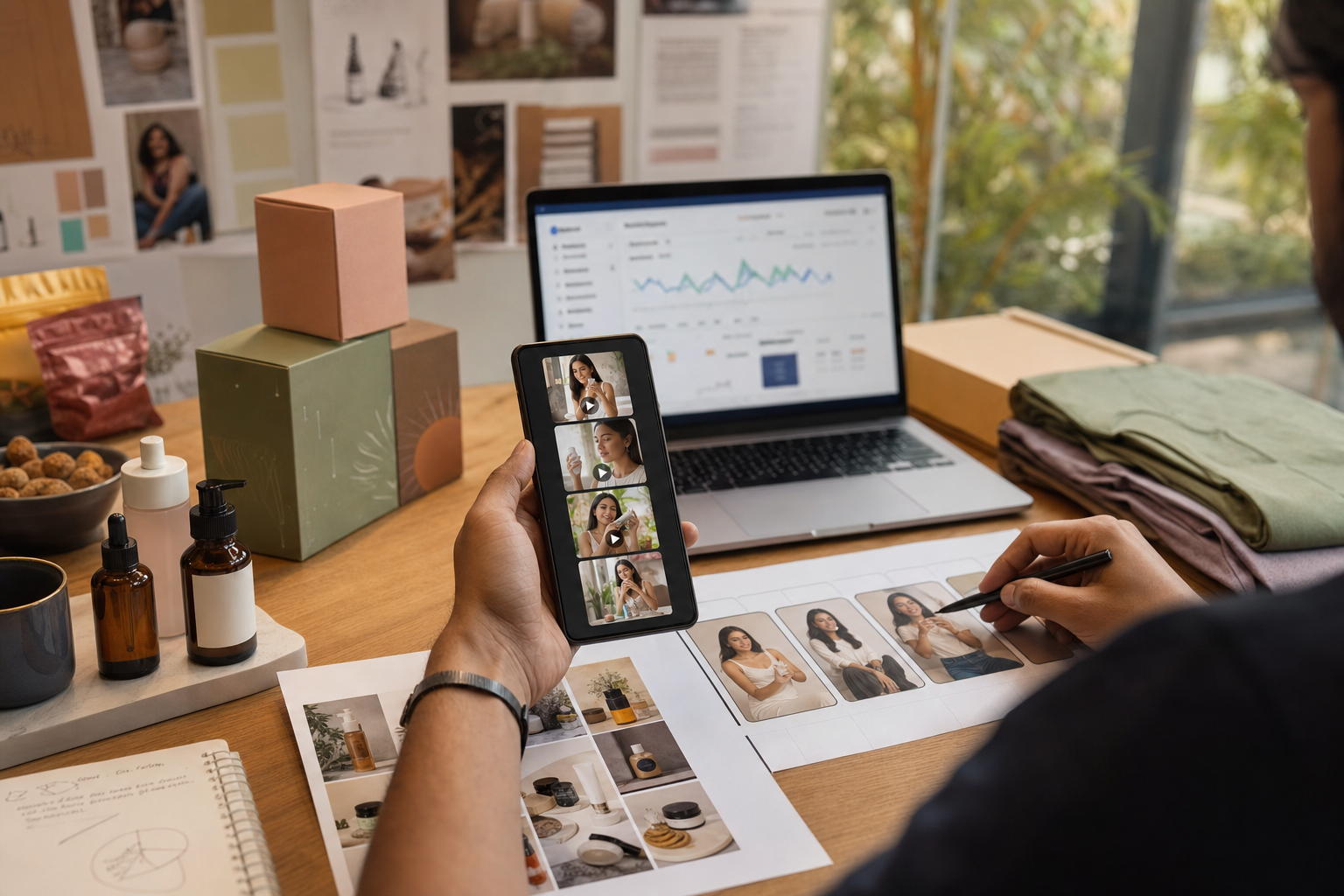
Indian D2C marketing team reviewing AI UGC video generator outputs with a product accuracy checklist

What should an AI UGC video generator do for Indian brands?

An AI UGC video generator should turn a product brief, product image, buyer hesitation, creator persona, and short script into a creator-style vertical ad draft. For Indian D2C teams, the output must feel like a believable product moment in a local home, office, kitchen, vanity, wardrobe, commute, or unboxing setting.

AI UGC video generator is a workflow that creates creator-style product videos from structured product inputs, prompts, scripts, or images.

Start with /blog/ai-video-generator-for-ads-india when you need the broader ad workflow.

Use /blog/ugc-video-generator-prompts-india when the generated clips are weak because the prompt is vague.

Generate the first draft in /dashboard/ugc-video once the scene has one buyer problem, one product action, and one CTA.

Which generator should you test first?

Test the generator against the ad job you actually need this week. If the product needs explanation, run a product-in-hand demo. If the product image already explains the offer, create a static follow-up instead. If language relevance is the gap, keep the same scene and test Hindi, Hinglish, or one regional version.

New SKU: product-in-hand demo with one use case.

Crowded category: creator comparison around one tradeoff, without naming competitors.

One good product photo: image-to-video test using /blog/product-image-to-video-ai-ads-india.

Clear offer: static retargeting creative in /dashboard/static-ads may beat another video.

Language test: reuse the same visual scene before changing the hook, offer, and persona.

How do you review AI UGC videos before using them in ads?

Review AI UGC videos like a media buyer, not like someone admiring a model demo. A clip is useful only if the product still looks right, the first three seconds are clear, the language sounds natural, the claim is safe, the CTA is direct, and the video makes sense in a 9:16 mobile feed.

Product check: does the item still match the real SKU shape, color, scale, and packaging?

Hook check: does a cold buyer understand the product action before scrolling?

Scene check: does the environment look like the buyer's real life, not a generic stock set?

Language check: does the line sound natural in English, Hinglish, Hindi, or the chosen regional language?

Claims check: remove medical, financial, legal, or exaggerated performance promises unless reviewed.

Format check: no tiny text, slow intro, confusing crop, or unclear CTA.

Why do AI UGC generator outputs look fake?

Most fake-looking AI UGC outputs come from broad prompts and weak review rules. The generator is asked to create a full campaign, preserve exact packaging, show perfect hands, speak long lines, and use multiple scenes at once. Narrow the job before switching tools.

Bad prompt: viral creator ad, many benefits, luxury studio, exact readable label, three scenes, dramatic reveal.

Better prompt: Indian office desk, product visible, one use action, one spoken line, no readable text overlays.

Use /blog/ugc-hooks-examples-india if the video looks acceptable but the opening line is weak.

Use /blog/ugc-video-script-examples-india if the generator has no clear hook, objection, or CTA to follow.

What is the fastest AI UGC workflow for ecommerce teams?

The fastest workflow is one product image, one buyer hesitation, one creator-style scene, one short line, and one review pass. After the first usable output, create variants by changing only one thing: hook, language, setting, offer, or CTA. Changing everything at once makes the test impossible to read.

Step 1: pick the buyer hesitation from comments, reviews, support tickets, or ad account learnings.

Step 2: write one 15-second scene with a visible product action.

Step 3: generate the draft in /dashboard/ugc-video.

Step 4: reject outputs that fail product accuracy, language, claim, crop, or CTA checks.

Step 5: create two variants only after the baseline clip is usable.

Source note: Meta video ad guidance emphasizes mobile-ready video creative, facebook.com/business/ads/video-ad-format

Source note: Google's video ABCDs framework focuses on attention, branding, connection, and direction, support.google.com/google-ads/answer/14783551

AI UGC video generator decision table

What you need
Best first test
Reject the output if
Explain a new product
Product-in-hand creator demo
The product is not clear in the first three seconds
Use one product image
Image-to-video product action
Shape, color, label direction, or scale changes too much
Test Indian context
Local home, office, kitchen, vanity, wardrobe, or commute scene
The setting feels generic, foreign, or overproduced
Test language
Same scene with a shorter Hindi, Hinglish, or regional line
The line sounds translated, formal, or unnatural
Retarget warm buyers
Short objection-answer video or static offer follow-up
The CTA is weak or the offer is hard to understand
Scale creative testing
Change one variable per variant
Hook, scene, persona, language, and offer all change together

Best For

Indian D2C founders comparing AI UGC generator tools

Performance marketers reviewing AI video drafts before paid spend

Agencies building creator-style concepts before a filmed shoot

Ecommerce teams with product photos that need fast video variants

Not Ideal For

Guaranteeing ROAS from one generated video

Imitating a real creator, celebrity, influencer, or competitor ad

Regulated claims without legal, medical, or category review

Campaigns that require perfect readable packaging in every frame

Examples

Beauty: vanity-table creator shows one texture moment, says one routine-fit line, and keeps the bottle visible.
Snack: office-desk chai-break scene with one bite, one taste reaction, and one simple CTA.
Fashion: mirror try-on where the creator shows fit or fabric, not a long outfit montage.
Home product: messy drawer, one product use, clean reveal, and no exaggerated before-after promise.
Wellness: breakfast-table routine with conservative language about habit fit, not medical results.
Regional variant: same approved visual scene rewritten into natural Hinglish, Hindi, Tamil, Kannada, Marathi, Bengali, Telugu, Malayalam, or Gujarati.

FAQs

What is the best AI UGC video generator?

The best AI UGC video generator is the one that produces a usable campaign draft from your product, buyer hesitation, scene, language, and CTA. For Indian D2C brands, product accuracy, local context, prompt control, and review workflow matter more than a flashy sample gallery.

How do I test an AI UGC generator for ecommerce?

Test it with one real product, one buyer hesitation, one clean product image, one 15-second scene, and one CTA. Reject outputs that distort the product, sound unnatural, make unsafe claims, start slowly, or fail as a vertical mobile ad.

Why does my AI UGC video look fake?

It usually looks fake because the prompt is too broad, the setting is generic, the product action is unclear, or the spoken line sounds like brand copy. Make the scene smaller: one creator, one product action, one Indian setting, one line, and one CTA.

Should I use AI UGC video or static ads first?

Use AI UGC video first when buyers need explanation, trust, routine context, or product use. Use static ads first when the product and offer are already clear and the missing piece is price, benefit hierarchy, bundle framing, or retargeting.

Can AI UGC replace filmed creator videos?

AI UGC can replace some early drafts, hook tests, language variants, and low-cost creative exploration. Filmed creator videos still matter when you need real creator trust, whitelisting, testimonial rights, influencer distribution, or exact product handling.

Can AI UGC replace real creators?

AI UGC is best for fast creative testing, early campaign drafts, hook exploration, and low-cost content volume. Real creators still matter for influencer distribution, creator trust, and testimonial rights.

Does AI UGC work for Indian audiences?

It can work well when the prompt includes Indian personas, local language, realistic home settings, product-in-hand moments, and duration-safe dialogue instead of generic global stock-style scenes.

What assets do I need to start?

A product name, a short product brief, and ideally one clean product image are enough to generate the first AI UGC video or product visual.