Ecommerce Visuals

Product Photography AIBy Indian UGC Team10 min read

AI Product Photography for Ecommerce in India

AI product photography for ecommerce works best when one clean product image becomes a controlled set: packshot-safe edits, PDP lifestyle images, marketplace supporting visuals, and static ad variants. For Indian brands, the winning prompt includes the exact category, buyer context, local setting, usage moment, and review step before the image is used in ads or catalog pages.

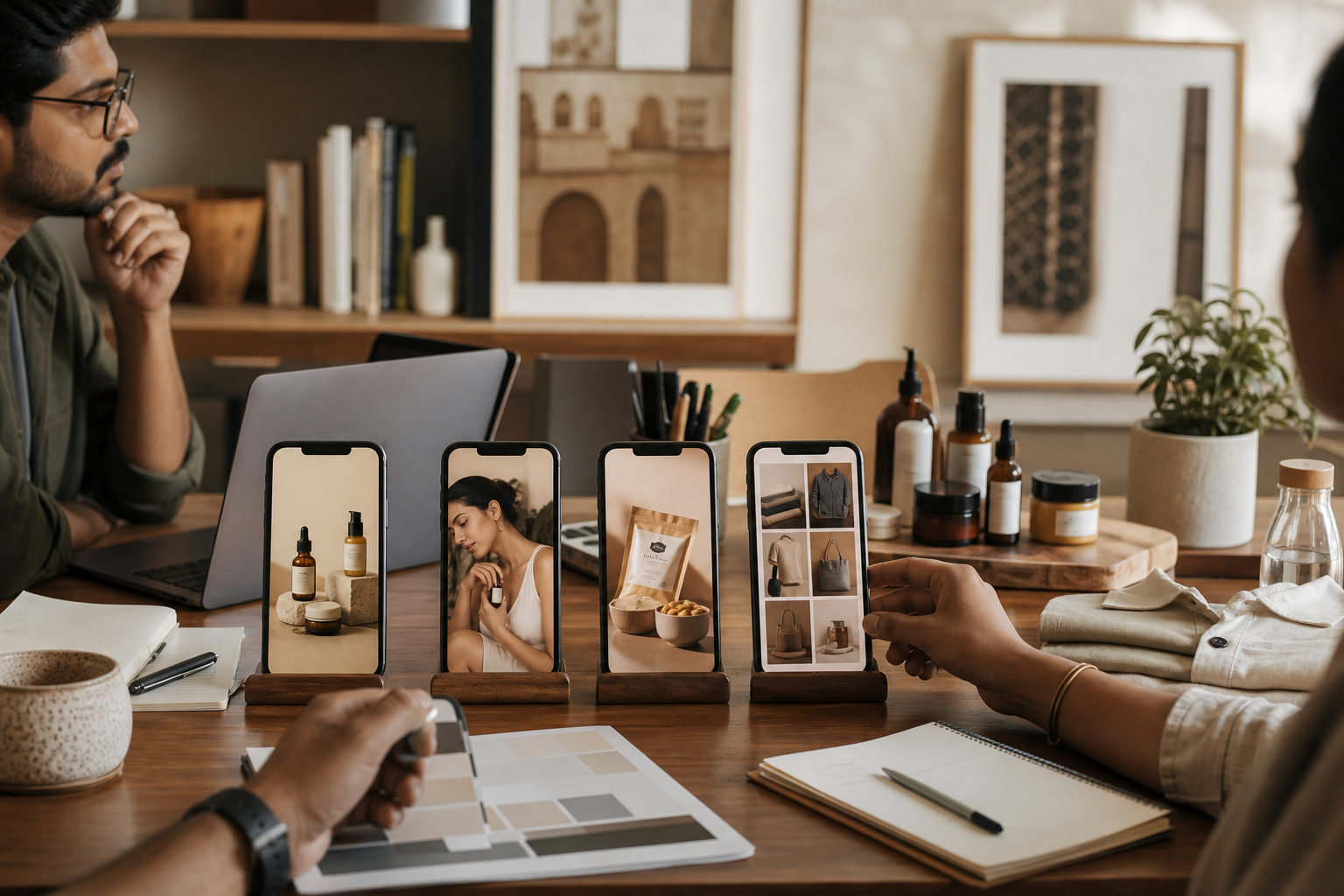
Indian ecommerce team planning AI product photography for product pages and static ads

What is AI product photography for ecommerce?

AI product photography for ecommerce is the use of AI image generation or editing to turn a source product photo into catalog, product-page, marketplace, lifestyle, and paid-ad visuals. It is not just background replacement. A useful ecommerce workflow protects product recognizability, shows one believable use case, and creates image variants that a buyer can understand quickly.

Start from the core product photography page: /ai-product-photography

Write stricter prompt formulas with /blog/ai-product-photography-prompts-india before producing many variants

Use the static creative workflow when you need ad variants: /dashboard/static-ads

Use product-image-to-video when the same asset needs motion: /ai-product-video-generator-from-image

Which ecommerce product photos should Indian brands generate first?

Generate the images closest to revenue first: one clean hero-safe product visual, two PDP lifestyle images that answer buyer hesitation, and three static ad variants for Meta or Instagram retargeting. Do not start with ten aesthetic concepts. Start with the product moment that helps a buyer believe the item fits their routine, size, taste, texture, or use case.

Beauty: texture close-up, vanity routine, before-routine setup without medical-style claims

Food and beverage: kitchen counter, serving suggestion, first-use moment with no exaggerated health promise

Fashion: fit check, fabric detail, styling scenario for office, travel, or festive use

Home goods: messy-before context, product-led fix, storage or size reference

How do you decide between AI photos, studio photos, and static ads?

Use AI photos when you need fast scene testing, seasonal variants, PDP secondary images, or static ads. Use a studio when the main packshot, legal label accuracy, premium hero campaign, or marketplace compliance review matters. Use static ads when the product photo is already good and the missing piece is offer framing, benefit hierarchy, or creative testing volume.

Do not treat AI product photography as a generic image-generator prompt. Ecommerce teams need assets that protect product recognizability, answer buyer hesitation, and survive review on PDPs, marketplaces, and paid-social crops.

Use the generic AI product photography workflow for broad scene generation, then make the ecommerce version stricter: one source product, one buyer context, one usage moment, and a review pass for label accuracy, scale, shadows, and platform rules.

Why do AI product photos fail for marketplaces and PDPs?

Most failures come from asking for a pretty image instead of a usable ecommerce asset. The product changes shape, label text becomes unreadable, shadows look fake, the prop scale is wrong, or the scene hides the buyer-relevant detail. For Amazon, Flipkart, Meesho, Myntra, and Shopify stores, review main-image rules separately and use AI more safely for secondary images, lifestyle modules, and ads.

Source note: Amazon India seller image guidance, sellercentral.amazon.in help pages

Source note: Flipkart seller listing and product image guidance, seller.flipkart.com help pages

Source note: Meta ad creative specs, facebook.com/business/ads-guide

Ecommerce AI product photo decision table

Asset needed
Best workflow
Review before publishing
Main marketplace image
Studio or strict packshot edit
White background, product accuracy, label readability, platform rules
PDP lifestyle image
AI product photography
Buyer context, realistic scale, no distorted packaging
Meta static ad
AI photo plus static ad layout
Hook clarity, offer fit, mobile crop, no unreadable text
Seasonal campaign visual
AI scene variants
Brand consistency, festive relevance, product visibility
Product demo video
Product image to AI UGC video
One action, one setting, realistic hand/product interaction

Best For

Indian D2C teams that need PDP and paid-social visuals quickly

Founders testing product scenes before booking a shoot

Catalog teams refreshing secondary images across Shopify, Amazon, Flipkart, Meesho, or Myntra

Performance marketers who need static ad variants from one product image

Not Ideal For

Unreviewed main marketplace packshots

Packaging-heavy products where label accuracy is legally important

Medical, financial, or regulated claims without compliance review

Luxury hero campaigns where exact material, hand model, and lighting control matter more than speed

Examples

Skincare serum: clean bottle photo turned into a bathroom vanity routine, then a static ad for texture-led retargeting.
Snack brand: packshot placed in an Indian kitchen counter scene with chai, then a social image around the 4 pm craving moment.
Fashion accessory: product close-up converted into office, travel, and festive styling stills before video testing.
Home organizer: plain product shot expanded into a messy-drawer fix that explains the use case faster than a catalog image.
Copper bottle: breakfast-table lifestyle image for PDP, separate offer-led static creative for paid social.
Pet product: living-room usage image with scale reference, reviewed carefully for product shape and animal safety cues.
Regional ad set: same product photo adapted into Hindi, Tamil, Marathi, or Bengali creative prompts after the base image passes QA.
Marketplace support: AI lifestyle image used as a secondary visual, not as an unchecked main image.

FAQs

Can AI product photography be used for ecommerce in India?

Yes. It is most useful for PDP lifestyle images, secondary marketplace images, static ads, social posts, and quick campaign concepts. Main marketplace images and regulated product visuals still need stricter review for accuracy and platform compliance.

What is the best way to prompt AI product photos for Indian ecommerce?

Use one product, one Indian setting, one buyer use case, and one visual goal. For example: a skincare serum on a real bathroom vanity for a morning routine PDP image. Avoid long text, many props, unreadable packaging requirements, or several scenes in one prompt.

When should I use AI product photos instead of a studio shoot?

Use AI for fast testing, seasonal variants, lifestyle concepts, paid-social stills, and supporting product-page images. Use a studio for final packshots, strict label accuracy, hero campaigns, or images that must pass marketplace rules without visual ambiguity.

Why do AI product photos look fake?

They usually look fake because the prompt ignores product scale, lighting direction, shadows, hand interaction, local context, or packaging accuracy. Start with a clean product image and review the output against a checklist before using it in ads.

How do I turn one product image into ecommerce ads?

Create one approved product visual first, then build static ad variants around one benefit, offer, or hesitation. IndianUGC's static ads workflow is the closest path when the goal is paid-social creative rather than a plain PDP image.

Can AI product photography replace a studio shoot?

For ecommerce testing, PDP refreshes, lifestyle scenes, and paid social variants, AI product photography can reduce dependence on studio shoots. High-stakes hero campaigns may still need a real shoot.

Is AI product photography useful for Indian marketplaces?

Yes, especially for lifestyle scenes, social ads, secondary PDP images, and category-specific visuals. Marketplace main images may still need strict compliance checks.

Can I generate product videos from one image?

Yes. A product image can guide the product appearance while the prompt defines the scene, creator, camera movement, and action.