How long should a UGC video ad be?
Start with 15 to 30 seconds. Choose 15 seconds for a simple hook, demonstration, and CTA; choose 30 seconds when the buyer needs visual proof or one objection answered. Use 6 to 10 seconds for one familiar visual idea and 45 to 60 seconds only for genuine education or a considered purchase.
Is 15 seconds enough for a UGC ad?
Yes, when the ad covers one audience problem, one product action, one approved benefit, and one CTA. Fifteen seconds is too short when the product needs setup, comparison, detailed proof, or several steps. In that case, make a 20- to 30-second control and derive a shorter cut from it.
Are 30-second UGC ads too long?
No. Thirty seconds is reasonable when the second half adds meaningful proof, an objection answer, or a demonstration the viewer needs. It is too long when the extra time repeats the hook, adds generic reactions, or delays the CTA without making the product easier to understand or believe.
Should Meta, Reels, and Shorts use different UGC ad lengths?
Do not choose duration from the platform name alone. Match runtime to the idea, placement, audience awareness, and product complexity, then review the current placement specifications before upload. A modular vertical production lets you export several compliant cuts without filming unrelated concepts for every channel.
How many words fit in a 15-second UGC ad?
A natural 15-second delivery usually supports roughly 30 to 40 spoken words, but pace varies by language, speaker, pauses, and product action. Time a conversational read instead of writing to a fixed count. If the creator must rush, remove a claim or sentence rather than accelerating the voice unnaturally.
Can AI create several UGC ad lengths from one concept?
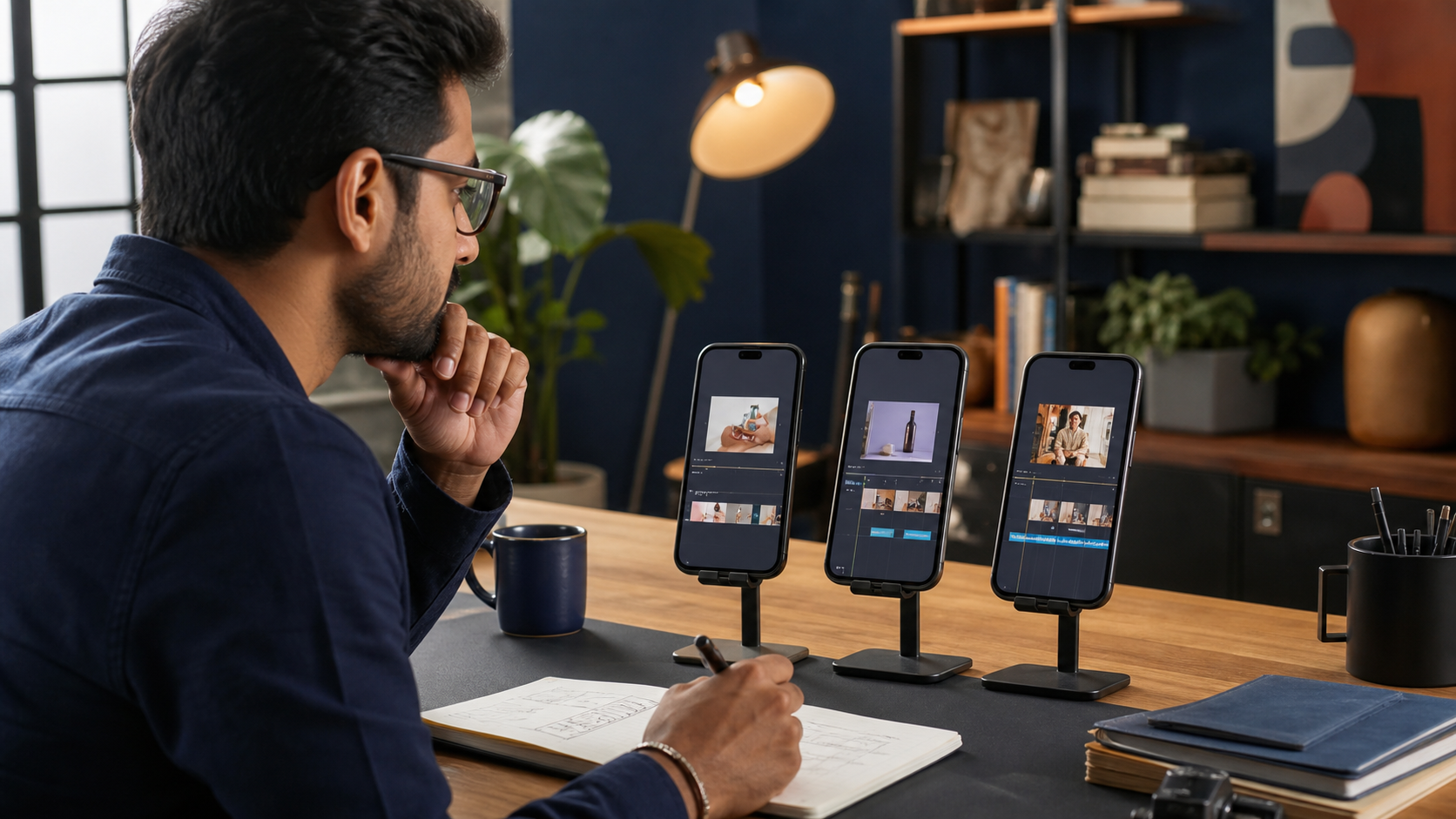
Yes. Build one approved concept with modular hook, demonstration, proof, and CTA scenes, then generate or edit 6-, 15-, and 30-second versions. A person should review product fidelity, claims, continuity, speech, captions, crop, disclosure needs, and whether the synthetic output implies a customer experience that never happened.
Can AI UGC replace real creators?
AI UGC is best for fast creative testing, early campaign drafts, hook exploration, and low-cost content volume. Real creators still matter for influencer distribution, creator trust, and testimonial rights.
Does AI UGC work for Indian audiences?
It can work well when the prompt includes Indian personas, local language, realistic home settings, product-in-hand moments, and duration-safe dialogue instead of generic global stock-style scenes.
What assets do I need to start?
A product name, a short product brief, and ideally one clean product image are enough to generate the first AI UGC video or product visual.