Skincare Product Images

Product Photography AIBy Indian UGC Team10 min read

AI Skincare Product Photography for Indian Beauty Brands

AI skincare product photography works best when approved photos of the real pack, applicator, and formula remain the source of truth. Capture those assets in neutral light, generate one controlled routine or lifestyle scene at a time, and reject every output that changes the label, pack size, texture, ingredient story, usage instruction, or product claim.

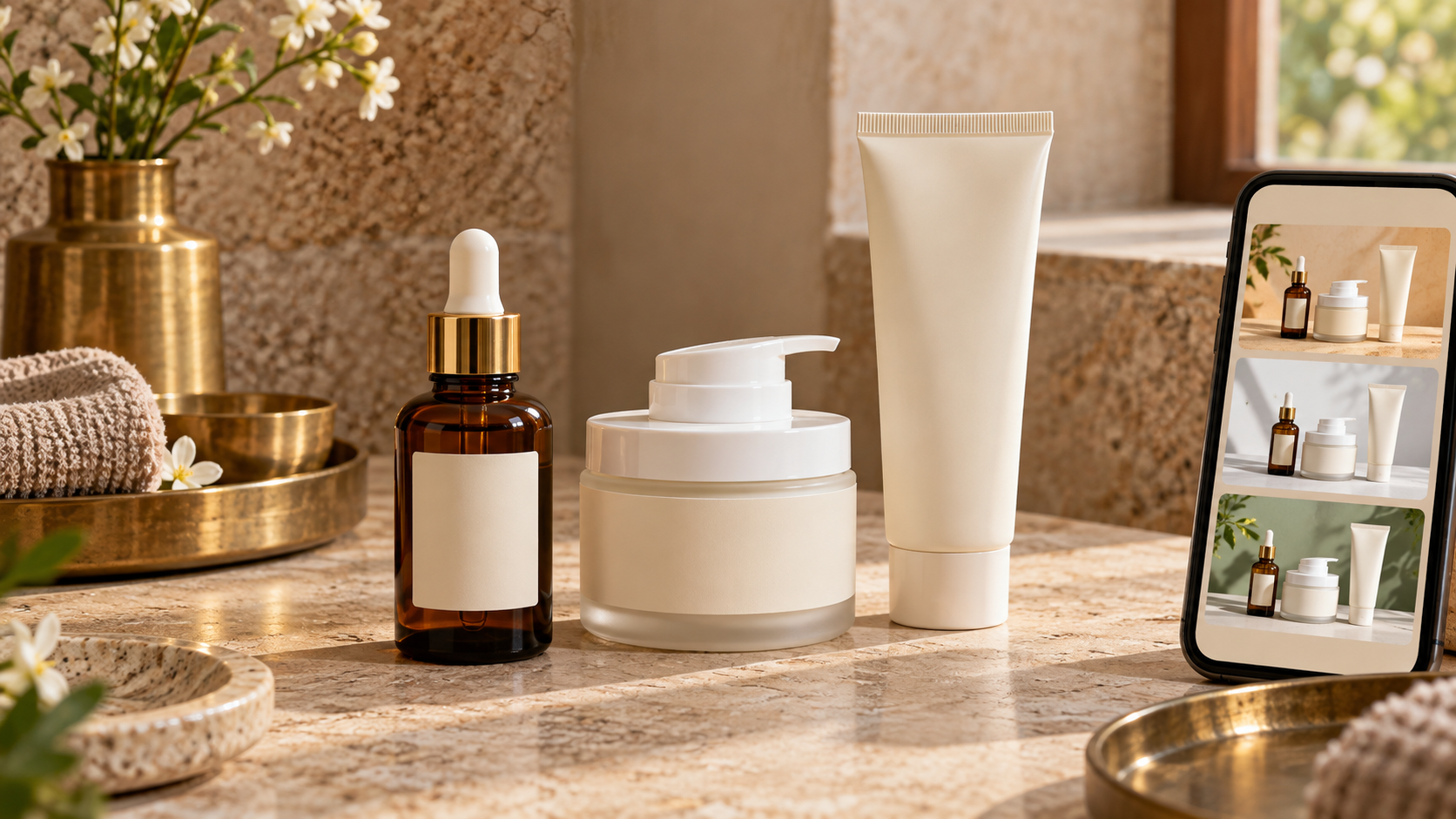
Skincare serum, moisturiser, and sunscreen arranged for an AI-assisted product photography workflow

What is AI skincare product photography?

AI skincare product photography is a controlled workflow for turning accurate source images of a serum, cleanser, moisturiser, sunscreen, or treatment into new backgrounds, crops, routine scenes, and ad layouts. AI may change the presentation, but the real SKU must still govern the pack, label, applicator, fill level, formula appearance, directions, and claims.

Use /blog/ai-product-photography-for-ecommerce-india for the broader PDP-to-ad workflow.

Use /blog/ai-background-remover-product-photos-india to create a clean reusable product layer.

Use /blog/ai-product-photography-prompts-india when prompts keep changing the bottle or label.

Use /blog/ai-ugc-video-ads-skincare-india when the buyer needs to see a routine or application in motion.

Which skincare product image should you create first?

Create the image that answers the nearest purchase question. A serum usually needs a label-safe packshot and real texture close-up; sunscreen needs the real tube, dispensing amount, and finish evidence; a moisturiser needs pack size, jar or pump detail, and texture. Build one truthful support image before making decorative campaign scenes.

Serum or facial oil: front pack, dropper or pump, real droplet texture, then one routine scene.

Moisturiser: closed pack, opening mechanism, real texture macro, and a clear scale reference.

Cleanser: label-safe packshot, dispensing action, real foam or gel texture, then bathroom context.

Sunscreen: approved pack, real dispensing amount, real finish evidence, and no invented SPF or clinical badge.

Marketplace listing: keep the primary image conservative and use lifestyle visuals only where platform rules allow.

How do you photograph skincare for accurate AI variations?

Use soft neutral light, locked white balance, a stable camera, and a clean background. Photograph the front, back, sides, cap, pump or dropper, and an internal scale reference. Capture the real formula separately. Better source evidence reduces hallucinated labels, warped pumps, wrong bottle proportions, and impossible reflections faster than adding more prompt adjectives.

Clean fingerprints, dust, product residue, and reflective surfaces before shooting.

Keep one straight-on source frame for packaging geometry and readable label placement.

Capture translucent, glossy, metallic, and frosted materials from more than one useful angle.

Photograph gel, cream, oil, foam, and droplet textures from the actual formula.

Do not ask an image model to recreate ingredients, warnings, batch details, directions, or certifications.

How should skincare textures and routine scenes be handled?

Treat texture and application as product evidence, not decoration. Use a real macro or dispensing reference whenever viscosity, colour, absorption, foam, finish, or quantity could influence the purchase. AI can arrange an approved product and texture in a believable vanity scene, but it should not fabricate skin improvement or make the formula perform differently.

Keep the real formula colour, opacity, viscosity, spread, foam, and droplet behaviour.

Show a realistic application amount instead of an oversized decorative smear.

Use Indian bathroom, bedside, travel, or dressing-table context only when it supports the buyer's routine.

Separate illustrative ingredient styling from evidence about what is inside the formula.

Never create a before-and-after result, dermatologist endorsement, or clinical-looking proof without approved evidence and review.

Why do AI skincare product photos look fake or misleading?

They fail when the product and scene stop obeying the same physical and commercial rules. Typical errors include bent labels, duplicate droppers, floating jars, impossible liquid, invented ingredients, oversized packs, fake water resistance, and flawless skin that implies a result. Simplify the scene, preserve the approved product layer, and keep claims in reviewed copy.

Wrong SKU: bottle, cap, pump, label direction, colour, or pack size changes.

Wrong formula: texture, colour, foam, droplet, or finish differs from the real product.

Wrong physics: the product floats or shadows, reflections, liquid, and condensation disagree.

Wrong promise: generated skin, badges, ingredients, or lab cues imply unsupported efficacy.

Wrong hierarchy: props and ingredient theatre hide the pack buyers need to recognise.

When should a skincare brand use a real shoot instead of AI?

Use a real shoot when exact formula texture, packaging text, application action, skin finish, substantiated result, regulated claim, or premium campaign craft is the reason the image exists. Use AI for controlled background variations, seasonal scenes, regional context, social crops, and early ad concepts after the master SKU and evidence images are approved.

Real first: master packshots, labels, applicators, formula texture, real skin finish, testing evidence, and approved results.

AI first: vanity context, routine placement, gifting scene, seasonal background, or concept test.

Static ad next: turn the approved image into hook and offer variants with /dashboard/static-ads.

Video next: use /dashboard/ugc-video when application order, dispensing, or routine explanation needs motion.

Skincare product photography decision table

Asset
Best first workflow
Reject when
Main PDP or marketplace image
Real packshot or strict clean-up
Pack, label, size, colour, or included item changes
Formula texture
Photograph the real gel, cream, oil, foam, or droplet
AI changes colour, viscosity, spread, finish, or amount
Routine lifestyle image
Place an approved product in one believable use context
Product drifts or the scene implies unverified use or results
Ingredient-led image
Approved pack plus clearly illustrative ingredient styling
Visual invents an ingredient, concentration, purity, or efficacy claim
Paid-social static ad
Approved image plus /dashboard/static-ads
Claim, result, price, badge, or offer is not reviewed
Application or results content
Real demonstration and substantiated evidence
Generated skin is presented as customer or clinical proof

Best For

Indian skincare brands building accurate PDP and marketplace support images

Beauty teams creating controlled routine and seasonal scenes from approved masters

Performance marketers turning reviewed skincare visuals into static ad tests

Agencies producing consistent image systems across multiple skincare SKUs

Not Ideal For

Inventing skin results, formula textures, ingredients, certifications, endorsements, or clinical claims

Replacing real master photography for labels, directions, applicators, and formula evidence

Publishing generated people as real customers or before-and-after proof

Premium campaign heroes where exact material, liquid, skin, and set craft are central to the brand

Examples

Vitamin C serum: real amber bottle and droplet first, restrained morning-vanity scene second, reviewed static ad third.
Gel moisturiser: accurate jar and real texture macro, one humid-weather routine scene, then a product-page support crop.
Sunscreen: approved tube, real dispensing amount and finish evidence, then an outdoor-bag scene without invented SPF claims.
Cleanser: real pump and formula, truthful lather reference, simple bathroom context, then one offer-led ad variant.
Festive skincare kit: preserve every included SKU and quantity; add one restrained Indian gifting cue instead of burying the set in props.

FAQs

Can AI be used for skincare product photography?

Yes. Start with accurate photos of the real pack, applicator, and formula, then use AI for controlled backgrounds, crops, routine scenes, and campaign concepts. Reject outputs that change the SKU, label, size, texture, directions, ingredients, certification, or claim.

What is the best setup for skincare product photography?

Use soft neutral light, locked white balance, a stable camera, a clean background, and separate references for the front, back, sides, cap, pump or dropper, scale, and real formula texture. Control reflections on glossy, metallic, translucent, and frosted packaging.

Should AI generate skincare texture photos?

Not when shoppers may use the image to judge colour, viscosity, spread, finish, foam, absorption, or application amount. Photograph the real formula. AI may help arrange an approved texture image, but it should not invent how the product looks or behaves.

How do I make AI skincare photos look real?

Preserve the approved product layer, use one surface and one light direction, keep props restrained, match contact shadows and reflections, and compare each output with the physical SKU. Remove any scene element that makes the product harder to verify.

When should a skincare brand book a real photoshoot?

Book a real shoot for master packshots, readable labels, applicator actions, formula textures, real skin finish, substantiated results, regulated claims, and premium campaign heroes. Use AI after those source assets are approved to create controlled variants.

Can AI product photography replace a studio shoot?

For ecommerce testing, PDP refreshes, lifestyle scenes, and paid social variants, AI product photography can reduce dependence on studio shoots. High-stakes hero campaigns may still need a real shoot.

Is AI product photography useful for Indian marketplaces?

Yes, especially for lifestyle scenes, social ads, secondary PDP images, and category-specific visuals. Marketplace main images may still need strict compliance checks.

Can I generate product videos from one image?

Yes. A product image can guide the product appearance while the prompt defines the scene, creator, camera movement, and action.