AI Spokesperson Ads

UGC Video GeneratorBy Indian UGC Team10 min read

AI Spokesperson Video Ads for Indian D2C Brands

An AI spokesperson is a synthetic presenter used to deliver a brand-approved script on video. For an effective Indian D2C ad, give the presenter one buyer problem, one product action, one defensible claim, and one CTA in 15 to 30 seconds. Treat the output as brand creative—not a real customer testimonial—and review the face, voice, product, language, claims, and disclosure before launch.

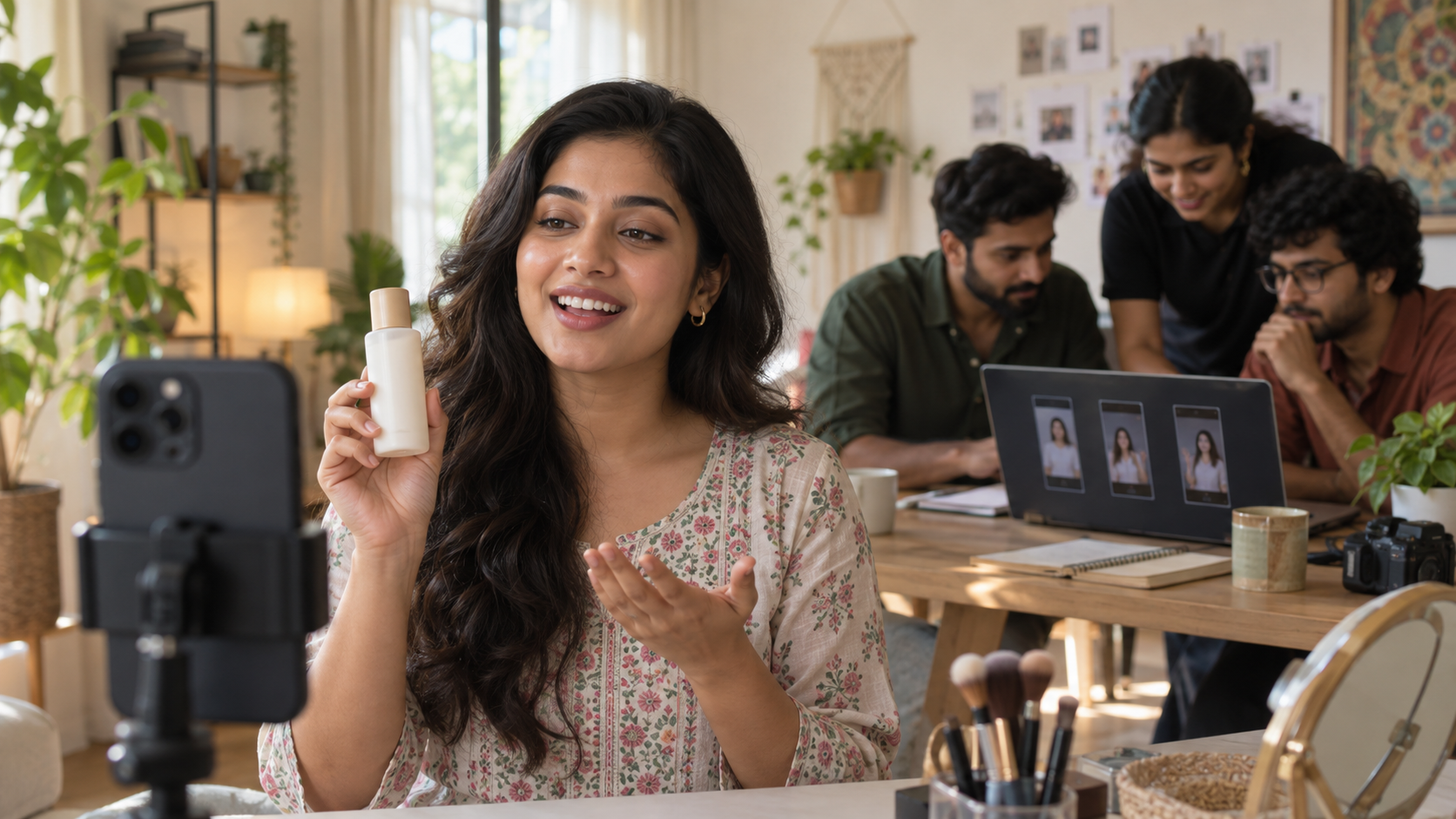
Indian D2C team reviewing an AI spokesperson video ad with a product demonstration

What is an AI spokesperson?

An AI spokesperson is a generated or digitally animated presenter that delivers a scripted message on behalf of a brand. Unlike a real customer testimonial, the presenter has not personally bought, used, or experienced the product. The safest role is clear brand communication: explain a feature, demonstrate a simple action, introduce an offer, or localise an approved message.

Use the presenter as a narrator or demonstrator, not fabricated customer proof.

Keep the product reference, script, claim boundaries, language, and CTA under brand control.

Disclose synthetic or materially altered media where the platform, law, or context requires it.

Use a real creator when personal experience, testimonial evidence, whitelisting, or audience trust is the core value.

What is the fastest way to make an AI spokesperson ad?

Use a five-part brief: buyer hesitation, spokesperson role, product action, approved proof, and next step. Write one 45-to-70-word script, generate a vertical draft, and review accuracy before polishing captions or music. This narrow workflow produces a useful first version faster than asking a generator to invent the audience, story, product behaviour, and offer at once.

1. Choose one hesitation, such as fit, setup, convenience, ingredients, delivery, or price.

2. Give the spokesperson a role: host, product guide, founder-style narrator, or demonstrator.

3. Show one real product action using a clean product reference.

4. Use one approved proof point without inventing reviews, results, or endorsements.

5. End with one CTA that matches the landing page.

Build the first draft in /dashboard/ugc-video and tighten it with /blog/ugc-video-editing-checklist-india.

How do you write an AI spokesperson video script?

Write for spoken delivery, not a product page. Open with the buyer's problem, identify the product, show or explain one useful action, state one supportable benefit, and give one next step. A 20-second script should usually carry one argument. Read it aloud: if the line sounds like corporate copy or needs three breaths, shorten it.

Hook: ‘Still losing time to a ten-step morning routine?’

Product: name the category and show the actual pack clearly.

Action: demonstrate one use, setup, pour, fit, or comparison.

Proof: use an approved fact, visible feature, or accurate product detail.

CTA: tell the viewer exactly what to compare, create, shop, or learn next.

For reusable structures, follow /blog/ugc-script-template-india and /blog/ugc-video-generator-prompts-india.

When should you use an AI spokesperson instead of a real creator?

Use an AI spokesperson for controlled explainers, rapid concept drafts, language variants, frequent offer updates, and messages that do not depend on lived experience. Use a real creator when the ad requires authentic product handling, personal results, community credibility, creator distribution, or a legally meaningful endorsement. A hybrid workflow can validate the script with AI before funding the real shoot.

AI spokesperson: fast brand narration, feature education, localisation, and early concept testing.

Real creator: genuine experience, nuanced handling, testimonial evidence, and creator-owned reach.

Product demo footage plus AI narration: useful when the product must remain exact but the voice needs variants.

Static ad follow-up: build a reviewed offer or proof card in /dashboard/static-ads.

How should Indian brands review AI spokesperson ads?

Review the ad in six passes: identity, voice, product, message, disclosure, and mobile format. Confirm that the presenter does not resemble a real person without permission, the voice and accent are respectful, the SKU remains accurate, every claim is approved, synthetic media is identified where needed, and captions remain readable inside the platform crop.

Identity: no celebrity, employee, creator, or private-person impersonation without explicit rights.

Voice: natural pronunciation, respectful regional delivery, and no cloned voice without consent.

Product: correct shape, colour, pack, label layout, quantity, use, and included items.

Message: no invented customer experience, performance result, price, review, certification, or guarantee.

Disclosure: check the current rules of every ad platform and destination market before launch.

Format: review the first three seconds, captions, safe zones, audio, CTA, and landing-page continuity on a phone.

Why do AI spokesperson videos look fake?

AI spokesperson videos look fake when the brief asks for too much: long dialogue, emotional acting, complex hand contact, tiny readable packaging, several locations, and camera movement in one clip. Reduce the scene to one presenter, one setting, one product action, and one short line. Add precise captions, prices, and legal copy during editing instead of asking the model to render them.

Use medium framing when hands or product details are unstable.

Keep the product large enough to compare with the approved reference.

Split a 30-second script into short shots instead of forcing one continuous performance.

Reject lip-sync drift, unnatural blinking, warped fingers, floating objects, label changes, or inconsistent lighting.

Use /blog/ai-video-generator-for-ads-india for the wider ad-generation workflow.

AI spokesperson production decision table

Campaign need
Best format
Main review risk
Explain one product feature
AI spokesperson plus accurate product insert
Invented product behaviour or claim
Share a customer result
Real consented customer or creator
Fabricated testimonial or implied experience
Test three opening hooks
Controlled AI spokesperson variants
Other scene or message variables changing
Localise an approved script
Reviewed language and voice variants
Literal translation or unnatural pronunciation
Show detailed product use
Real demo footage with narration
Hands, labels, texture, or sequence drifting
Run a founder message
Real founder when identity is material
Synthetic presenter implying a false identity

Best For

Indian D2C teams testing short product explanations before a creator shoot

Brands localising one approved message into reviewed language variants

Performance teams refreshing hooks while keeping the product argument fixed

Agencies producing controlled drafts for client review

Not Ideal For

Fake customer testimonials, reviews, endorsements, or personal product experience

Celebrity, creator, employee, or private-person impersonation without explicit permission

Claims that lack brand, legal, or regulatory approval

Final product demonstrations when the generated SKU or physical action cannot remain accurate

Examples

Skincare: a brand host explains where one product fits in a routine while real pack and texture footage provide the proof.
Food: a presenter introduces an office-snack use case, then cuts to an accurate pack opening and serving shot.
Fashion: a narrator explains fabric and sizing while real garment close-ups handle fit-critical evidence.
Home utility: the spokesperson names the problem, then real or strictly reviewed footage shows the setup step.

FAQs

What is an AI spokesperson?

An AI spokesperson is a generated or digitally animated presenter that delivers a brand-approved script. It can explain a feature, introduce an offer, or narrate a product demo, but it should not be presented as a real customer with personal product experience.

How do I make an AI spokesperson video for an ad?

Choose one buyer hesitation, one spokesperson role, one product action, one approved proof point, and one CTA. Write a 45-to-70-word script, generate a vertical draft, then review identity, voice, product accuracy, claims, disclosure, captions, and landing-page continuity.

Should an AI spokesperson video be disclosed?

Disclosure depends on the platform, market, and how the synthetic presenter is used. Do not imply a real customer, creator, expert, or founder when none participated. Check current platform and legal requirements before launch and use clear labelling whenever the context could mislead viewers.

Can an AI spokesperson give a product testimonial?

An AI spokesperson can read an approved brand message, but it cannot truthfully claim personal product experience. Use real, consented, substantiated customer or creator material when the ad depends on a testimonial, result, review, or endorsement.

Why does my AI spokesperson video look unnatural?

Long scripts, complex emotion, hand-to-product contact, tiny labels, multiple scenes, and camera movement often expose generation errors. Use one presenter, one setting, one simple product action, and short lines; then reject lip-sync drift, warped hands, product changes, or unnatural eye movement.

Can AI UGC replace real creators?

AI UGC is best for fast creative testing, early campaign drafts, hook exploration, and low-cost content volume. Real creators still matter for influencer distribution, creator trust, and testimonial rights.

Does AI UGC work for Indian audiences?

It can work well when the prompt includes Indian personas, local language, realistic home settings, product-in-hand moments, and duration-safe dialogue instead of generic global stock-style scenes.

What assets do I need to start?

A product name, a short product brief, and ideally one clean product image are enough to generate the first AI UGC video or product visual.