Creative Testing

D2C Ad CreativesBy Indian UGC Team9 min read

D2C Creative Testing Framework: A Practical System for Indian Brands

A D2C creative testing framework is a repeatable way to test one buyer-facing variable at a time—usually the hook, proof, format, or offer—while keeping the rest of the ad stable. Start with a proven baseline, name the question the test must answer, produce a small controlled batch, and decide in advance what result means keep, iterate, or stop.

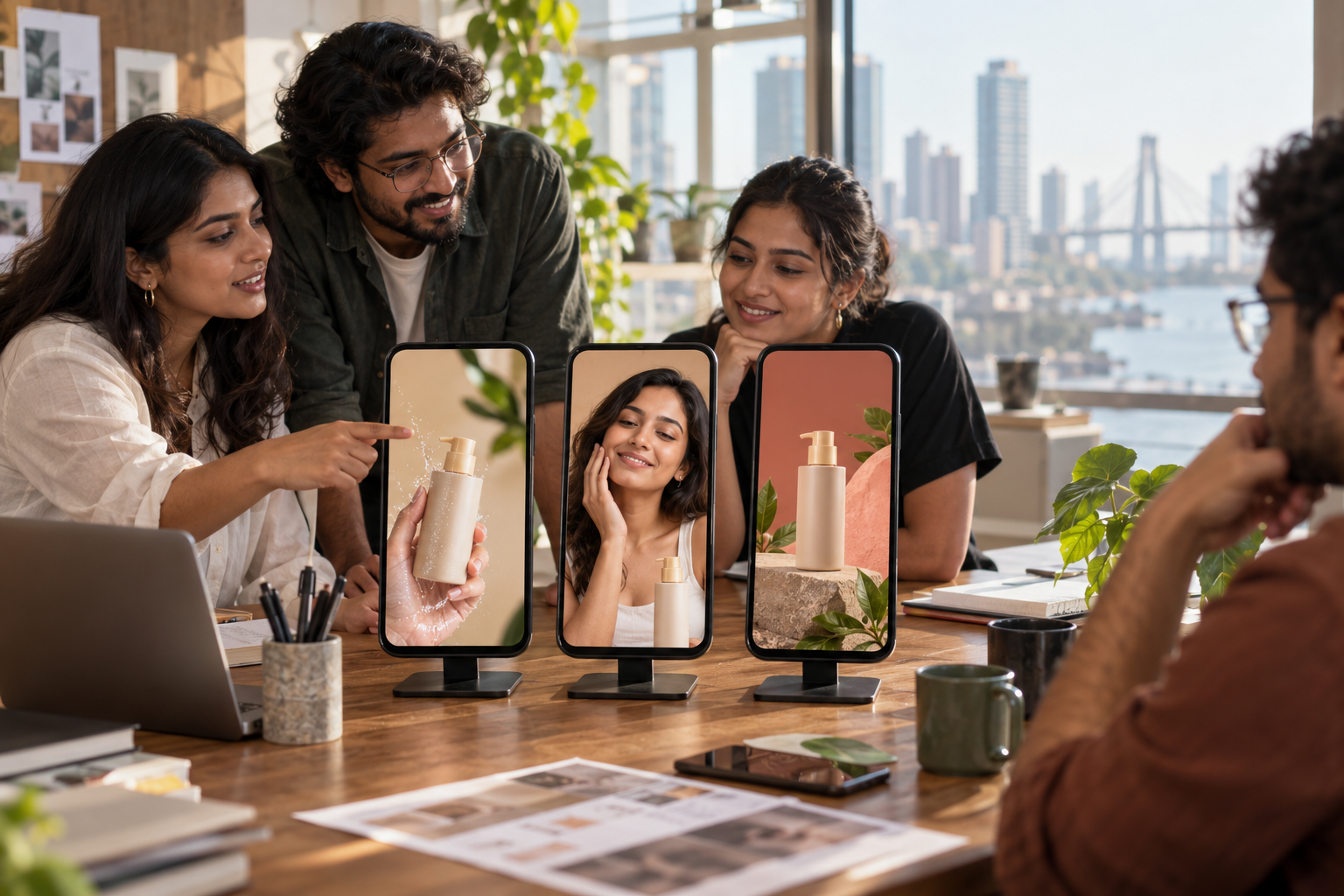
Indian D2C team comparing three vertical UGC ad creative tests on mobile screens

What is a D2C creative testing framework?

A D2C creative testing framework is a decision system for making ads that teach you something. Instead of uploading a pile of unrelated UGC clips, it turns one customer problem into controlled tests: one version changes the opening, another changes the proof, and the rest of the product, offer, CTA, audience, and landing-page handoff stay comparable. The outcome is a clearer next creative decision, not merely more assets.

A baseline is the current ad or message you are trying to improve.

A variable is one meaningful change, such as the first frame, creator delivery, demonstration, or proof format.

A decision rule states what result makes a version worth keeping, iterating, or pausing.

Use /blog/ad-creative-fatigue-d2c-india when a previous winner is losing response and you need to separate fatigue from an offer or landing-page problem.

What should you test first in a D2C ad?

Test the earliest constraint in the viewer journey first. If people do not stop, test the hook. If they watch but do not believe, test the product demonstration or proof. If clicks are healthy but purchases are weak, stop making more creative for a moment and inspect the offer and landing page. This simple order prevents teams from redesigning a good message to solve a non-creative problem.

Low attention: test product-first, problem-first, objection-first, comparison, or result-context openings.

Attention without belief: test a clearer demonstration, close-up, comparison, review, or approved evidence.

Belief without action: test whether the CTA and offer match the buyer's next question.

Clicks without purchases: audit price, stock, delivery promise, page clarity, and checkout before declaring the creative a loser.

Use /blog/ugc-video-ad-hooks-india for distinct hook families that keep the product proof and CTA stable.

How do you build a controlled creative test?

Build one test around a single question a buyer could answer differently. For example: ‘Does a messy-before opening earn more qualified attention than a product-first opening?’ Keep the SKU, approved claim, product action, offer, CTA, destination, and major audience conditions fixed. Make three or four legible variants, give each one a name, and avoid changing script, creator, proof, and offer all at once.

1. Write the buyer problem and the one variable you are testing.

2. Lock the product, promise, proof, offer, CTA, and landing page.

3. Make a small batch with visibly different versions of only that variable.

4. Review product accuracy, captions, claims, safe zones, and mobile clarity before launch.

5. Compare results against the baseline, then document the next question rather than copying a winner blindly.

Create controlled video drafts in /dashboard/ugc-video and proof or offer-card variants in /dashboard/static-ads.

Which variables are worth testing in UGC ads?

The best UGC variables change how a real buyer encounters the same commercial argument. A new hook, first action, creator delivery, scene, edit pace, proof order, or format can earn a fresh look while preserving the product truth. Avoid treating cosmetic caption changes as a serious test when the buyer has already ignored the actual opening and proof.

Hook: direct question, problem scene, product action, objection, comparison, or outcome context.

Proof: close-up, side-by-side, setup demonstration, ingredient or feature explanation, or approved review excerpt.

Delivery: creator persona, language, framing, pace, location, voiceover, or on-screen product handling.

Format: creator clip, static proof card, carousel, short cutdown, or product-demo sequence.

Use /blog/product-demo-video-ecommerce-india when the buyer needs to see how the product works before a hook can convert them.

How long should a creative test run?

Run a creative test until it has enough comparable delivery to answer the question you actually asked; there is no honest universal number of days or rupees. Predefine the observation window and the leading signal you will use, then avoid reacting to a tiny early swing. If budget, audience, placement, offer, stock, tracking, or landing page changes materially, note the change before drawing a creative conclusion.

Use the same optimisation event and as similar a delivery context as practical.

Read early signals in sequence: attention, watch depth, clicks, then downstream conversion quality.

Do not call a version a winner because one metric improved while the business outcome deteriorated.

Keep a reserve of ready variants so a fatigued winner does not force rushed production.

Why do creative tests fail?

Creative tests fail when the versions are too similar to reveal a preference, or too different to explain one. They also fail when teams treat every poor conversion result as a video problem. The fastest learning comes from a meaningful controlled change, a clean handoff to the product page, and a written record of what the test did and did not prove.

Changing the hook, creator, product angle, proof, offer, and CTA together produces noise, not a lesson.

A test cannot rescue inaccurate product imagery, unsupported claims, fake customer experience, or an unclear offer.

Do not let generated UGC imply that a synthetic person is a real customer or that an unverified result occurred.

If viewers understand the ad but do not buy, investigate the product and purchase experience before producing endless variants.

D2C creative testing decision table

Observed pattern
Test next
Keep stable
People scroll before the product is understood
First frame or hook
Product, proof, offer, CTA, destination
People watch but do not click
Demonstration or proof
Buyer problem, offer, CTA, audience
Clicks are healthy but purchases are weak
Landing-page and offer diagnosis
Do not add creative variables yet
A past winner is fading
Delivery refresh: opening, creator, scene, crop, or format
Winning buyer argument and proof
One audience responds while another does not
Audience-specific opening or context
Product truth and measurement setup

Best For

Indian D2C teams that need a repeatable alternative to random ad production

Media buyers deciding whether the hook, proof, offer, or landing-page handoff is the constraint

Creative teams turning one product truth into controlled UGC and static variants

Founders who need a clear keep, iterate, or stop decision after each test batch

Not Ideal For

Producing dozens of unrelated ads without a question or stable baseline

Using invented testimonials, unsupported results, or inaccurate AI-generated product depictions as proof

Treating a short-term metric swing as proof when delivery conditions changed

Trying to repair price, stock, product-page, or checkout problems with a new hook

Examples

Skincare: keep the same routine and claim-safe product proof; test a texture close-up, a misconception hook, and a product-first opening.
Snack: keep the pack, serving action, and offer fixed; test office-break, commute, and evening-craving openings.
Fashion: preserve the garment and fit proof; test first reveal, styling problem, and fabric-movement openings.
Home utility: keep the same clutter-to-organised demonstration; test mess-first, time-saving, and capacity-first entry points.

FAQs

What is a D2C creative testing framework?

A D2C creative testing framework is a repeatable process for testing one meaningful ad variable at a time while keeping the rest of the commercial message comparable. It helps teams learn whether the hook, proof, delivery, format, offer, or handoff is limiting response.

What is the best way to test UGC ads?

Start with one buyer problem and a current baseline. Change one meaningful variable—often the opening or proof—across a small batch, while locking the product, approved claim, offer, CTA, and destination. Define your keep, iterate, and stop rule before reviewing results.

How many ad creative variations should I test?

Use the smallest batch that gives each version a distinct job, often three or four controlled variants. More versions are useful only when each answers a different, named question; a larger batch of minor cosmetic changes usually creates noise rather than learning.

Should I test hooks or offers first?

Test the earliest constraint you can see. If viewers do not stop, test hooks. If they engage but do not believe, test proof. If they click but do not purchase, inspect the offer and landing page before changing creative again.

Why do creative tests produce confusing results?

Results become confusing when multiple variables change together, delivery conditions differ, the observation window is too short, or the product-page handoff changes. Keep the test question narrow, lock the important constants, and record what changed before choosing the next test.

Can AI UGC replace real creators?

AI UGC is best for fast creative testing, early campaign drafts, hook exploration, and low-cost content volume. Real creators still matter for influencer distribution, creator trust, and testimonial rights.

Does AI UGC work for Indian audiences?

It can work well when the prompt includes Indian personas, local language, realistic home settings, product-in-hand moments, and duration-safe dialogue instead of generic global stock-style scenes.

What assets do I need to start?

A product name, a short product brief, and ideally one clean product image are enough to generate the first AI UGC video or product visual.