Odia UGC Ads

Regional Language UGCBy IndianUGC Team10 min read

Odia UGC Ads: Script, Prompt, and QA Guide for Indian Brands

Odia UGC ads are creator-style product videos built for Odia-speaking buyers, not generic Hindi or English ads with translated audio. The fastest reliable workflow is to start with a proven product angle, define the Odisha buyer and spoken register, adapt the meaning into natural Odia, show one unmistakable product action, and have fluent-language and brand reviewers approve the export before testing it against a control.

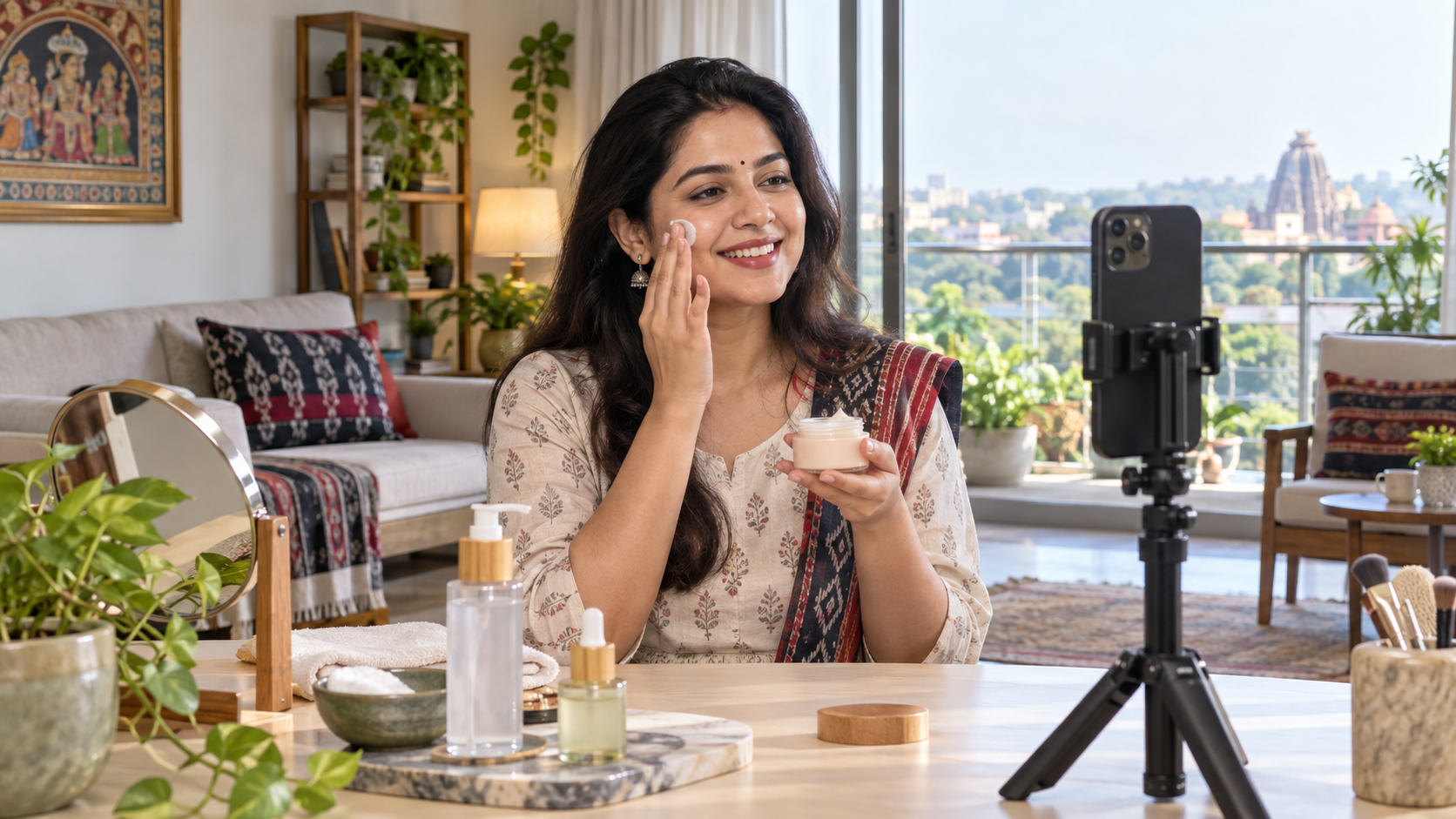
Odia-speaking creator filming a vertical skincare product demonstration in a Bhubaneswar home

What is an Odia UGC ad?

An Odia UGC ad is a short creator-style product video whose spoken line, setting, buyer hesitation, and product demonstration are designed for an Odia-speaking audience. It is more than an English or Hindi video with Odia dubbing. The ad should feel like one credible recommendation while keeping the real product, offer, approved claims, and destination page accurate.

Use /blog/regional-language-ugc-ads-india if you are still choosing which language market to enter.

Use /blog/regional-language-ad-localization-checklist-india to adapt a proven ad without losing its meaning.

Use /blog/regional-language-video-subtitles-ugc-ads-india when caption timing and mobile readability need a separate review.

Create the first reviewed concept in /dashboard/ugc-video after the product action and CTA are fixed.

When should a brand test Odia video ads?

Test Odia video ads when Odisha demand is visible in orders, qualified traffic, customer calls, reviews, creator content, or support conversations. Start with one market and one proven product argument. A language variant is worth testing when natural Odia can reduce trust friction or explain the product more clearly—not merely because a regional campaign sounds fashionable.

Demand signal: meaningful orders or qualified traffic from Bhubaneswar, Cuttack, Rourkela, Sambalpur, Berhampur, Puri, or other Odisha markets.

Conversation signal: customers already use Odia or Odia-English in comments, calls, reviews, or messages.

Category signal: food, beauty, fashion, home, education, household, baby care, or routine-led products where demonstration matters.

Source note: the Census of India Language Atlas identifies Odia among India's scheduled languages, censusindia.gov.in/nada/index.php/catalog/42561.

How do you write a natural Odia UGC ad script?

Write the commercial meaning before writing the Odia line. Define the buyer's hesitation, the product action that answers it, one approved reason to believe, and one next step. Then let a fluent Odia speaker produce the shortest natural spoken version. Preserve product truth and claim boundaries, but change word order, English mixing, cadence, and examples when natural delivery requires it.

Hook: name one familiar problem or buying hesitation in a line that can be understood immediately.

Proof: show the pack and one real action such as opening, applying, tasting, wearing, assembling, or cleaning.

Reason to believe: use a visible feature, routine fit, pack fact, or approved offer—not an invented personal result.

CTA: ask for one realistic action that matches the landing page.

For reusable hook structures, use /blog/ugc-video-script-examples-india.

What prompt should you give an AI UGC video generator?

Prompt for one Odia-speaking persona, one Odisha-relevant setting, one product action, one short spoken line, and one CTA. Keep the first draft to one location and one simple camera setup. Generate captions during editing rather than asking the scene model to render long Odia text, and never imitate a real creator, celebrity, customer, or expert without permission.

Persona: Odia-speaking skincare buyer, student, office commuter, young parent, home cook, fashion shopper, or category user.

Setting: Bhubaneswar apartment, vanity, kitchen, desk, balcony, college bag setup, commute preparation, or family-use scene.

Action: show exactly how the product is opened, used, worn, prepared, compared, or stored.

Dialogue: one fluent-reviewed Odia or natural Odia-English line that fits the available seconds.

Meta recommends creative designed for mobile video placements: facebook.com/business/ads/video-ad-format.

Google's ABCD guidance emphasizes attention, branding, connection, and direction: support.google.com/google-ads/answer/14783551.

How should you review Odia AI UGC before publishing?

Use two reviewers with different jobs. A fluent Odia reviewer checks meaning, pronunciation, cadence, register, and captions. A brand reviewer checks the SKU, pack, usage, offer, claims, rights, and destination page. Then watch the export once with sound and once muted on a phone; both versions should communicate the same honest product argument.

Reject literal translation, forced slang, wrong pronunciation, mismatched captions, or dialogue that sounds written rather than spoken.

Reject warped packaging, changing labels, impossible product use, fake before-and-after results, or unsupported claims.

Check the 9:16 crop, first-frame product recognition, caption safe area, CTA, and landing-page continuity.

Use /blog/regional-language-ugc-ad-testing-india for the controlled launch and scale sequence.

How should you test Odia UGC against a control?

Compare one fluent-reviewed Odia adaptation with a proven control. Keep the product angle, proof, offer, audience logic, placement, landing page, conversion event, and measurement window stable. Change language and only the cultural details required for natural delivery. Judge qualified clicks, conversion rate, purchase quality, and comments together; cheap views alone do not prove an Odia ad works.

Round one: control versus the same commercial meaning in natural Odia.

Round two: keep Odia, proof, and offer fixed; compare two opening hooks.

Round three: keep the winning hook; test one new persona or setting.

Scale only after the team can explain the result and both reviewers approve the production export.

Odia UGC production decision table

Situation
Best next step
Avoid
Odisha orders are growing
Adapt one proven ad into natural Odia
Translating an entire campaign at once
Product needs demonstration
Show one action with a short Odia line
Explaining every feature in dialogue
Personal experience drives the claim
Hire a real, consented Odia-speaking creator
Inventing a testimonial with AI
Visual proof already works
Test reviewed Odia dubbing and captions
Changing language, scene, offer, and audience together
First draft looks artificial
Simplify to one persona, location, and action
Adding more cuts, dialogue, and text

Best For

Indian D2C brands with meaningful Odisha demand

Performance teams localizing a proven UGC concept

Agencies with access to a fluent Odia reviewer

Products whose value becomes clear through a mobile-first demonstration

Not Ideal For

Brands with no evidence of an Odia-speaking audience

Word-for-word translation without fluent review

Fabricated testimonials, endorsements, identities, or product results

Regulated claims launched without category-specific compliance review

Examples

Skincare: a Bhubaneswar vanity scene shows texture and one application step, followed by a short routine-focused Odia line.
Food: a creator opens the real pack in a home kitchen, demonstrates preparation or taste, and gives one clear offer cue.
Fashion: a mirror try-on shows fit and fabric before a natural Odia-English styling line and shop CTA.
Home utility: a cluttered shelf becomes one product-led demonstration, with the result visible even when muted.
Retargeting: reuse the proven product action and offer, then test a shorter Odia CTA against the control.

FAQs

What are Odia UGC ads?

Odia UGC ads are short creator-style product videos designed for Odia-speaking buyers. They combine natural spoken Odia, an appropriate persona and setting, one visible product action, and a clear CTA while preserving accurate product, offer, and claim details.

Should an Odia ad script be translated word for word?

No. Preserve the intended meaning, product facts, offer, and claim boundaries, then let a fluent Odia speaker adapt the phrasing for the defined buyer. Literal translation often creates formal, rushed, or unnatural dialogue.

Can AI create Odia UGC video ads?

AI can create useful Odia concept drafts and controlled variants. A fluent speaker should review meaning, pronunciation, cadence, and captions, while a separate brand reviewer checks the product, offer, claims, rights, and landing page.

What is the best way to test an Odia UGC ad?

Compare one reviewed Odia adaptation with a proven control while keeping the product angle, visual proof, offer, audience logic, placement, landing page, and measurement window stable. Evaluate conversion quality as well as attention and clicks.

Why does an Odia video ad sound unnatural?

The usual causes are literal translation, formal written phrasing, forced English mixing, too much dialogue, or no defined audience. Rewrite for one buyer and one spoken situation, then have a fluent Odia reviewer approve the final audio and captions.

Can AI UGC replace real creators?

AI UGC is best for fast creative testing, early campaign drafts, hook exploration, and low-cost content volume. Real creators still matter for influencer distribution, creator trust, and testimonial rights.

Does AI UGC work for Indian audiences?

It can work well when the prompt includes Indian personas, local language, realistic home settings, product-in-hand moments, and duration-safe dialogue instead of generic global stock-style scenes.

What assets do I need to start?

A product name, a short product brief, and ideally one clean product image are enough to generate the first AI UGC video or product visual.