Creator Screening

UGC Creator SourcingBy Indian UGC Team10 min read

UGC Content Creator Checklist for Indian D2C Brands

A UGC content creator is worth hiring when their samples prove five things: they can show your product clearly, speak naturally to your buyer, handle the category, make the first three seconds useful, and agree to paid-ad usage terms. If two of those are missing, test the angle with AI UGC or a smaller paid sample before a full shoot.

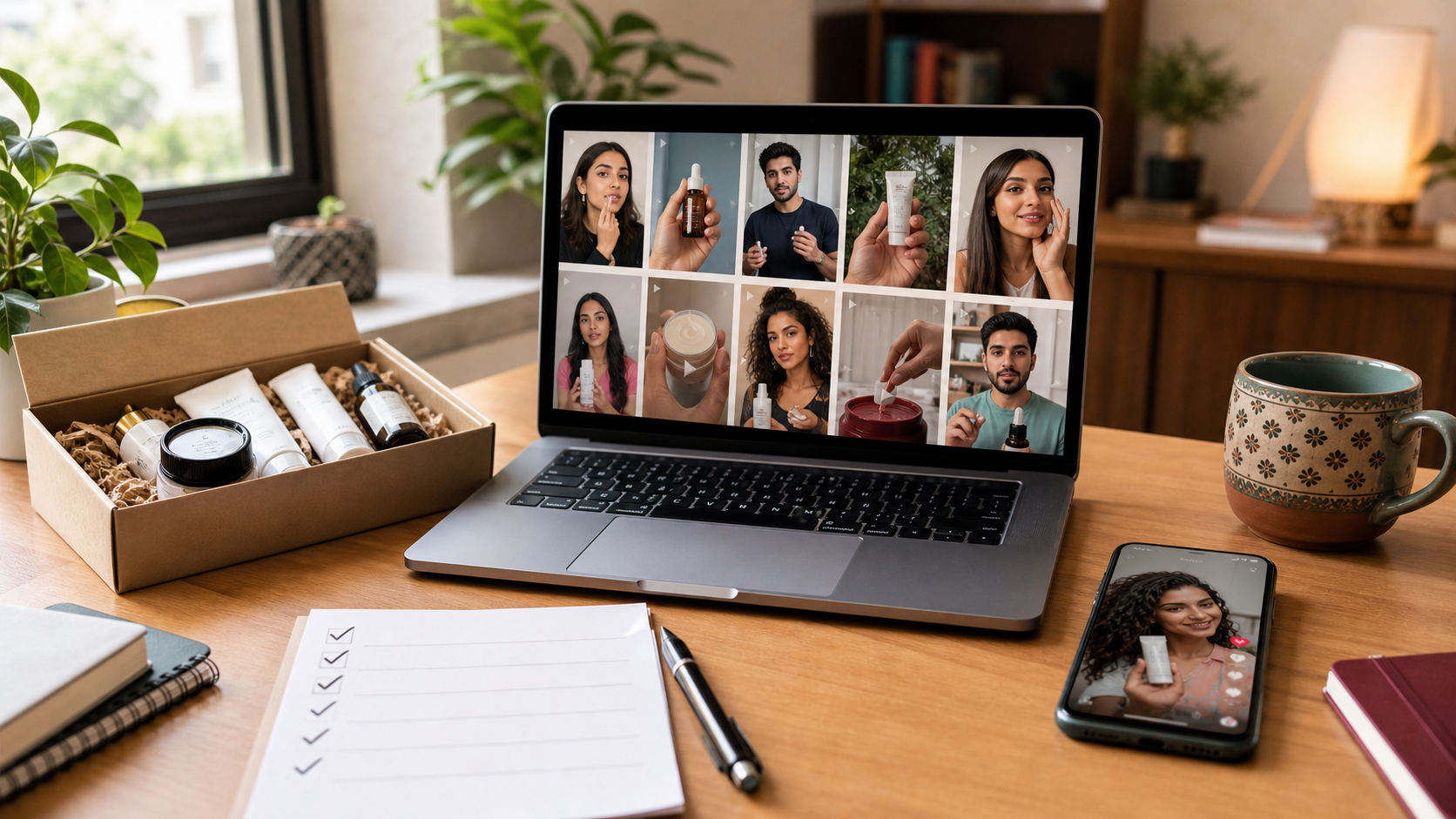
Indian ecommerce marketing desk reviewing UGC content creator videos, product samples, ad brief, and hiring checklist

What is a UGC content creator?

A UGC content creator is a person who makes user-generated-style content for brands, usually short product videos, demos, reviews, raw clips, or edited ads. For a D2C brand, the job is not simply to look good on camera. The creator must make one buyer problem, one product action, and one reason to buy clear on mobile.

Start with /blog/what-is-a-ugc-creator if the team is still separating UGC creators from influencers.

Use /blog/how-to-find-ugc-creators-india when you need sourcing routes before screening.

Use /blog/ugc-creator-portfolio-india when you already have samples to review.

Use /blog/ugc-creator-rates-india before comparing creator quotes, editing scope, posting, and paid usage.

Fast rule: hire for ad-job fit, not follower count, aesthetic taste, or the cheapest reel package.

How should Indian brands screen a UGC content creator?

Screen the creator against the exact ad you need to run. A good creator for Indian paid social should match the product category, buyer language, scene, product action, claim risk, and usage-right need. If the portfolio does not prove the job, ask for a smaller paid test instead of guessing.

Category fit: has the creator filmed a similar product, texture, fit, taste, setup, unboxing, or routine?

Buyer fit: does the creator sound like the audience you are targeting in India?

Language fit: can they speak naturally in English, Hinglish, Hindi, or the relevant regional language?

Ad fit: do samples include hook, product action, reason to believe, and CTA instead of only lifestyle montage footage?

Usage fit: can the creator quote paid ad usage, platform, duration, geography, edits, and raw-file permissions clearly?

What proof should a UGC creator show before you hire?

The best proof is a sample close to your campaign. A skincare creator should show texture and routine timing. A food creator should show pack visibility and a real consumption moment. A fashion creator should show fit, movement, and size confidence. Pretty videos without product proof are weak hiring evidence.

Product visibility: the product is visible before the viewer loses context.

First-three-second hook: the opening names a problem, mistake, question, comparison, or use case.

Natural delivery: speech sounds like a buyer talking, not a brand script being read.

Clean capture: audio, lighting, framing, and pacing are good enough for Meta, Instagram, or YouTube Shorts ads.

Claim safety: the creator can avoid exaggerated health, beauty, finance, performance, or before-after promises.

Source note: Meta's video ad guidance describes mobile-first video placements across Facebook and Instagram at facebook.com/business/ads/video-ad-format.

When should AI UGC come before hiring a creator?

Use AI UGC first when the uncertainty is the angle, not the human proof. If you are still choosing between a demo, comparison, routine, regional-language line, offer explanation, or objection answer, generate drafts before shipping samples or booking creators. Hire creators after the pattern is worth filming.

Use /dashboard/ugc-video to test one creator-style angle before outreach.

Use /blog/ugc-video-generator-prompts-india to turn the script into a duration-safe AI prompt.

Use /blog/ugc-video-script-examples-india when the hook and body structure are still weak.

Use /blog/regional-language-ugc-ads-india before asking creators for Hindi, Tamil, Telugu, Bengali, Marathi, Kannada, Malayalam, or Gujarati variants.

Use /dashboard/static-ads when the winning message should become a packshot, proof, comparison, or offer creative.

How do you brief a UGC content creator without wasting the shoot?

Brief one ad job at a time. The easiest useful brief has one buyer problem, one product action, one scene, one hook, one proof line, one CTA, and clear usage terms. Do not ask the creator to make a viral video. Ask for a specific paid-social asset that answers one hesitation.

Buyer problem: the exact doubt, pain, or moment the ad should solve.

Scene: one Indian home, kitchen, office, vanity, commute, gym, wardrobe, desk, store, or family-use setup.

Product action: apply, taste, wear, open, compare, clean, prepare, pack, pour, assemble, or show the result.

Proof line: one factual reason the buyer should care.

CTA: product page, offer page, WhatsApp flow, signup, or lead form.

Source note: Google's video ABCD framework focuses on Attention, Branding, Connection, and Direction at support.google.com/google-ads/answer/14783551.

Why do UGC content creator hires fail?

Creator hires fail when brands buy a vibe instead of an ad outcome. The common mistake is paying for a polished reel, then discovering it cannot run as a performance ad because the product is hidden, the hook is vague, the claim is risky, the language feels wrong, or paid usage was never agreed.

Wrong filter: creator with the nicest grid.

Better filter: creator whose samples prove your category, product action, buyer language, and ad structure.

Wrong scope: one generic reel for every channel.

Better scope: one video job, one platform priority, one CTA, and documented usage rights.

Wrong workflow: hire five creators before testing the message.

Better workflow: AI draft, small creator test, paid-usage agreement, static retargeting follow-up.

UGC content creator screening table

Screening area
Good sign
Red flag
Category proof
Samples show a similar product action or buyer routine
Only generic lifestyle reels or trend edits
Hook quality
First three seconds explain a problem, mistake, or use case
Slow montage opening with no product context
Product handling
Product is visible and used naturally
Product appears late, is hidden, or is handled unrealistically
Language fit
Delivery sounds natural for the target Indian market
Script sounds translated, stiff, or too formal
Ad readiness
Samples include reason to believe and CTA
Samples feel organic but cannot become paid ads
Usage rights
Quote separates filming, editing, posting, raw files, and paid usage
Creator cannot explain what the brand can run as ads

Best For

Indian D2C founders hiring a UGC content creator for paid-social ads

Performance marketers shortlisting creators before shipping products

Agencies building creator rosters for ecommerce clients

Brands comparing creator shoots, agencies, marketplaces, and AI UGC drafts

Not Ideal For

Creator advice on building a portfolio to get brand deals

Influencer audience valuation

Legal contract drafting

High-risk medical, financial, or safety claims without specialist review

Examples

Skincare brand: screen for texture shots, routine language, and claim-safe before-after framing.
Snack brand: screen for real taste reactions, pack visibility, and home or office consumption moments.
Fashion brand: screen for try-on framing, fit honesty, fabric movement, and size explanation.
Home product: screen for a visible problem-before and product-action-after sequence.
Premium D2C product: screen for objection handling, not only attractive lifestyle footage.
Agency workflow: generate an AI UGC draft first, then hire the creator whose samples match that winning scene.

FAQs

What is the difference between a UGC creator and a UGC content creator?

In most brand conversations, they mean the same thing: a creator hired to make user-generated-style content assets. The useful distinction is commercial: some creators only make organic-looking posts, while stronger UGC content creators can also make paid-ad-ready hooks, demos, and CTAs.

What should I check before hiring a UGC content creator in India?

Check category fit, product visibility, first-three-second hook quality, language comfort, natural delivery, audio and lighting quality, claim safety, and paid-usage clarity. If the samples are not close to your ad job, start with an AI draft or a small paid test.

Do UGC content creators need followers?

Not if you are buying the content asset for your brand's ads. Followers matter when the creator will also post to their own audience. For paid-social production, portfolio fit, product handling, language, and usage rights matter more.

Should I ask a creator for a free sample video?

No. Review relevant portfolio samples first, then pay for a small test if the fit is close but unproven. If the brand has not finalized the angle yet, use AI UGC drafts before asking a creator to film custom work.

What is the best way to brief a UGC content creator?

Give one buyer problem, one product action, one scene, one hook, one proof line, one CTA, deliverables, revision terms, paid-usage terms, platform, deadline, and examples of claims or visuals to avoid.

When should I use AI UGC instead of hiring a content creator?

Use AI UGC when you need fast angle testing, many variants, language exploration, or a first draft before creator outreach. Hire a creator when you need real product handling, personal trust, creator posting, or unmistakably filmed footage.