AI vs Studio

Product Photography AIBy Indian UGC Team10 min read

AI Product Photography vs Studio Shoot for Indian Ecommerce

Use a studio shoot when product accuracy, label detail, texture, model fit, or marketplace main images must be exact. Use AI product photography when the job is lifestyle variants, PDP support visuals, static ad concepts, seasonal scenes, and fast creative testing. The safest Indian ecommerce workflow is studio for source truth, AI for controlled variants, and human QA before anything goes live.

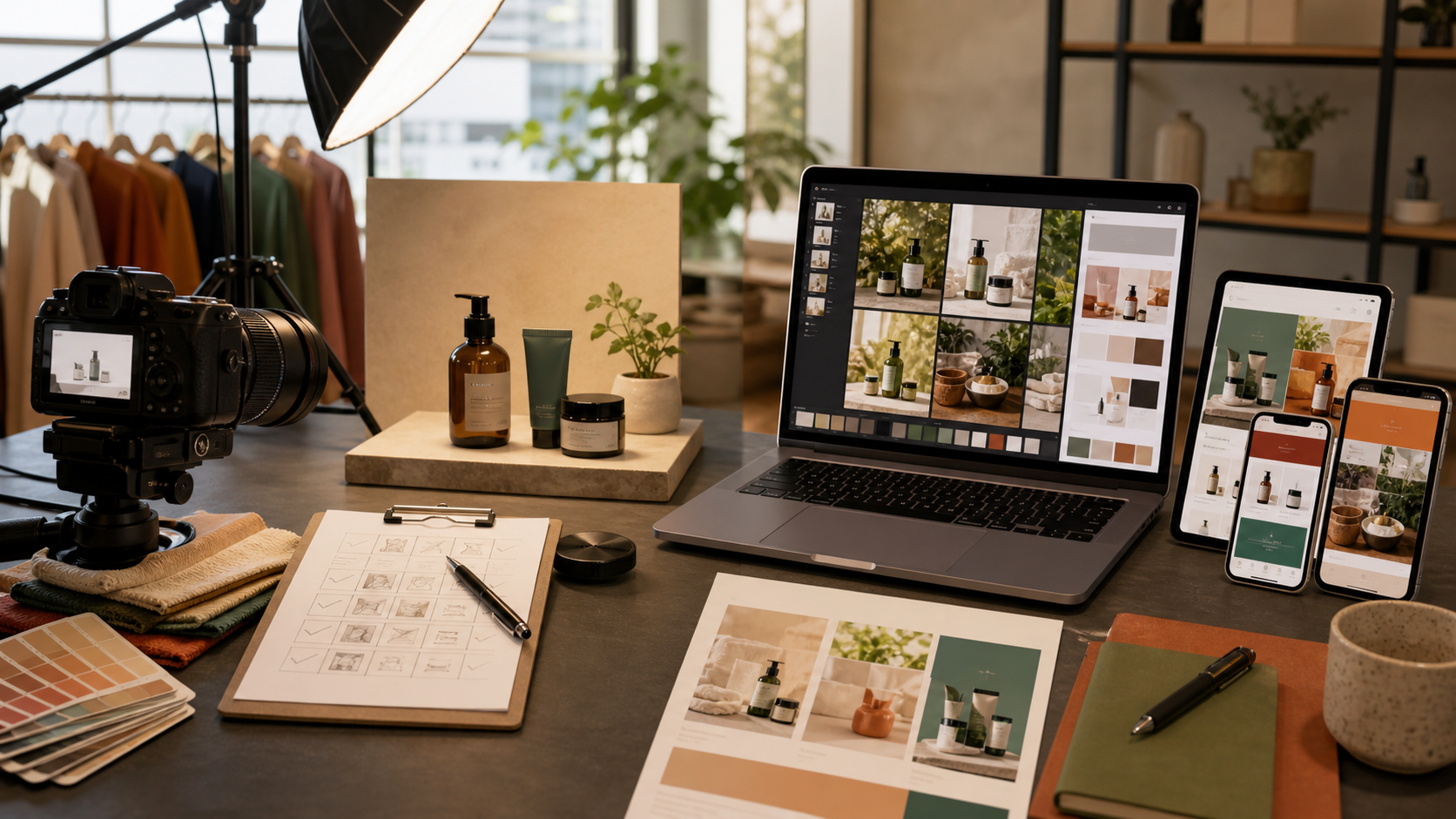
Indian ecommerce team comparing studio product photography setup with AI product photography variations for D2C ads

What is the difference between AI product photography and a studio shoot?

AI product photography creates product visuals from a source image and scene prompt. A studio shoot captures the real product with controlled lighting, camera, props, models, and physical styling. The useful choice is not AI or studio forever. It is which asset needs physical proof and which asset needs fast variation.

AI product photography is a product-visual workflow that turns one approved source image into lifestyle, PDP support, static ad, and campaign variants.

Studio product photography is the better source of truth for final packshots, exact material, label, size, fit, and texture.

Start with /ai-product-photography when the source product is ready and the team needs visual variants.

Use /blog/ai-product-photography-for-ecommerce-india for the broader ecommerce workflow before scaling images across pages and ads.

When should an Indian D2C brand choose a studio shoot first?

Choose a studio shoot first when the buyer must trust exact physical details. This includes main catalog images, label-heavy packaging, size-sensitive fashion, premium material shots, regulated product claims, hero campaign visuals, and any marketplace image where the product must match the listing without visual ambiguity.

Marketplace main image: keep the real product clear, accurate, and compliant before adding AI variants.

Fashion fit: shoot real size, cut, drape, embroidery, fabric transparency, and model scale when returns are expensive.

Beauty, food, and wellness: capture texture and packaging accurately before using AI for lifestyle or static ads.

Premium SKU: use studio lighting when material, finish, reflection, or luxury trust matters more than speed.

Source note: Amazon Seller Central says product images should accurately represent the product and match the product title, sellercentral.amazon.com/help/hub/reference/external/G1881.

When is AI product photography the better first move?

Use AI first when the question is creative direction, not physical proof. AI product photography is strongest for deciding which lifestyle scene, regional context, seasonal setup, retargeting visual, or static ad angle deserves more budget. It is also useful when a brand already has clean packshots but not enough campaign variants.

PDP support image: one buyer routine, one product use case, one realistic Indian setting.

Paid social: turn an approved product visual into static ad concepts in /dashboard/static-ads.

Seasonal campaign: test Diwali, wedding, summer, monsoon, office, travel, or gifting scenes before booking props.

Regional creative: adapt the same product scene into Hindi, Hinglish, Tamil, Telugu, Marathi, Kannada, Malayalam, Bengali, or Gujarati ad concepts.

Video follow-up: use the approved still as the input idea for /dashboard/ugc-video when buyers need product motion or creator context.

What is the fastest decision rule?

Use this rule: if the asset must prove what the product physically is, shoot it. If the asset must test how the product could be positioned, generate it. A packshot, fit image, or compliance-sensitive marketplace image needs truth. A lifestyle scene, retargeting concept, or seasonal ad needs controlled variation.

Shoot: main packshot, exact label, fabric detail, jewellery finish, size guide, hero campaign, high-claim category.

Generate: PDP lifestyle scene, buyer routine, static ad background, offer card source visual, language variant, seasonal scene.

Hybrid: shoot one clean packshot set, then use AI to create controlled backgrounds, ad layouts, and video prompts.

If the team is unsure, spend the real shoot on source images and use AI to decide which scenes should be reshot properly later.

How do you run a hybrid AI plus studio workflow?

Run the workflow in layers. First create real product truth: clean packshots, texture shots, and any model or fit images that affect buyer trust. Then use AI to create low-risk variants around scenes, props, crops, and campaign context. Finally, approve only the variants that preserve the product and answer a real buyer hesitation.

Step 1: capture clean front, side, texture, scale, and packaging references.

Step 2: write separate prompts for PDP lifestyle, marketplace support, static ads, and video inputs.

Step 3: review product shape, color, label direction, shadows, scale, hands, props, crop, and claim safety.

Step 4: turn approved stills into static ad variants with one hook, offer, or comparison.

Step 5: book a second shoot only for the AI scene concepts that actually perform or matter for trust.

Prompt formulas: /blog/ai-product-photography-prompts-india.

What should you check before publishing AI product photos?

Check AI product photos like a catalog owner, not like a mood-board reviewer. The image is usable only if the SKU remains recognizable, the buyer is not misled, the crop works on mobile, platform rules are respected, and the visual has one clear job. Pretty but inaccurate images create returns, ad waste, and trust problems.

Product truth: shape, color, label, closure, texture, volume, scale, and material still match the real SKU.

Scene truth: the Indian setting makes the buyer's decision easier, not just more decorative.

Marketplace truth: review Amazon, Flipkart, Shopify, Myntra, Meesho, Google Shopping, or category-specific image rules before upload.

Ad truth: product and hook remain clear in mobile feed crops.

Source note: Meta's Ads Guide provides placement-specific creative specs, facebook.com/business/ads-guide.

Source note: Google's ABCDs framework for video ads focuses on attention, branding, connection, and direction, support.google.com/google-ads/answer/14783551.

Source note: Flipkart Seller Hub advises sellers to use product images that capture relevant details and use cases, seller.flipkart.com/seller-blog/product-listing-optimisation.

AI product photography vs studio shoot decision table

Asset job
Choose studio when
Choose AI when
Main catalog image
Exact product representation and marketplace compliance matter
Only for internal concepts, not unchecked publishing
PDP lifestyle image
The product requires real scale, fit, texture, or model handling
The source image is approved and the scene only explains use context
Fashion and jewellery
Fit, drape, fabric, clasp, shine, or size must be exact
You need styling concepts, static ad backgrounds, or occasion variants
Food, beauty, wellness
Texture, packaging, legal claims, or trust-sensitive details are central
You need routine scenes, serving ideas, or claim-safe ad visuals
Static ad creative
A premium campaign needs final photography quality
You need fast hook, offer, bundle, comparison, or retargeting variants
Seasonal campaign
The final hero asset needs premium craft and exact props
You need to test which festive or local scene deserves production budget

Best For

Indian D2C founders deciding where product-photo budget should go

Catalog teams balancing marketplace accuracy with PDP lifestyle needs

Performance marketers who need more static ad variants from approved product visuals

Agencies building a hybrid studio, AI product-photo, and UGC video workflow

Not Ideal For

Replacing all product photography with unchecked AI images

Main marketplace images that need exact product representation

High-claim products without compliance review

Luxury campaigns where final craft, casting, and physical material control are the main value

Examples

Skincare brand: studio captures bottle, texture, and label; AI creates bathroom-vanity PDP scenes and static retargeting cards.
Snack brand: studio captures pack shape and serving truth; AI tests chai-break, office-desk, gifting, and bundle visuals.
Fashion brand: real shoot handles fit and fabric; AI explores festive, office, travel, and static ad styling concepts.
Home product: studio captures scale and parts; AI tests use-case scenes for product pages and Meta ads.
Jewellery brand: studio captures shine and size; AI tests gifting, wedding, and wardrobe context before a premium model shoot.
Wellness brand: studio captures packaging accurately; AI creates conservative routine visuals without unsupported health claims.
Marketplace seller: real main image stays clean; AI supports secondary PDP modules and paid-social creatives.
Agency workflow: AI narrows scene direction before booking the second shoot, so the client pays for proven concepts.

FAQs

Is AI product photography better than a studio shoot?

AI product photography is better for fast variants, lifestyle scenes, PDP support images, and paid-social concepts. A studio shoot is better for exact product truth: packshots, labels, texture, fit, premium campaign images, and marketplace main images.

Can Indian ecommerce brands use AI product photos for Amazon or Flipkart?

Use AI product photos cautiously for Amazon or Flipkart. They are safer for secondary lifestyle visuals, PDP modules, and ad creatives than for unchecked main images. Review platform rules and product accuracy before publishing.

What is the best hybrid workflow for product photos?

Shoot clean source images first, then use AI for controlled lifestyle scenes, backgrounds, static ads, and video inputs. Review every output for product accuracy, claim safety, crop, and platform fit before using it in ecommerce or ads.

When should a brand book a real product photography studio?

Book a studio when the product needs exact labels, material, scale, fabric, fit, texture, model handling, premium campaign craft, or marketplace compliance. Use AI when the job is testing scenes, offers, hooks, and campaign variants.

How do I turn studio product photos into ads with AI?

Start with the cleanest approved product image, generate one buyer-relevant scene, review product fidelity, then create static ad variants around one hook, offer, comparison, or retargeting message in the static ad workflow.

Can AI product photography replace a studio shoot?

For ecommerce testing, PDP refreshes, lifestyle scenes, and paid social variants, AI product photography can reduce dependence on studio shoots. High-stakes hero campaigns may still need a real shoot.

Is AI product photography useful for Indian marketplaces?

Yes, especially for lifestyle scenes, social ads, secondary PDP images, and category-specific visuals. Marketplace main images may still need strict compliance checks.

Can I generate product videos from one image?

Yes. A product image can guide the product appearance while the prompt defines the scene, creator, camera movement, and action.