Creator Media Kit

UGC Creator SourcingBy IndianUGC Team10 min read

UGC Creator Media Kit: India Template and Checklist

A UGC creator media kit is a short sales document that helps a brand decide whether to request a quote or brief. Keep it to one focused page or a short mobile-friendly deck: lead with category and language fit, show three to six relevant samples, define deliverables, state starting rates or a quote process, explain usage-right assumptions, and end with one contact action.

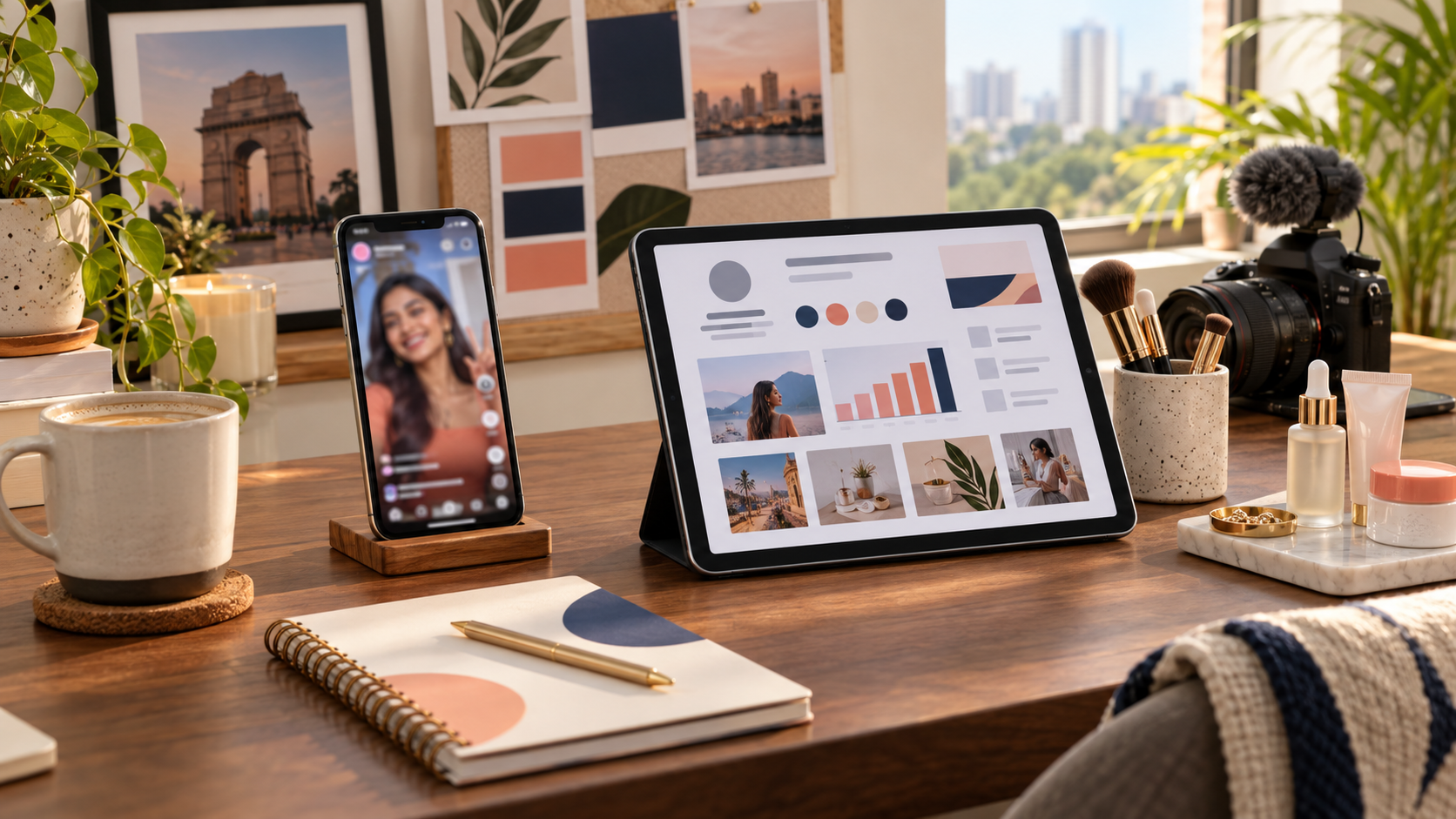
Indian UGC creator desk with a one-page media kit, vertical video portfolio, product samples, and rate card

What is a UGC creator media kit?

A UGC creator media kit is a compact sales document that combines your positioning, strongest work, services, commercial terms, and contact details. Unlike a portfolio, which mainly proves creative ability, the media kit helps a brand understand what it can hire you for and what information it must provide to receive an accurate quote.

Portfolio: proves what you can make through relevant video and photo samples.

Media kit: explains who you help, what you deliver, how the engagement works, and where to contact you.

Rate card: lists starting prices or packages, with assumptions that make the numbers comparable.

Start with /blog/ugc-creator-portfolio-india if your samples are not yet strong enough to sell the offer.

Use /blog/ugc-creator-rates-india to understand the scope variables behind a useful quote.

What should a UGC media kit include?

Include only the information a brand needs for the next decision. A useful kit has a clear creator niche, location and languages, three to six clickable samples, deliverable types, production strengths, starting commercial terms, usage-right assumptions, turnaround, and one contact method. Remove autobiography, vanity metrics, and decorative pages that do not reduce hiring risk.

Header: name, face or creator image, city or service region, email, and primary social handle.

Positioning: one sentence naming the categories, audience, language, and content outcome you handle best.

Proof: three to six relevant samples labelled by product category, format, language, and your role.

Services: raw hooks, edited videos, product demos, testimonials, unboxings, photos, or regional-language variants.

Commercials: starting rate or quote process, revision assumption, turnaround, and whether paid usage is separate.

CTA: one request such as “Email the brief for availability and a scoped quote.”

What is the fastest one-page UGC media kit template?

Use a one-page layout that works on a phone: identity and positioning at the top, proof in the middle, and services plus next step at the bottom. A brand should be able to qualify you in under a minute. Link samples instead of embedding large video files, export a compressed PDF, and keep an editable source version for category-specific variants.

Block 1 — “[Name] creates [formats] for [categories/audiences] in [languages].”

Block 2 — three featured samples: strongest hook, clearest product demo, and best category or language match.

Block 3 — deliverables: duration, raw or edited, aspect ratio, hooks, stills, and optional posting.

Block 4 — process: brief, product delivery, concept approval, first cut, consolidated revision, final files.

Block 5 — commercials: “Projects start at ₹X for the stated base scope; paid usage and extra variants quoted separately.”

Block 6 — availability, email, portfolio link, and a single reply prompt.

Should a UGC creator publish rates in the media kit?

Publish a starting rate only when you define the included scope. Otherwise, say that pricing is quoted after the brand shares the deliverable, duration, editing, language, deadline, revision count, posting requirement, and paid-ad usage. A naked price creates bad comparisons because one organic video and one multi-hook paid-ad package are different jobs.

State currency and tax treatment where relevant.

Separate content production from creator posting and audience distribution.

Separate raw footage, editing, extra hooks, reshoots, rush delivery, exclusivity, and paid usage.

For paid use, ask the platform, geography, duration, edit permission, and creator-handle advertising requirement.

Use /blog/ugc-usage-rights-india and /blog/ugc-creator-contract-india before accepting an ad-use clause.

Which proof should replace follower count?

Lead with evidence that predicts whether you can complete the content job. For asset-only UGC, category fit, product handling, language delivery, hook clarity, audio, framing, reliability, and a repeatable review process usually tell the brand more than follower count. Show audience metrics only when the deal also includes posting to your account.

Label each sample with category, format, language, and whether you scripted, filmed, edited, or posted it.

Use verified campaign results only with the brand's permission and enough context to avoid implying guaranteed performance.

Add one short client quote only when it is genuine and attributable with permission.

New creators can show polished spec samples, clearly labelled as self-initiated rather than paid client work.

Never invent client logos, testimonials, performance metrics, or prior collaborations.

How should you tailor the media kit for Indian brands?

Create one master kit and duplicate only the top proof section for the opportunity. A skincare brand should immediately see texture and routine work; a food brand should see preparation, pack visibility, and natural reactions. State the Indian languages you speak naturally, the cities you can film in, product-shipping constraints, and whether invoices or tax details are available.

Keep English, Hinglish, Hindi, and regional-language ability specific; do not claim fluency from a translated script.

Show vertical 9:16 work when you want Reels, Shorts, or paid-social assignments.

Name the categories you will not accept and any claim-sensitive categories that require brand-approved wording.

For creator outreach, pair the kit with a short personalized message from /blog/ugc-creator-outreach-message-templates-india.

If a brand wants multiple tested concepts, draft the direction in /dashboard/ugc-video before committing to a shoot plan.

What mistakes make a creator media kit easy to ignore?

The common failure is making the document about the creator instead of the hiring decision. Brands ignore slow files, broken sample links, vague services, unrelated examples, unexplained packages, tiny text, and contact details buried on the last page. Every section should either prove fit, clarify scope, reduce risk, or make the next action easier.

A long personal story before the brand can see your category and work.

Ten similar beauty montages when the brief needs a product demonstration.

A package price with no duration, hooks, edits, revisions, usage, or delivery terms.

Autoplay videos or a huge attachment that loads badly on mobile.

Outdated availability, broken Drive permissions, or an email address that is not monitored.

A generic “let's collaborate” ending instead of a clear brief-and-quote action.

UGC portfolio, media kit, and rate card comparison

Asset
Primary job
Must include
UGC portfolio
Prove creative and category fit
Relevant samples, roles, formats, languages
UGC media kit
Turn proof into a hireable offer
Positioning, proof, services, process, commercials, contact
UGC rate card
Set a pricing starting point
Base scope, exclusions, options, usage assumptions
Custom proposal
Price one defined campaign
Deliverables, timeline, revisions, rights, fee, validity
Creator contract
Record the final agreement
Scope, payment, approvals, rights, cancellation, disclosures

Best For

Indian UGC creators pitching D2C brands and agencies

Beginners turning a sample portfolio into a commercial offer

Multilingual creators packaging language-specific services

Creators who need a mobile-friendly document for email and Instagram outreach

Not Ideal For

A replacement for a campaign-specific proposal or signed contract

Fabricated results, logos, testimonials, or brand relationships

Influencer deals where audience analytics and posting distribution are the main product

A fixed lifetime price for undefined deliverables and paid-ad usage

Examples

Skincare creator: lead with a texture demo, routine video, and claim-safe voiceover; offer edited 9:16 videos and raw hook options.
Food creator: show preparation, pack visibility, and a natural tasting reaction; state kitchen setup and dietary restrictions.
Fashion creator: include try-on, fit explanation, fabric movement, and mirror framing; state sizing and shipping requirements.
Regional-language creator: lead with one natural sample per offered language and state whether translation or adaptation is included.
Beginner creator: use three clearly labelled spec ads that demonstrate distinct jobs instead of filling the kit with unrelated personal posts.

FAQs

What should be in a UGC creator media kit?

Include your name and contact details, a one-sentence niche and language position, three to six relevant samples, deliverable types, process, turnaround, starting commercial terms or quote requirements, paid-usage assumptions, and one clear next action.

How long should a UGC media kit be?

One strong mobile-friendly page is usually enough for initial qualification. Use a short deck only when you need distinct category case studies or audience analytics. Link to videos instead of embedding large files, and make the decision-critical information visible in under a minute.

What is the difference between a UGC portfolio and a media kit?

A portfolio proves what you can create. A media kit packages that proof into a hireable offer by adding positioning, services, process, commercial assumptions, and contact details. Most creators should link the portfolio from the media kit rather than forcing one document to hold every sample.

Should a beginner UGC creator make a media kit?

Yes, after creating a few strong samples. Label self-initiated work as spec content, focus on categories and formats you can deliver reliably, avoid invented metrics or client logos, and use a starting scope instead of pretending to have extensive campaign history.

Should I put my UGC rates in my media kit?

You can publish a starting rate when the included duration, hooks, editing, revisions, turnaround, and usage assumptions are clear. Otherwise, list the inputs required for a quote and state that posting, paid usage, raw footage, rush delivery, and extra variants are priced separately.

How do I send a UGC media kit to brands?

Send a short personalized email or DM that names the brand fit and requested next step, then share a lightweight PDF or public link with working sample permissions. Do not attach large video files. Follow up once with useful scope or availability information.

Can AI UGC replace real creators?

AI UGC is best for fast creative testing, early campaign drafts, hook exploration, and low-cost content volume. Real creators still matter for influencer distribution, creator trust, and testimonial rights.

Does AI UGC work for Indian audiences?

It can work well when the prompt includes Indian personas, local language, realistic home settings, product-in-hand moments, and duration-safe dialogue instead of generic global stock-style scenes.

What assets do I need to start?

A product name, a short product brief, and ideally one clean product image are enough to generate the first AI UGC video or product visual.