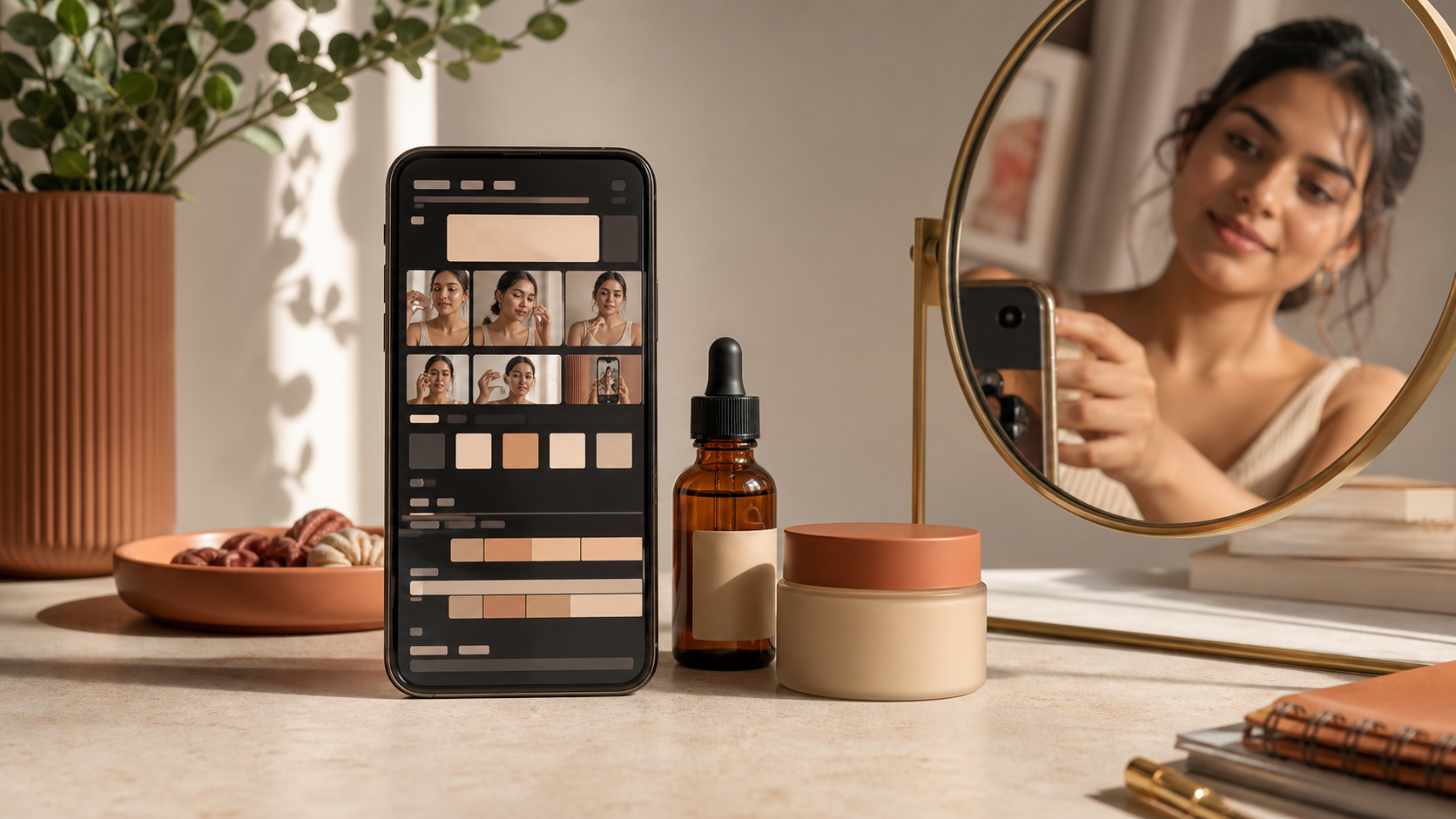
What is a skincare UGC video ad?
A skincare UGC video ad is a creator-style mobile video that places a cleanser, serum, moisturiser, sunscreen, or similar product inside a believable routine. The useful version does not imitate a glossy cosmetic commercial. It quickly shows who the product is for, how it fits into a routine, what the viewer can inspect, and what to do next.
Which skincare UGC video should you make first?
Make the video that resolves the first visible buying hesitation. If shoppers cannot judge texture, show one restrained application close-up. If the routine feels complicated, show where the product fits. If the pack is unfamiliar, begin with a clear product-in-hand shot. Do not combine texture, ingredients, results, price, and a full morning routine in one clip.
Texture doubt: one drop, spread, or lather shot using the real product as reference.
Routine confusion: show the product between two familiar routine steps without giving medical advice.
Packaging doubt: clear front-facing pack, simple vanity, one hand action.
Value doubt: explain amount used or routine convenience without inventing performance data.
How do you write an AI UGC prompt for skincare?
Write one creator, one Indian setting, one skincare moment, one product action, one short spoken line, and one camera instruction. Anchor the pack with a clean product image. Ask for no readable generated labels or on-screen claims, then add approved copy during editing. This keeps the model focused on a reviewable scene instead of an overloaded finished ad.
Prompt formula: Indian creator + vanity or bathroom setting + exact SKU reference + one action + one buyer hesitation + one natural line + vertical 9:16 framing.
Serum example: creator at a daylight vanity holds the referenced bottle, places one drop on the back of the hand, and says, ‘I wanted something that fits into my routine without feeling complicated.’
Cleanser example: creator shows a small amount beside a sink and explains when they use it; avoid fabricated foam, treatment language, and instant-result claims.
Use /blog/product-image-to-video-ai-ads-india when the packshot is the starting asset.
How should skincare brands review product accuracy and claims?
Review the generated clip against the real SKU before judging whether it looks attractive. Check pack shape, colour, closure, label layout, fill, texture, amount used, and hand interaction frame by frame. Keep all claims within approved brand copy and evidence. AI output is creative material, not proof that a cosmetic produces a particular skin result.
Reject changed packaging, invented ingredients, fake certifications, unreadable pseudo-labels, or impossible product motion.
Reject diagnostic, treatment, guaranteed-result, or instant transformation language unless a qualified compliance review has approved the exact claim.
Do not generate a before-and-after result and present it as customer evidence.
Use /blog/ad-creative-audit-checklist-india for the final hook, proof, offer, format, and CTA review.
Why do AI skincare UGC ads look fake?
They usually look fake because the prompt asks for perfect skin, complex hand movement, readable packaging, dramatic transformation, several routine steps, and polished dialogue at once. Simplify the first generation. Keep the product large enough to inspect, use one light direction, choose one action, and add typography outside the generated video.
Too many actions: split application, reaction, and CTA into separate clips.
Wrong texture: use a real macro insert rather than asking AI to invent formula behaviour.
Plastic-looking skin: request natural skin texture and avoid perfection language.
Generic setting: name one believable Indian vanity, bedroom, or bathroom context without crowding it with cultural props.
How should you test skincare UGC video ads?
Test one meaningful variable at a time. Keep the product, scene, and CTA stable while changing the opening hesitation; then keep the winning hook and test creator line or language. A useful first batch is three videos: texture, routine fit, and product-in-hand explanation. Turn the clearest winner into static retargeting creative rather than generating random new concepts.
Batch one: three buyer hesitations, same product and offer.
Batch two: winning hesitation in English, Hinglish, or one relevant regional-language direction.
Batch three: winning video angle becomes a still ad in /dashboard/static-ads.