What is an ad creative audit?
An ad creative audit is a structured review of the message and execution inside an advertisement. It separates a weak creative from a weak offer, audience, or landing page by asking what the viewer can actually see and understand. A useful audit produces one diagnosis and one next test, not a vague list of everything the team dislikes.
Creative question: can a cold viewer identify the product and buyer problem quickly?
Evidence question: does the visual support the spoken or written promise?
Action question: is the next step obvious and consistent with the landing page?
Testing question: which single change would make the next result easiest to interpret?
What is the fastest 10-minute ad creative analysis?
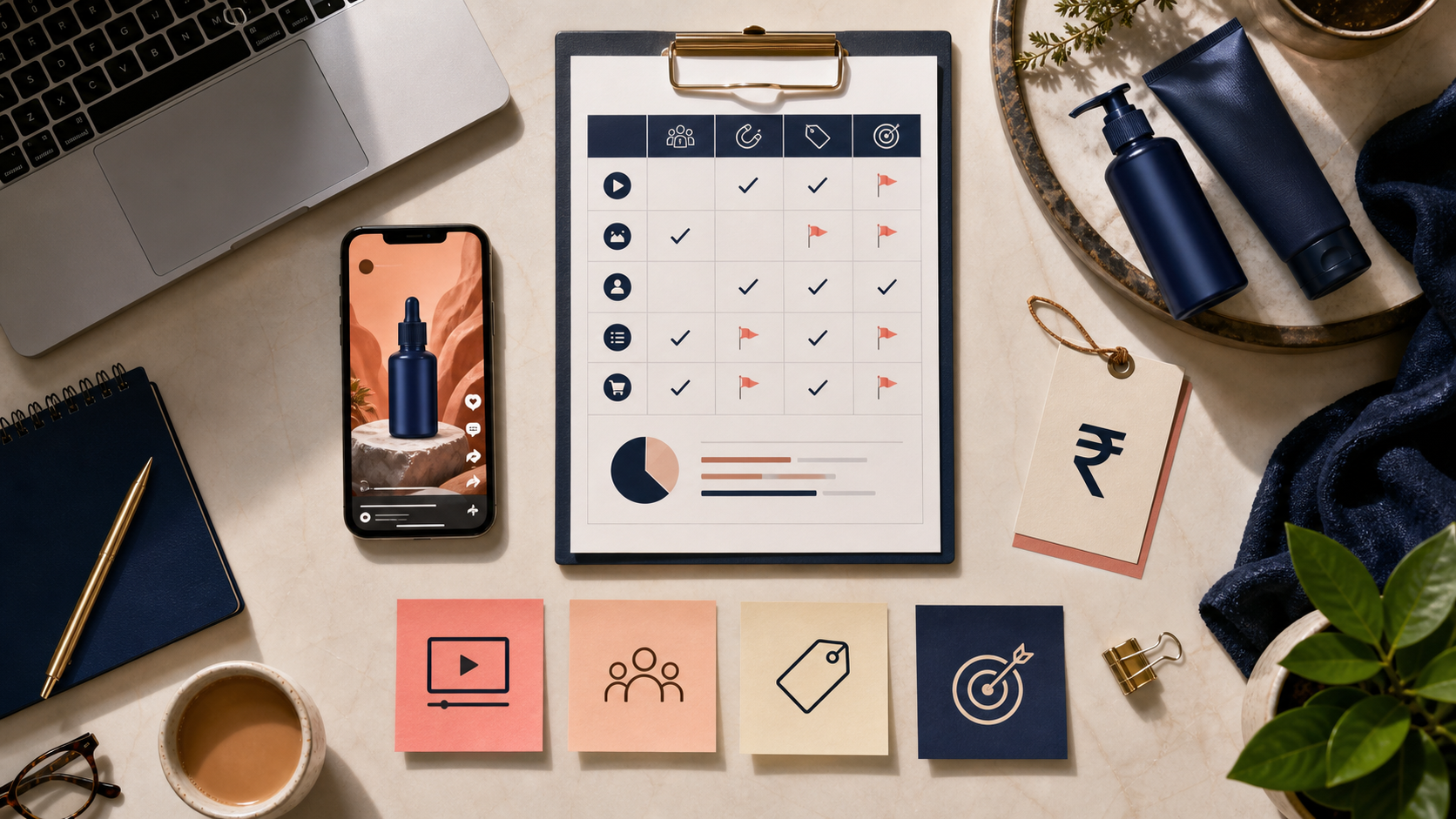
Watch the ad once without sound, once with sound, and once frame by frame. Then score five areas from zero to two: hook, product, proof, offer, and CTA. Zero means missing, one means present but unclear, and two means immediately understandable. Any zero is a production blocker; the lowest score becomes the next revision brief.
Minute 1-2: watch on a phone without sound and write what the ad appears to sell
Minute 3-4: replay with sound and check whether dialogue adds meaning rather than repeating captions
Minute 5-6: pause the first frame, product reveal, proof moment, offer, and final CTA
Minute 7-8: score hook, product, proof, offer, and CTA from zero to two
Minute 9-10: write one revision and one controlled variant for the next test
How do you score the hook and first frame?
A strong hook makes the category, problem, or useful contrast clear before the viewer needs context. Score two when the first frame and opening line work together on a small screen; score one when the idea appears late or relies on audio; score zero when the opening is a logo, generic lifestyle shot, or claim with no visible product connection.
Show the product, product action, buyer problem, or meaningful result immediately
Use one opening idea instead of stacking a question, discount, feature list, and testimonial
Check whether subtitles remain readable under Reels or Stories interface controls
If the hook is weak, use /blog/ugc-hooks-examples-india before changing the entire concept
How do you audit product clarity and visual proof?
Product clarity means the viewer can identify what is being sold, how it is used, and why the visible action matters. Visual proof means the frame supports the claim rather than asking the viewer to trust narration alone. For AI UGC, compare packaging, colour, labels, dimensions, and product behaviour with an approved source image before launch.
Product appears early enough and remains large enough to recognise on a phone
The demo action has a clear start, action, and result
The pack, shade, jewellery detail, garment, food texture, or app screen matches the approved SKU
The claim does not outrun what the creative can honestly demonstrate
Use /blog/product-demo-ad-creatives-india when the missing proof is a clearer product action
How should Indian D2C teams audit the offer and CTA?
The offer tells the buyer why to act now; the CTA tells them what to do next. Score them together because a strong discount with a vague action still creates friction. Use the exact price, bundle, delivery condition, coupon, or trial wording approved for the destination page, and make sure the landing page fulfils the promise without reinterpretation.
Use rupee pricing and discount maths that match the live product page
State important delivery, prepaid, COD, subscription, or bundle conditions clearly
Use one CTA such as shop the bundle, see shades, watch the demo, or start a trial
Reject countdowns, scarcity, testimonials, or performance claims the team cannot substantiate
Source note: ASCI's code and influencer advertising guidelines explain disclosure and truthful-advertising expectations, asci.social/codes-guidelines.
What should you audit for mobile format and AI output?
Review the exported asset in its real placement, not only on a desktop timeline. A technically correct file can still hide subtitles, crop the product, distort hands, or make the CTA too small. AI-generated ads need an additional continuity pass because a polished frame can contain a changed pack, impossible motion, or inconsistent product detail.
Preview 9:16 video and cover crops using /blog/instagram-reels-size-ugc-ads-india
Check faces, fingers, lip movement, product labels, reflections, and scene continuity
Listen for unnatural Hindi, Hinglish, or regional-language cadence before approving
Remove unreadable generated text and add controlled typography during editing
Review without sound, at normal speed, and frame by frame on a real phone
How do you turn the audit into the next creative test?
Translate the lowest score into one testable change. If the hook scored zero but product proof scored two, keep the demo and create two new openings. If the product is unclear, reshoot or regenerate the action before testing offers. This protects useful learning and reduces the time and cost of producing random variants.
Keep the audience, landing page, product, and offer stable when testing a hook
Keep the hook and product action stable when testing a creator persona or language
Use /blog/d2c-ad-creative-angles-india only when the buyer promise itself needs a new angle
Use /blog/meta-ad-creative-testing-calendar-india to schedule the revision, launch, and review
Generate controlled video variants through /dashboard/ugc-video instead of ten unrelated concepts
Why do ad creative audits fail?
Creative audits fail when taste replaces evidence, every stakeholder adds a different preference, or the team changes several variables after one bad day. They also fail when the audit ignores the landing page: an ad can be clear and persuasive while the click destination breaks the same promise. End every review with an owner, one revision, and a review date.
Avoid feedback such as make it pop, premium, viral, or more engaging without naming the failing frame
Separate product accuracy and claim safety blockers from optional styling opinions
Do not call an ad fatigued before it has enough delivery to reveal a pattern
Compare prospecting and retargeting creatives separately because they answer different buyer questions