AI Video Dubbing

Regional UGCBy IndianUGC Team10 min read

AI Video Dubbing for Indian Ads: Workflow and QA Guide

AI video dubbing replaces or adapts a video's spoken track in another language while keeping the original visuals. For Indian ads, the safest workflow is to preserve the selling idea and approved product facts, adapt the script for natural speech, generate one language draft, review voice, timing, lip sync and captions with a fluent speaker, then test it against the original creative before scaling.

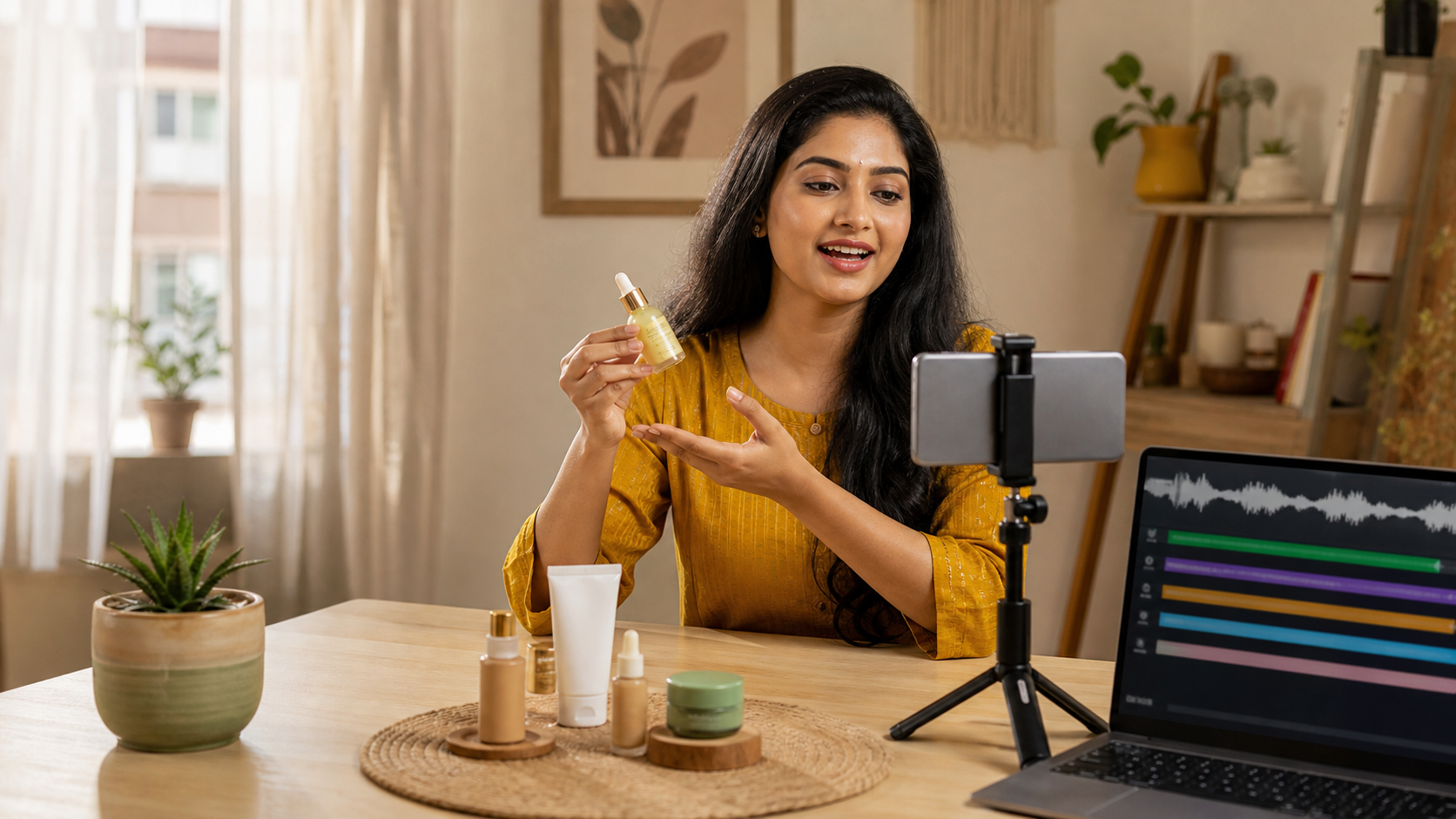
Indian creator recording a product ad beside an AI video dubbing waveform and language tracks

What is AI video dubbing?

AI video dubbing is the use of speech, translation and editing models to create a new spoken-language track for an existing video. Some systems also match voice characteristics or adjust visible mouth movement. In advertising, dubbing is useful when the visual proof already works and the team wants to test a new language without rebuilding every shot.

Dubbing changes the spoken track; localization also adapts wording, captions, CTA and audience context.

The original product action, pack, offer and claim boundaries should remain accurate.

Use /blog/regional-language-ad-localization-checklist-india for the broader meaning-first localization workflow.

Create a controlled regional-language video draft in /dashboard/ugc-video.

What is the fastest safe AI dubbing workflow for an ad?

Start with one ad whose visual argument already deserves another test. Extract the spoken meaning, mark product facts that cannot change, adapt it into short natural speech, generate one dubbed draft and review it before making a language batch. This catches mistranslation, rushed delivery and changed offers while revisions are still cheap.

Step 1: transcribe the exact spoken line and note who is speaking on screen.

Step 2: separate the buyer problem, product fact, proof and CTA from the original phrasing.

Step 3: ask a fluent speaker to adapt the meaning for the defined audience and register.

Step 4: generate the voice track and align pauses to the existing edit.

Step 5: review pronunciation, timing, lip sync, captions, pack, claim, offer and destination page.

Step 6: test one reviewed language version against the proven control.

Why does an AI-dubbed ad sound unnatural?

A dubbed ad usually sounds unnatural because a written translation has been forced into the original timing. Indian buyers may mix English category words with Hindi, Tamil, Telugu or another language, and the natural sentence may be longer or shorter than the source. Adapt for spoken cadence first, then adjust the edit instead of compressing every word into a fixed slot.

Define the market, buyer, age range and desired level of English mixing.

Keep familiar product, ingredient and technology terms when forced translation would confuse buyers.

Split a long sentence across two shots or remove filler rather than speeding up the voice.

Avoid textbook language, exaggerated accents and fashionable slang that the audience would not use.

For North India code-switching, compare the guidance in /blog/hinglish-ugc-ads-india.

How should you review voice, pronunciation and lip sync?

Review intelligibility before perfect lip sync. A fluent speaker should confirm that names, places, product terms and numbers are pronounced naturally and that emphasis lands on the commercial point. Then watch the visible speaker at normal speed. Small mismatches can pass in quick cuts, but obvious mouth-shape conflicts or dialogue during a closed mouth need a new line, cutaway or edit.

Listen once without video for meaning, pacing, stress, emotion and audio artifacts.

Watch once without sound for visible speech, cuts and product continuity.

Watch the final version on a phone with sound, then muted with captions.

Do not clone or imitate an identifiable person's voice without appropriate permission.

Use a real speaker when identity, endorsement or personal experience is central to the message.

Should captions copy the dubbed audio word for word?

Captions should preserve the same meaning as the dubbed audio, but they do not need to reproduce every filler word. Keep them short enough to read on a phone, time them to the spoken phrase and protect product names, prices, units and disclaimers. Add captions during editing rather than asking a video model to render important text inside the scene.

Use the correct script and have a fluent reviewer check spelling and line breaks.

Keep captions away from platform controls, faces, product labels and demonstrations.

Do not let the voice, caption and landing page show different prices or offers.

Keep required qualifiers visible long enough to read; dubbing must not weaken claim context.

Export and review the exact placement version, not only the clean master.

When should you dub, regenerate or film a new ad?

Dub when the original visuals are culturally usable and the product proof remains clear without changing the scene. Regenerate when the creator, setting or product action needs to fit the new market. Film a real creator when the message depends on truthful personal experience, a recognizable identity, detailed demonstration or distribution through the creator's account.

Dub: the winning visual is universal, the speaker is easy to align and only the language must change.

Regenerate: the hook needs a different creator context, setting, gesture or visual example.

Re-edit: the adapted speech needs different pauses, cutaways or caption timing.

Film: the ad requires a real testimonial, precise hands-on proof, whitelisting or creator trust.

Use /blog/telugu-ugc-ads-india for a market-specific creator brief and review example.

How do you test a dubbed regional-language ad?

Compare the reviewed dub with the original winner while keeping the product angle, offer, landing page, placement and measurement stable. Change language first. If the dub wins, compare hooks or voices inside that language. Judge qualified clicks, conversion rate, purchase quality and comment sentiment together; cheap video views do not prove the localized message works.

Round one: original control versus the same meaning in one reviewed language.

Round two: keep the winning language and visual, then test two opening lines.

Round three: adapt the proven structure into a second justified language market.

Route each ad to a landing page that supports the language, offer and product shown.

Record pronunciation and terminology decisions so the next ad does not restart from zero.

AI dubbing production decision table

Situation
Best next step
Main QA risk
Proven visual; only language changes
AI dub plus fluent review
Literal phrasing or rushed timing
Speech timing no longer fits
Re-edit with cutaways and shorter lines
Unnatural speed or obvious mouth mismatch
New market needs different context
Regenerate selected scenes
Generic stereotypes or product drift
Personal experience drives the claim
Film a real creator
Fabricated endorsement or identity
Many language variants are planned
Approve one language and a terminology sheet first
Scaling the same error across every export

Best For

Indian D2C teams adapting proven ads into one regional language

Agencies producing controlled multilingual creative tests

Performance marketers reusing product-accurate visual proof

Teams with access to a fluent language reviewer

Not Ideal For

Unproven ads multiplied into many languages

Voice cloning without appropriate permission

Fabricated testimonials, endorsements or personal experience

Publishing without fluent-language, product and offer review

Examples

Skincare: retain the real application shot, adapt the routine explanation, and keep ingredient and claim wording approved.
Food: preserve the preparation step and pack while adapting taste language and serving context naturally.
Fashion: reuse a product-accurate try-on, but shorten the dubbed line so it does not compete with fit and fabric proof.
SaaS: keep the interface demo, dub the problem and outcome, and localize captions outside the product UI.

FAQs

What is AI video dubbing?

AI video dubbing creates a new spoken-language track for an existing video using speech, translation and editing models. For ads, it should preserve the original selling idea and approved product facts while adapting the phrasing, voice, timing and captions for a defined audience.

Can AI dub an ad into Hindi or regional Indian languages?

Yes. AI can produce useful Hindi and regional-language ad drafts, but a fluent speaker should review meaning, register, pronunciation, cadence and captions. A separate brand review should confirm the product, offer, claims, rights and destination page.

Why does AI dubbing sound robotic or translated?

It often happens when a literal written translation is forced into the source video's timing. Adapt the intended meaning for natural spoken language, choose an appropriate voice and register, then shorten lines or adjust the edit instead of speeding up the speech.

Does an AI-dubbed ad need lip sync?

Not every shot needs perfect lip sync. Clear meaning and natural audio matter first. Use cutaways, product close-ups or a revised line when the visible mouth conflicts with the dub, and reject obvious mismatches during direct-to-camera speech.

Should I dub an existing ad or generate a new regional-language ad?

Dub when the existing visual proof works for the new market and only the language needs to change. Generate new scenes when the creator context, setting, gesture or example needs localization. Film a real creator when truthful personal experience or endorsement is central.

Can AI UGC replace real creators?

AI UGC is best for fast creative testing, early campaign drafts, hook exploration, and low-cost content volume. Real creators still matter for influencer distribution, creator trust, and testimonial rights.

Does AI UGC work for Indian audiences?

It can work well when the prompt includes Indian personas, local language, realistic home settings, product-in-hand moments, and duration-safe dialogue instead of generic global stock-style scenes.

What assets do I need to start?

A product name, a short product brief, and ideally one clean product image are enough to generate the first AI UGC video or product visual.