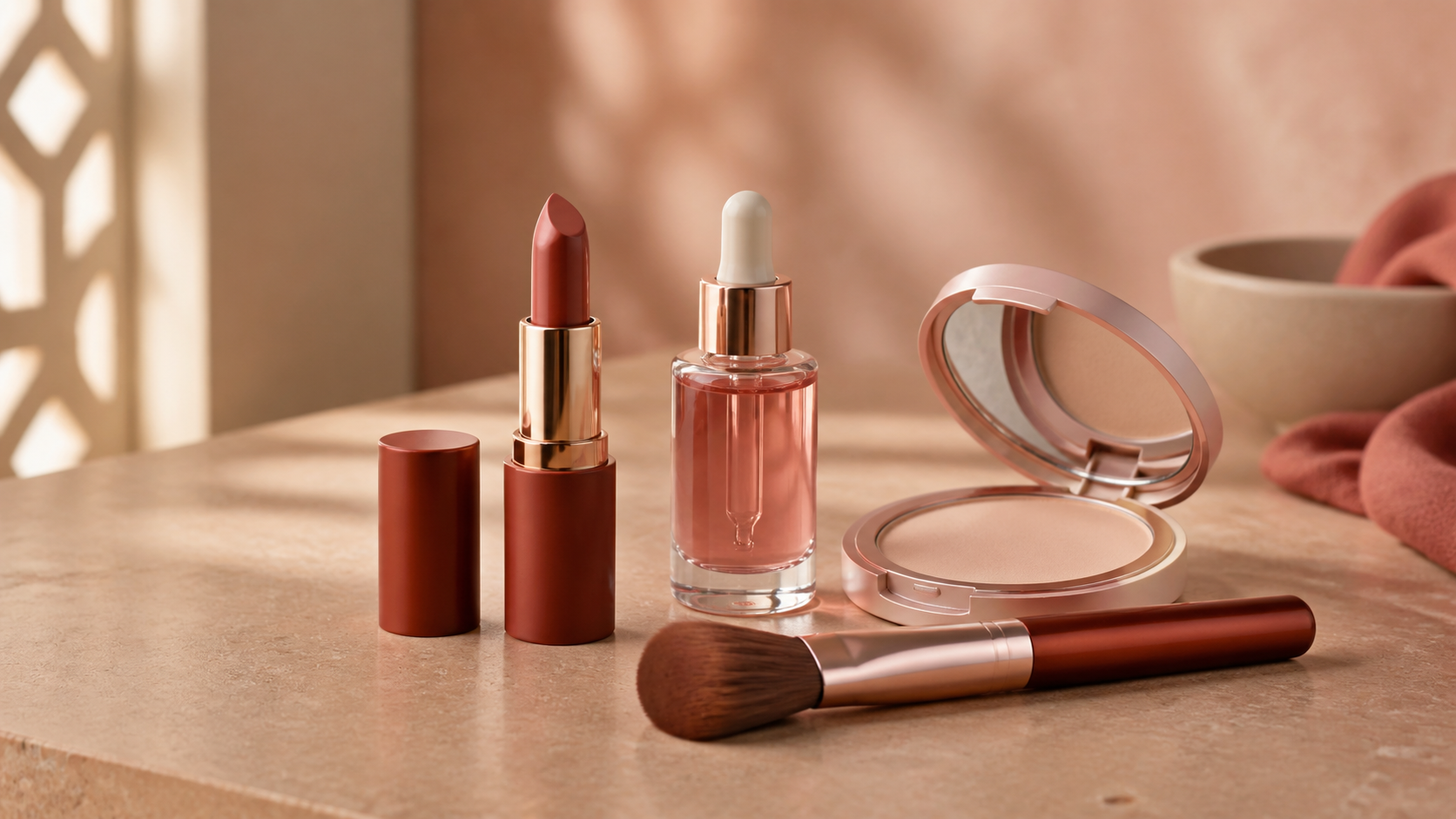
Can AI be used for makeup product photography?
Yes, but use it as a controlled variation tool. Start with accurate photos of the real product and use AI for backgrounds, crops, and campaign scenes. Reject outputs that change the pack, shade, applicator, texture, label, fill level, or product claims.
What is the best setup for makeup product photography?
Use soft neutral light, locked white balance, a clean background, a stable camera, and separate reference photos for the pack, applicator, texture, and swatch. Add a colour reference when shade accuracy matters and control reflections on glossy or metallic packaging.
Should AI generate makeup swatches?
No, not when shoppers will use the swatch to choose a shade or judge performance. Photograph the real formula. AI may help arrange or clean an approved swatch image, but it should not invent colour, opacity, coverage, finish, or skin results.
How do I make AI cosmetic product photos look real?
Preserve the approved product layer, use one surface and one light direction, keep props restrained, match contact shadows and reflections, and compare every output with the real SKU. Simplify any scene that makes the product harder to verify.
When should a beauty brand choose a real photoshoot?
Choose a real shoot for master packshots, shade ranges, swatches, textures, applicator action, regulated labels, substantiated results, and premium campaign heroes. Use AI after those source assets are approved to create controlled scene and ad variations.
Can AI product photography replace a studio shoot?
For ecommerce testing, PDP refreshes, lifestyle scenes, and paid social variants, AI product photography can reduce dependence on studio shoots. High-stakes hero campaigns may still need a real shoot.
Is AI product photography useful for Indian marketplaces?
Yes, especially for lifestyle scenes, social ads, secondary PDP images, and category-specific visuals. Marketplace main images may still need strict compliance checks.
Can I generate product videos from one image?
Yes. A product image can guide the product appearance while the prompt defines the scene, creator, camera movement, and action.