Background Scenes

Product Photography AIBy Indian UGC Team10 min read

AI Product Photography Backgrounds for Indian Ecommerce

The best AI product photography background is the one that makes the product easier to buy, not the one that looks most cinematic. For Indian ecommerce, start with one clean product image, choose a buyer-relevant setting, preserve product scale and shadows, then review the output for packaging accuracy before using it on PDPs or ads.

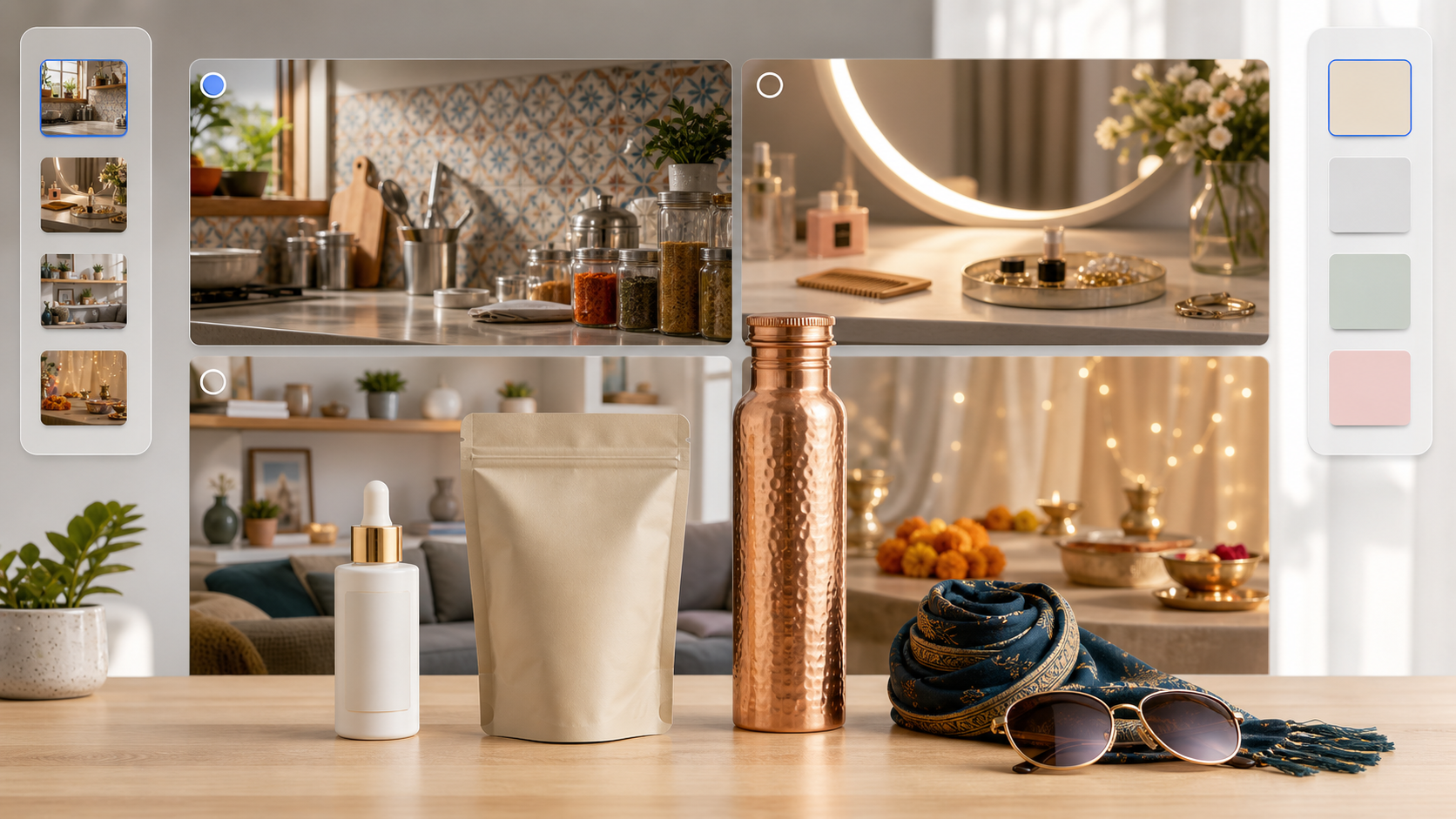
Indian ecommerce product photos shown with AI-generated background scene options for PDPs and ads

What is an AI product photography background?

An AI product photography background is a generated or edited scene placed behind a product photo to make the asset useful for ecommerce, ads, or social content. It can be a plain catalog background, an Indian kitchen counter, a bathroom vanity, a festive table, a desk setup, or a lifestyle scene. The job is to support the product, not distract from it.

Use the broader ecommerce workflow first: /blog/ai-product-photography-for-ecommerce-india

Use prompt formulas when the scene keeps changing unpredictably: /blog/ai-product-photography-prompts-india

Use /dashboard/static-ads when the approved product visual needs offer, hook, or retargeting layouts

Use /blog/product-image-to-video-ai-ads-india when the same image should become a short UGC-style video

Which product background should Indian brands choose first?

Choose the background that answers the buyer's biggest hesitation. If the product's size is unclear, use a scale-reference scene. If taste, texture, or routine matters, use a realistic usage setting. If the asset is for a marketplace support image, keep the background clean and product-led. If the asset is for Meta or Instagram, choose a background that makes the first benefit obvious on mobile.

Beauty: bathroom vanity, dressing table, texture close-up, or morning-routine setup

Food and beverage: Indian kitchen counter, serving suggestion, breakfast table, or office-snack drawer

Fashion and accessories: mirror, wardrobe, office desk, travel bag, or festive outfit context

Home goods: messy-before setup, shelf, drawer, kitchen cabinet, or size-reference scene

Premium products: restrained studio surface with one local prop instead of a crowded luxury set

How do you use a product background generator safely?

Use a product background generator as an editing workflow, not a magic catalog replacement. Remove or simplify the old background, keep the source product visible, ask for one believable scene, and review the product edge, shadow, reflection, label, and scale before publishing. If the generated scene changes the pack, the output is a concept, not a finished ecommerce asset.

Fast rule: one product, one surface, one setting, one buyer use case

Avoid asking for readable text, multiple rooms, tiny label details, heavy reflections, or too many props

Source note: Amazon India seller image guidance separates main image discipline from supporting image use, sellercentral.amazon.in help pages

Source note: Flipkart seller listing guidance expects clear product representation, seller.flipkart.com help pages

Source note: Meta's ad guide keeps creative specifications mobile-first, facebook.com/business/ads-guide

Why do AI product photo backgrounds look fake?

AI product photo backgrounds look fake when the product and scene do not share the same light, scale, surface, or camera angle. The usual failure is a sharp packshot pasted into a soft lifestyle scene, or a beautiful background that hides the product. Fix the physical cues first: contact shadow, surface height, hand scale, reflection, and product-facing direction.

Bad: skincare bottle floating on marble with no contact shadow

Better: bottle on a bathroom vanity with matching light direction and a simple towel prop

Bad: snack pouch in a luxury restaurant scene that says nothing about the buying moment

Better: pouch on an Indian kitchen counter or office desk where the use case is obvious

Bad: festive background with props bigger than the product

Better: one festive cue, product centered, packaging still readable enough for recognition

When should backgrounds become static ads instead of product photos?

Turn the background into a static ad when the product is already clear and the missing piece is the hook, offer, or buyer objection. A plain lifestyle background helps PDP comprehension. A static ad needs composition: product, headline idea, benefit hierarchy, CTA, and mobile crop. Do not force one AI background prompt to solve both jobs at once.

PDP background: make the product feel real, sized correctly, and easy to understand

Marketplace support image: keep the scene clean and review platform rules before upload

Static ad: use the approved visual, then build hook and offer variants in /dashboard/static-ads

Video ad: use the strongest background idea as the scene brief for /dashboard/ugc-video

AI product background decision table

Goal
Best background
Check before publishing
Main packshot support
Clean surface or light studio setting
Product edge, shadow, scale, and label recognition
PDP lifestyle image
Buyer routine scene
Does the background answer a real hesitation?
Marketplace secondary image
Simple use-case setup
Platform rules, product clarity, no exaggerated claims
Meta static ad
Benefit-led product scene
Mobile crop, hook clarity, offer fit
Regional campaign
Local home, kitchen, desk, or festive cue
Does the scene feel specific without becoming cluttered?

Best For

Indian D2C teams improving PDP secondary images

Catalog teams changing product backgrounds without a new shoot

Performance marketers turning packshots into static ad concepts

Founders deciding which products deserve a real lifestyle shoot

Not Ideal For

Unreviewed main marketplace packshots

Packaging-heavy products where label accuracy must be exact

Medical, financial, or regulated product claims without compliance review

Luxury hero campaigns where physical material, model casting, and lighting control matter more than speed

Examples

Skincare serum: bathroom vanity background for a morning routine PDP image, then a cleaner static ad for retargeting.
Snack brand: kitchen counter with chai for lifestyle, office drawer for working-professional retargeting.
Copper bottle: breakfast table with soft daylight, not a crowded wellness-spa scene.
Kurta accessory: wardrobe or mirror background first, festive background only when the campaign needs it.
Home organizer: messy drawer before-scene and clean shelf after-scene as separate assets.
Premium tea: restrained ceramic cup, Indian kitchen light, product pack still facing camera.
Pet product: living-room floor with scale reference, reviewed carefully for product shape and safety cues.
Regional launch: same product visual adapted into Tamil, Hindi, Marathi, or Bengali ad settings after the base image passes QA.

FAQs

What is the best background for AI product photography?

The best background is the one that supports the buyer's decision. Use a clean surface for product clarity, a realistic routine scene for PDP lifestyle images, and a benefit-led composition for static ads. Avoid backgrounds that make the product smaller, less recognizable, or visually unbelievable.

How do I change a product photo background with AI?

Start with a clear product photo, remove or simplify the existing background, choose one setting, and ask the AI to preserve product shape, scale, lighting, and shadow. Review the output before using it in ecommerce pages or paid ads.

Why does my AI product background look fake?

It usually looks fake because lighting, scale, perspective, or shadows do not match the product. Reduce the scene complexity, use one surface, keep props small, and check whether the product appears to touch the background naturally.

Should Indian brands use AI backgrounds for Amazon or Flipkart images?

Use AI backgrounds more cautiously for marketplaces. Main images often need stricter product-focused rules, while secondary images can sometimes use lifestyle or use-case visuals. Review platform guidance and product accuracy before upload.

When should I use a static ad instead of an AI product photo?

Use a static ad when the product visual is already approved and the goal is to test a hook, offer, CTA, comparison, or retargeting message. Use AI product photography when the first problem is the scene or product context.

Can AI product photography replace a studio shoot?

For ecommerce testing, PDP refreshes, lifestyle scenes, and paid social variants, AI product photography can reduce dependence on studio shoots. High-stakes hero campaigns may still need a real shoot.

Is AI product photography useful for Indian marketplaces?

Yes, especially for lifestyle scenes, social ads, secondary PDP images, and category-specific visuals. Marketplace main images may still need strict compliance checks.

Can I generate product videos from one image?

Yes. A product image can guide the product appearance while the prompt defines the scene, creator, camera movement, and action.