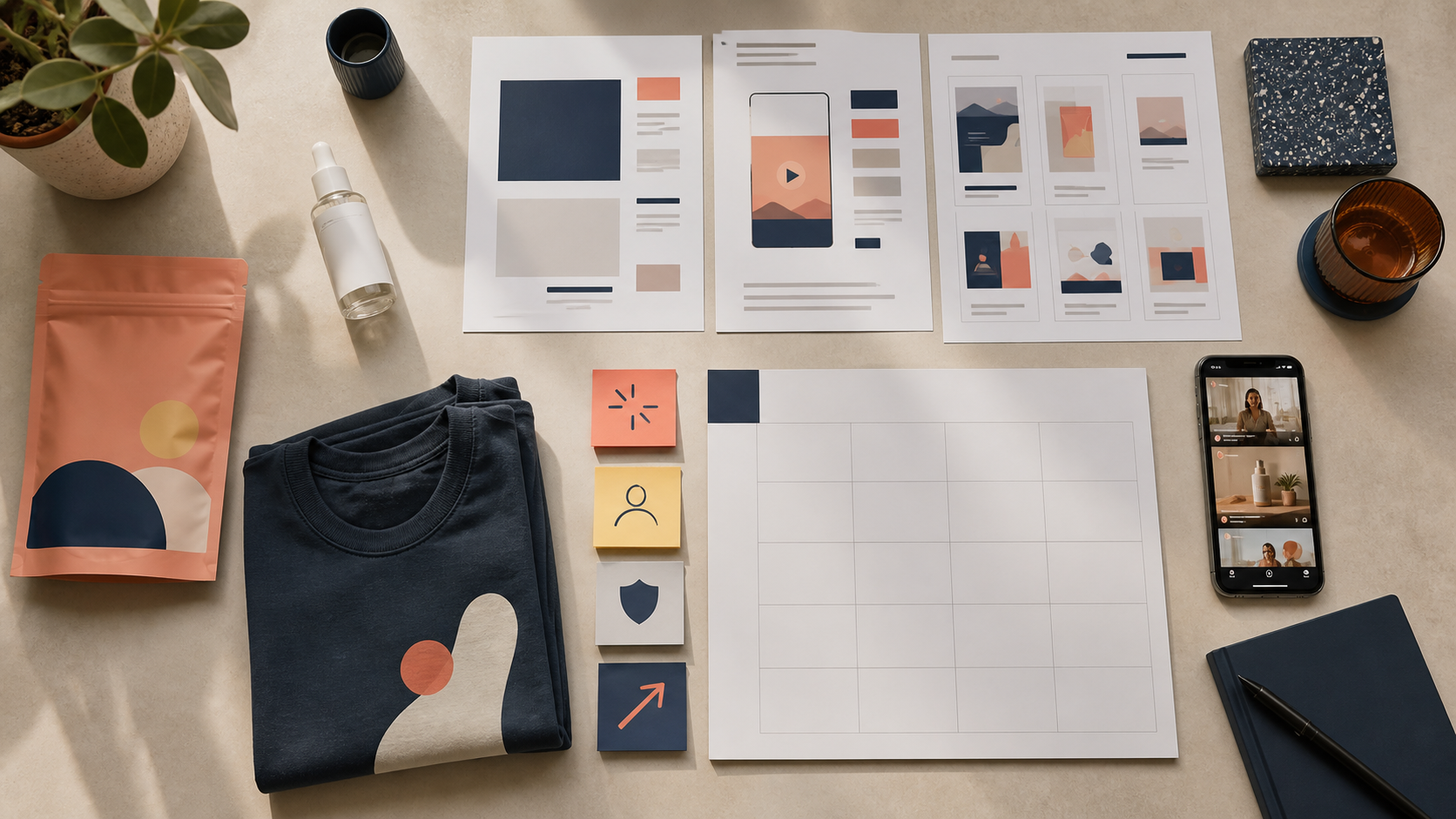
What is an ad creative strategy?
An ad creative strategy is the plan that connects a buyer hesitation to a message, proof moment, format, CTA, and next test. It tells the team why each UGC video or static ad exists and what the campaign should learn from it.
How do I create an ad creative strategy for a D2C brand?
Start with the buyer's biggest hesitation, choose one defensible promise, show one visible proof moment, select video or static based on how much explanation is needed, and define one next action. Then create three to five controlled variants around that same idea.
Should D2C brands start with UGC video or static ads?
Start with UGC video when the product needs demonstration, trust, routine context, or objection handling. Start with static ads when shoppers already understand the product and need a clearer offer, comparison, review, bundle, or reminder.
How often should an ad creative strategy change?
Review the strategy weekly, but do not rebuild it every week. Keep a buyer angle while it produces useful learning, refresh fatigued hooks or formats as needed, and change the core strategy when evidence shows the hesitation, proof, or offer is wrong.
Can AI UGC be part of a D2C ad creative strategy?
Yes. AI UGC is useful for fast concept drafts, hook tests, persona comparisons, scene exploration, language directions, and creative refreshes. It still needs human review for product accuracy, claims, packaging, crop, and CTA clarity.
Can AI UGC replace real creators?
AI UGC is best for fast creative testing, early campaign drafts, hook exploration, and low-cost content volume. Real creators still matter for influencer distribution, creator trust, and testimonial rights.
Does AI UGC work for Indian audiences?
It can work well when the prompt includes Indian personas, local language, realistic home settings, product-in-hand moments, and duration-safe dialogue instead of generic global stock-style scenes.
What assets do I need to start?
A product name, a short product brief, and ideally one clean product image are enough to generate the first AI UGC video or product visual.