Marketplace Image QA

Product Photography AIBy Indian UGC Team10 min read

AI Product Photography for Marketplace Images in India

AI product photography is useful for marketplace support images, PDP lifestyle modules, Google Shopping experiments, and paid-social stills, but it should not be treated as a blind replacement for main product packshots. Indian ecommerce teams should separate strict product images from creative support images, then review product accuracy, background rules, file quality, claim safety, and platform fit before publishing.

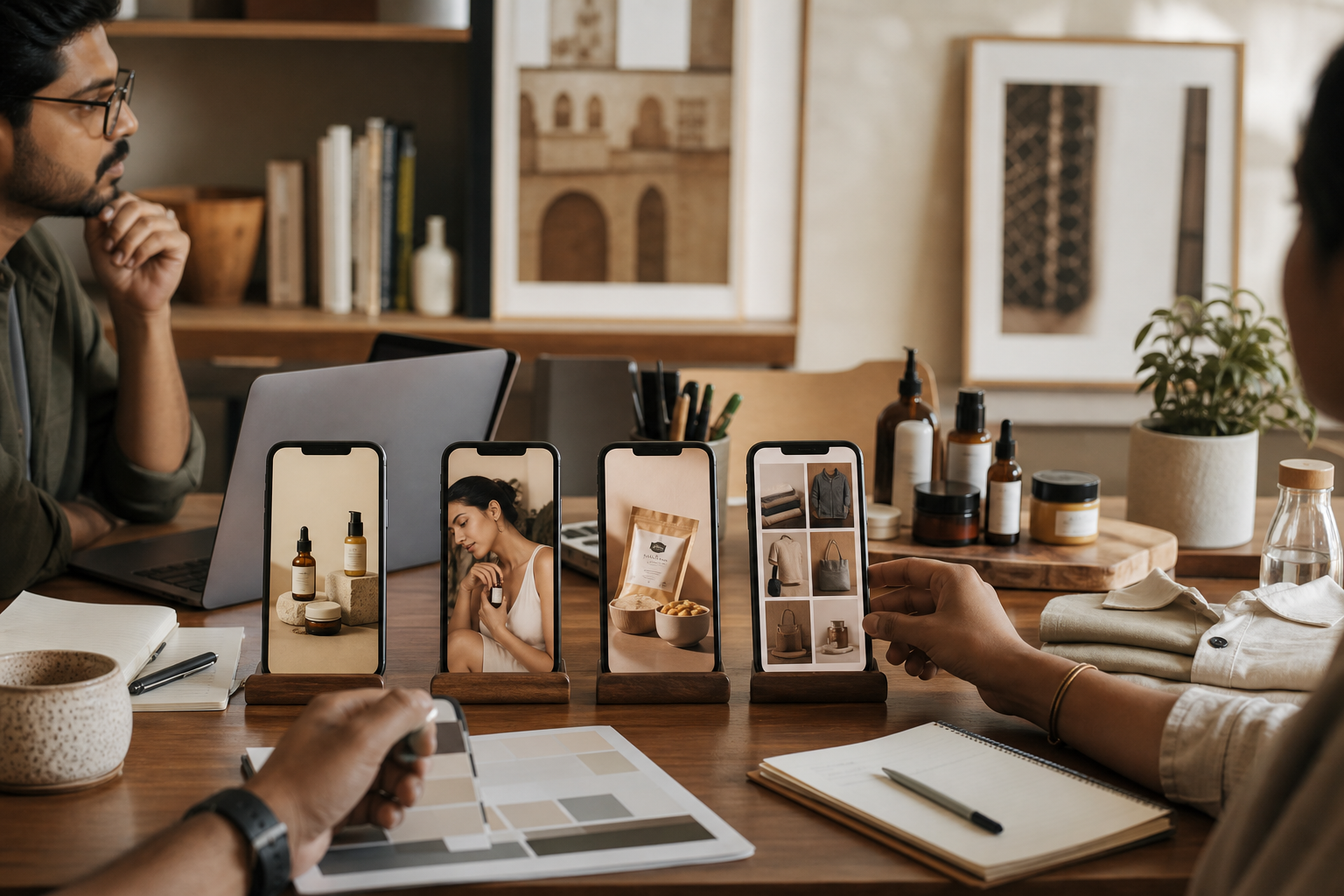
Indian ecommerce marketplace image workflow with packshots, lifestyle product photos, and review checklist

What is AI product photography for marketplace images?

AI product photography for marketplace images is the use of AI editing or generation to create product visuals for listings, PDP galleries, shopping feeds, and ads. The safest workflow starts with a real source product image, keeps the main packshot conservative, and uses AI more freely for secondary lifestyle images, use-case scenes, and paid-social variants.

AI product photography is a product-image workflow for creating marketplace support visuals, PDP lifestyle images, and ad stills from one clean source product photo.

Start with the broader ecommerce guide in /blog/ai-product-photography-for-ecommerce-india if the team is still deciding where AI fits

Use /blog/ai-product-photography-prompts-india when prompts are changing packaging, scale, shadows, or scene realism

Use /blog/ai-product-photography-backgrounds-india when the image problem is background choice rather than marketplace review

Which marketplace product image should you create first?

Create the image closest to buyer confidence first: a clean product-led visual, then one secondary image that answers the biggest hesitation. If shoppers need scale, show scale. If they need texture, show texture. If they need usage context, show the product in a realistic Indian home, kitchen, vanity, wardrobe, desk, or storage setup.

Beauty: keep the main product image clean, then add a vanity or texture scene as a support image

Food and beverage: show pack clarity first, then serving context such as chai, breakfast, office snack, or kitchen counter

Fashion and accessories: use studio or controlled product photos for exact color, then AI scenes for styling, travel, office, or festive context

Home goods: use product-led scale images before decorative lifestyle scenes

If the approved product visual already exists, turn it into retargeting creatives in /dashboard/static-ads

When should you use AI, studio photography, or static ads?

Use studio photography when the image must prove exact product shape, color, dimensions, label, or compliance. Use AI product photography when the buyer needs supporting context at speed. Use static ads when the product image is already accurate and the missing layer is offer clarity, comparison, bundle framing, or retargeting.

Studio first: main packshot, exact label, apparel color accuracy, regulated category, premium campaign hero

AI first: PDP secondary image, seasonal scene, marketplace support image, social post, product-use visual

Static ad first: price anchor, offer stack, comparison, bundle, benefit hierarchy, retargeting creative

Video next: use /blog/product-image-to-video-ai-ads-india when the same approved image needs motion

How do you review AI product photos before marketplace upload?

Review AI product photos like ecommerce assets, not like moodboards. Check whether the product is the same item, the scene is believable, the buyer can understand scale, the background fits the platform, and no generated text or claim appears. If the image changes packaging or product form, keep it as an internal concept.

Product accuracy: shape, color, material, pack size, visible variant, and label direction still match the real SKU

Platform fit: main image stays product-led; support images can show lifestyle context when the marketplace allows it

Feed quality: image URL is stable, file format is accepted, product is not hidden, and resolution is high enough for shopping placements

Claim safety: no fake badges, invented discounts, medical-style claims, unsupported benefits, or generated comparison text

Source note: Google Merchant Center says product images must accurately show the whole product, avoid placeholders, promotional overlays, and borders, and preserve AI-generated image metadata when applicable: https://support.google.com/merchants/answer/6324350

Source note: Amazon Seller Central recommends multiple product images and videos, while its image requirements keep main listing visuals product-focused: https://sellercentral.amazon.com/help/hub/reference/external/G1881

Source note: Flipkart Seller Hub product photography guidance stresses clear lighting and authentic product presentation for seller images: https://seller.flipkart.com/seller-blog/product-photography

Why do marketplace AI product images get rejected or underperform?

Marketplace AI product images fail when they look attractive but reduce trust. The product may be cropped, label text may change, packaging may distort, props may imply an included accessory, or the scene may distract from the item. Fix the image by simplifying the scene and making the product easier to verify.

Wrong product: bottle shape, pouch size, fabric color, or accessory variant changes

Wrong promise: generated badge, fake offer, exaggerated result, or implied certification appears

Wrong scene: the background looks premium but does not answer a buyer question

Wrong crop: product occupies too little of the frame or loses key edges

Wrong next step: the image should have become a static ad, not a marketplace support image

Marketplace product image decision table

Image job
Best workflow
Review before upload
Main marketplace image
Studio photo or strict packshot edit
White or clean background, exact SKU, no props that confuse the buyer
Marketplace support image
AI product photography from approved source image
Use case is clear, product remains accurate, no unsupported claims
PDP lifestyle image
AI lifestyle scene
Buyer hesitation answered, local setting feels believable, product scale is right
Google Shopping feed image
Stable product-led image URL
Accepted format, product visibility, no promotional overlays, AI metadata preserved if required
Paid-social static ad
Approved product visual plus /dashboard/static-ads
One hook, mobile crop, readable layout added outside the generated product photo

Best For

Indian D2C catalog teams refreshing marketplace support images

Founders deciding whether a SKU needs studio photography or AI variants

Performance marketers turning approved product visuals into static ads

Agencies building PDP, marketplace, and paid-social image systems from one source product photo

Not Ideal For

Blind replacement of main marketplace images without platform review

Products where legal label, ingredient, warning, color, or dimension accuracy must be exact

Regulated claims, medical outcomes, financial promises, or before-after proof without compliance review

Luxury hero shoots where exact material, casting, and lighting control are the campaign value

Examples

Skincare marketplace set: studio packshot for the main image, AI vanity scene for PDP lifestyle, texture-led static ad for retargeting.
Snack brand set: clean pouch image first, kitchen-counter serving context second, office snack static ad third.
Kurta accessory set: color-accurate product photo for marketplace, mirror styling image for PDP, festive static ad for campaign use.
Home organizer set: product-only scale image, drawer-use support image, before-after static ad created separately.
Copper bottle set: exact bottle image for marketplace, breakfast-table lifestyle image for PDP, bundle or gifting creative for paid social.
Pet product set: product-led scale image, careful living-room usage visual, no exaggerated pet behavior or safety implication.
Regional campaign set: approved product visual adapted into Hindi, Tamil, Marathi, or Kannada creative only after the product image passes QA.
Image-to-video follow-up: use the approved still as the anchor for /dashboard/ugc-video after marketplace images are reviewed.

FAQs

Can AI product photography be used for Amazon or Flipkart images?

Use it cautiously. AI product photography is safer for secondary lifestyle images, PDP modules, and ad visuals than for unchecked main marketplace images. Main images should stay product-led and must be reviewed against the platform's current listing rules before upload.

What is the safest AI product photography workflow for Indian marketplaces?

Start with a clean real product image, create one support image for one buyer question, then check product accuracy, background, crop, file quality, and claims. Do not upload outputs that change packaging, invent text, add fake badges, or imply accessories that are not included.

When should I choose studio product photography instead of AI?

Choose studio photography for main packshots, strict color or label accuracy, regulated categories, premium campaign hero images, apparel fit, and any product where visual ambiguity could create returns or listing issues.

How do I make AI product photos look less fake?

Use one source product, one surface, one use case, and one light direction. Reduce props, preserve contact shadows, avoid generated text, and review whether the product scale matches the scene. If the image feels decorative but not useful, simplify it.

What is the best way to turn marketplace product photos into ads?

Approve the product visual first, then create static ads around one hook, offer, comparison, or bundle. Keep marketplace support images clean and use a separate static-ad workflow when the goal is a paid-social layout.

Can AI product photography replace a studio shoot?

For ecommerce testing, PDP refreshes, lifestyle scenes, and paid social variants, AI product photography can reduce dependence on studio shoots. High-stakes hero campaigns may still need a real shoot.

Is AI product photography useful for Indian marketplaces?

Yes, especially for lifestyle scenes, social ads, secondary PDP images, and category-specific visuals. Marketplace main images may still need strict compliance checks.

Can I generate product videos from one image?

Yes. A product image can guide the product appearance while the prompt defines the scene, creator, camera movement, and action.