AI Video Ads

AI UGC WorkflowBy Indian UGC Team11 min read

AI Video Generator for Ads: India D2C Workflow

An AI video generator for ads should not start with a vague prompt like 'make a viral ad.' For Indian D2C brands, the fastest workflow is one buyer hesitation, one visible product action, one Indian setting, one creator-style line, one platform format, and a review pass for product accuracy, claims, language, and mobile readability.

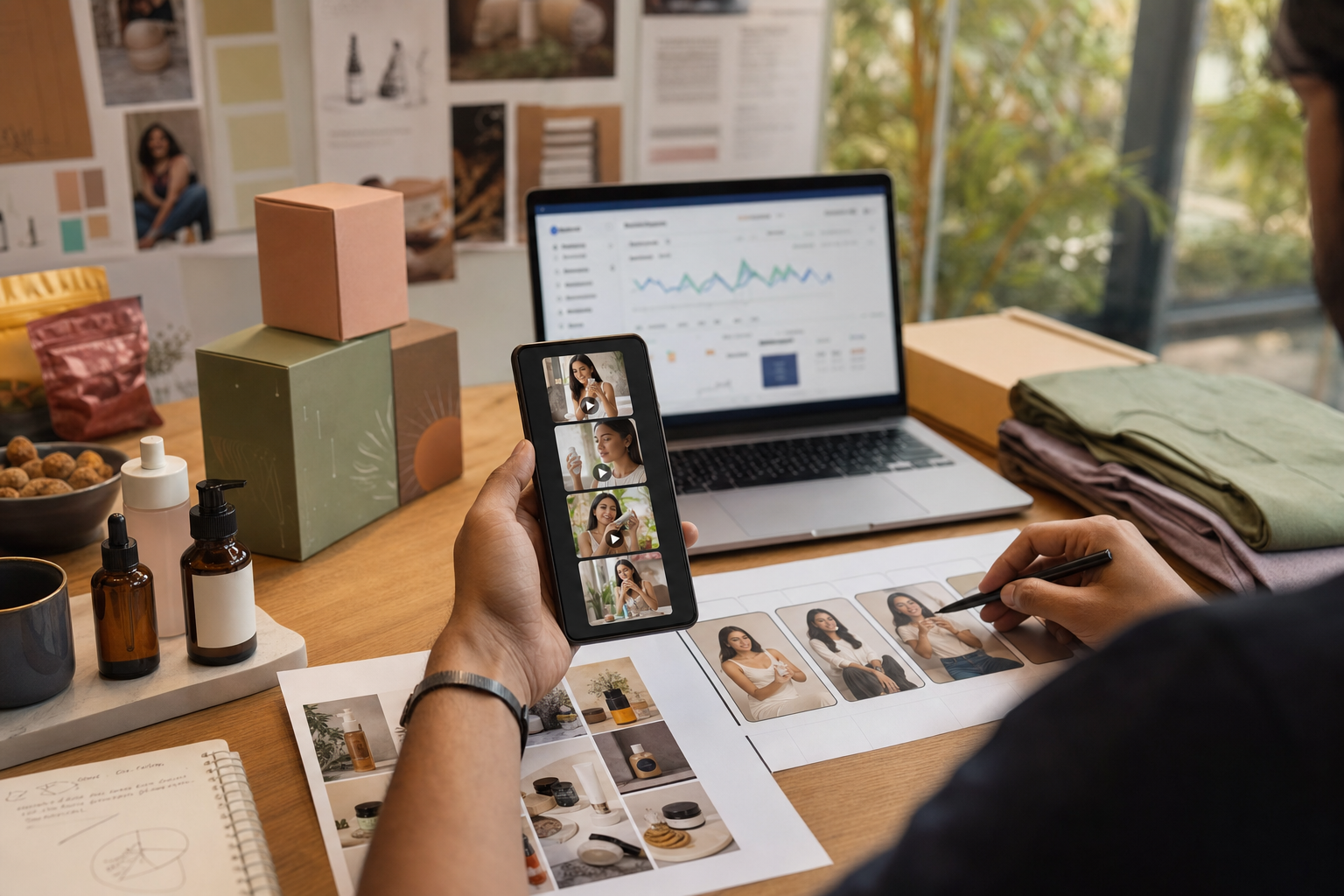
Indian ecommerce marketer planning AI video ads with UGC storyboards, product prompts, and mobile ad previews

What is an AI video generator for ads?

An AI video generator for ads is a tool or workflow that turns a product brief, image, URL, script, or prompt into short paid-social video creative. The best ad outputs are not generic AI videos. They are narrow creator-style drafts built around one buyer problem, one product demonstration, and one clear next step.

Use /ai-ugc-video-generator when you need the IndianUGC video studio itself

Use /blog/product-image-to-video-ai-ads-india when you already have one product photo and need motion variants

Use /blog/ugc-video-generator-prompts-india when the prompt is the weak part of your workflow

Generate the first ad draft in /dashboard/ugc-video

What should Indian D2C brands generate first?

Generate the ad that removes the buyer's biggest hesitation first. If the product is hard to understand, create a product-in-hand demo. If people doubt the benefit, create a proof or routine scene. If the category is crowded, create a comparison angle. If the price is the issue, create a value-per-use or bundle explanation before testing discounts.

New product: one clear demo in an Indian home, desk, kitchen, mirror, commute, or unboxing setting

Crowded category: one comparison without naming or attacking competitors

High-effort product: first-use walkthrough that shows the easiest path

Regional buyer: same visual with natural Hindi, Hinglish, Tamil, or other language variants

Plan the next test with /blog/ad-creative-testing-india instead of changing hook, offer, and language together

How do you write the first AI video ad prompt?

Write the first AI video ad prompt like a production note, not a full screenplay. Include the product, target buyer, setting, creator persona, one action, one spoken line, format, and review constraints. Keep the clip short enough that the model can preserve the product and scene instead of inventing extra moments.

Formula: product plus buyer hesitation plus Indian setting plus creator persona plus action plus one spoken hook plus CTA

Good: young office commuter at a desk opens the snack pack, takes one bite, says a natural value line, vertical mobile ad, no readable text

Avoid: cinematic viral commercial with many scenes, perfect label text, long voiceover, celebrity style, or unrealistic product claims

Source note: Meta recommends mobile-ready video creative for video ads, facebook.com/business/ads/video-ad-format

Source note: Google's video ABCDs framework focuses on attention, branding, connection, and direction, support.google.com/google-ads/answer/14783551

When should you use AI UGC video instead of a generic AI ad generator?

Use AI UGC video when the buyer needs a creator-style recommendation, product-in-hand use, spoken objection handling, or local language context. Use a generic AI ad generator when the asset is mostly motion graphics, product URL automation, or simple brand video assembly. UGC-style ads need prompt control because trust comes from the scene feeling specific.

AI UGC first: beauty, food, apparel, home, wellness, pet care, accessories, and products that need demonstration

Generic ad maker first: simple sale announcement, app explainer, event promo, or non-product brand video

Static ad first: offer-led retargeting, packshot comparison, testimonial card, or catalogue refresh in /dashboard/static-ads

Use examples from /blog/ugc-ads-examples-india before inventing a new format from scratch

Why do AI video ads fail?

AI video ads fail when they look impressive but cannot be used in a campaign. Common failure points are wrong product shape, unreadable packaging, unnatural hands, fake-looking Indian settings, overclaiming, awkward language, slow first three seconds, and no clear CTA. Review the output like a media buyer, not like someone admiring a demo reel.

Product check: does the item still look like the real SKU?

Hook check: would the first three seconds stop the right buyer?

Claims check: can the brand legally and ethically say the line?

Language check: does the line sound like a real Indian buyer or creator?

Format check: does it work as a vertical ad without tiny text?

Use /blog/ugc-hooks-examples-india when the clip looks fine but the opening line is weak

AI video ad generator decision table

Ad job
Best first AI video
Review before launch
Explain a new product
Product-in-hand demo with one use case
Can a cold buyer understand it in five seconds?
Beat category sameness
Creator comparison around one tradeoff
Is it fair, specific, and not competitor-copying?
Show routine fit
Morning, office, commute, kitchen, vanity, or unboxing scene
Does the setting match the actual buyer?
Turn one image into motion
Packshot-led image-to-video demo
Does the product remain recognizable?
Scale language variants
Same scene in English, Hinglish, Hindi, or regional language
Does the line sound natural, not translated?
Retarget warm buyers
Short objection-answer or offer reminder
Is the CTA direct enough for paid traffic?

Best For

Indian D2C founders who need first-round paid-social video drafts

Performance marketers testing hooks, languages, and product demos quickly

Agencies creating UGC-style options before a filmed creator brief

Ecommerce teams comparing AI video generators for ad creative, not entertainment clips

Not Ideal For

Guaranteeing ROAS from one generated video

Imitating a real creator, celebrity, influencer, or competitor ad

Regulated product claims without review

Campaigns where exact packaging text must be perfectly readable in every frame

Examples

Skincare: vanity-table creator shows texture first, then gives one routine-fit line.
Snack: office-desk bite reaction for a buyer who wants a cheaper chai-break option.
Fashion: mirror try-on with one fit or fabric detail before a simple CTA.
Home product: messy drawer, product use, small reveal, no exaggerated before-after claim.
Wellness: breakfast-table routine with conservative benefit language and product visible.
Regional variant: same visual concept in natural Hinglish or Hindi before testing Tamil, Telugu, Marathi, Bengali, Kannada, Malayalam, or Gujarati.

FAQs

What is the best AI video generator for ads?

The best AI video generator for ads is the one that can produce a usable campaign draft from your product, buyer hesitation, scene, language, and CTA. For Indian D2C brands, Indian context, prompt structure, product review, and creative testing workflow matter more than a generic viral-video feature list.

Can AI generate UGC video ads?

Yes. AI can generate UGC-style video ads when the prompt includes a creator persona, product action, Indian setting, spoken hook, and platform format. The output still needs human review for product accuracy, claim safety, language, and whether the first seconds are strong enough for paid social.

How do I make AI video ads for ecommerce?

Start with one product, one buyer hesitation, one clean product image if available, one creator-style scene, and one short line. Generate a narrow draft, review product accuracy, then create variants by changing only the hook, language, offer, or scene.

Should I use AI UGC video or filmed creator UGC?

Use AI UGC video for fast first drafts, hook testing, language variants, and deciding which angles deserve more budget. Use filmed creator UGC when you need real creator trust, whitelisting, usage rights, influencer distribution, or testimonial-style credibility.

Why do AI ad videos look fake?

They usually look fake because the prompt asks for too many scenes, vague creators, luxury stock settings, exact readable text, perfect hands, or broad claims. Make the scene smaller, keep the product visible, use local context, and review the output before using it in ads.

Can AI UGC replace real creators?

AI UGC is best for fast creative testing, early campaign drafts, hook exploration, and low-cost content volume. Real creators still matter for influencer distribution, creator trust, and testimonial rights.

Does AI UGC work for Indian audiences?

It can work well when the prompt includes Indian personas, local language, realistic home settings, product-in-hand moments, and duration-safe dialogue instead of generic global stock-style scenes.

What assets do I need to start?

A product name, a short product brief, and ideally one clean product image are enough to generate the first AI UGC video or product visual.